


Tens of Thousands Protest Immigration Policies Across Europe
Demonstrations erupted in at least two major European cities this weekend, highlighting ongoing political tensions surrounding immigration policy. Tens of thousands of protesters descended onto the streets, showcasing divided sentiments on this contentious issue.
In Rome, rival demonstrations unfolded as anti-immigration activists gathered at one rally, while supporters of immigrant and refugee rights congregated at another. This clash of ideologies highlighted the complex and polarized nature of immigration discourse in Italy and beyond.
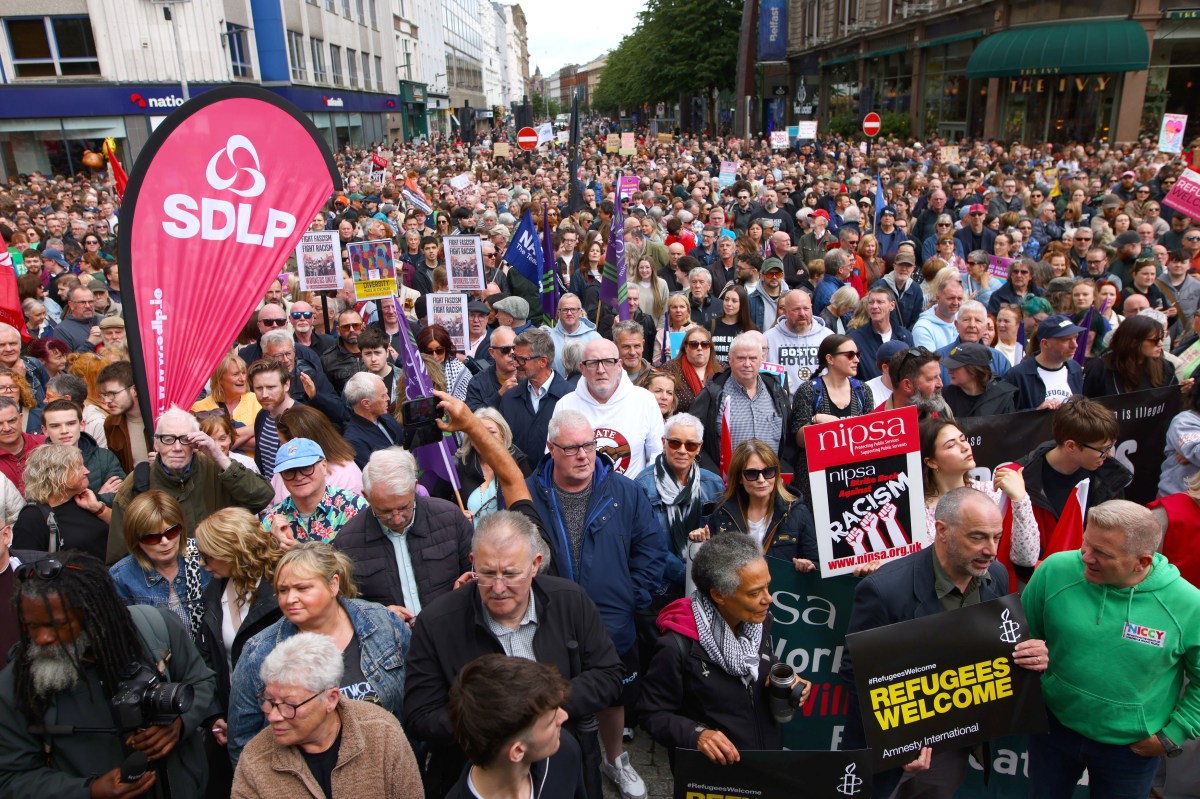
Simultaneously, Belfast witnessed a significant turnout as thousands rallied against a recent surge of anti-immigrant violence. This unrest developed earlier in the week following the arrest of a Sudanese asylum seeker, charged in connection with a stabbing that left a person critically injured. Riots and confrontations with police ensued, leading to widespread public concern.
Political Context of the Protests
The demonstrations came on the heels of the European Union’s new Migration and Asylum Agreement, which aims to unify immigration screening processes and improve the handling of asylum requests across the 27-member bloc. Critics, however, worry that these reforms may not adequately address the human rights issues tied to forced expulsions of immigrants and refugees.
In Italy, the impetus behind the protests was a citizens’ initiative known as “Migration and Reconquest,” which successfully gathered over 50,000 signatures to propel its petition into parliamentary discussion. This initiative has stirred up contentious debates surrounding immigration terminology and policy, with some viewing it as a call for stricter measures, including proposals for voluntary departure incentives for migrants and enhanced deportation policies.
On Saturday afternoon, crowds in Rome swelled as supporters of the initiative clutched banners demanding stricter immigration laws. Some protesters made headlines by gesturing fascist salutes, chanting references to former dictator Benito Mussolini, further fueling the incendiary atmosphere.
Counterprotests and Nationwide Concerns
In stark contrast, a pro-immigration march in another part of Rome drew thousands, including labor unions and various leftist groups, who carried banners with messages promoting unity and diversity. These counterprotests underscored the stark divide within Italian society over immigration issues.
Amid these unfolding events, the U.S. mission in Italy issued a warning for American citizens to avoid the protest areas, particularly around the embassy, emphasizing the potential for unrest. Observers noted that most demonstrations tended to kick off in the early afternoon and subsequently wrap up by the evening.
Violence and Safety Concerns in Northern Ireland
Meanwhile, Belfast’s anti-racism rally notably occurred in the wake of tumultuous events that rocked the city. Following the violent altercation involving the Sudanese man, public outcry erupted as demonstrations against racism emerged. Protesters carried placards denouncing racism and calling for an end to violence, delivering a powerful message of unity amidst chaos.
Earlier in the week, riots led by masked groups resulted in arson and vandalism, targeting properties believed to house migrants. The confrontations left several police officers injured and contributed to business closures and disruptions within public transport systems throughout Northern Ireland.
