


Rise in H-2A Certifications Reflects Growing Labor Demand
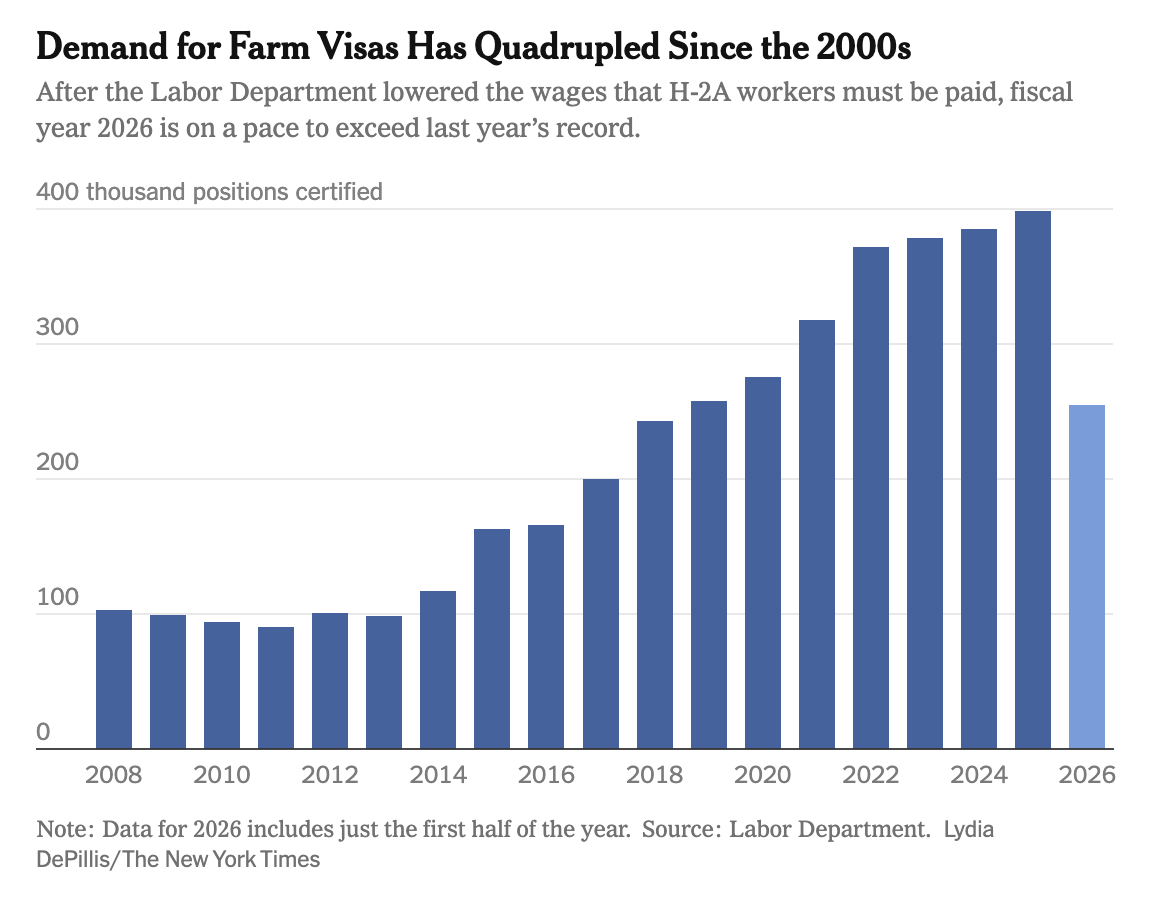
Recent reports from Lydia DePillis of the New York Times highlight a significant increase in the certification of H-2A temporary agricultural workers. In the first half of fiscal year 2026, the Department of Labor certified 17 percent more workers compared to the same period last year.
This program is designed to provide essential support to agricultural producers during peak seasons while offering foreign workers a legitimate pathway to higher earnings compared to domestic options. However, the rapid expansion of the H-2A program raises concerns about its vulnerabilities. DePillis notes that fraud, labor trafficking, and abuses have been prevalent within the system. Alarmingly, the Department of Labor uncovered violations in 84 percent of 2,857 investigations conducted from 2018 to 2023, according to the Comptroller’s Office.
As the agricultural sector strives for self-regulation, the industry’s efforts hinge on the integrity of producers and labor contractors. However, a disparity in power often manifests, with workers left vulnerable to exploitation. Rachel Micah Jones, executive director of Centro de los Derechos del Migrante, emphasizes the dangers of misinformation relating to legal status, wages, and working conditions, which intensifies this vulnerability.
Moreover, the demographic shift within the agricultural workforce cannot be ignored. Since 2013, the number of H-2A visa holders has quadrupled, making up one-sixth of the agricultural labor force due to an aging workforce and a decline in immigration. The program shows signs of further growth as the Trump administration’s crackdown on illegal immigration makes finding workers increasingly challenging, whether from domestic or foreign sources. In tandem, the administration is tightening legal immigration avenues, including restrictions on numerous visa types.
In response to these pressures, farmers and the Department of Agriculture have sought adjustments to the structure of the H-2A program. Recent discussions revealed that wage reductions for guest workers have been put in place, aimed at lessening the financial burden on employers who rely on these workers.
Proposed Expansion of the H-2A Program Gains Support
House Agriculture Chairman Glenn ‘GT’ Thompson (R-Pennsylvania) is advocating for an expansion of America’s temporary farm worker program, as detailed in a draft of upcoming farm labor legislation. According to Agripulse, this initiative seeks to redefine “temporary” work as any contract lasting less than 350 days, thus easing the process for dairy manufacturers and similar businesses to secure long-term assistance while employing seasonal workers.
Thompson’s proposal is rooted in recommendations from the House Agriculture Committee’s Agricultural Labor Task Force report, which calls for a clarified acceptance process for H-2A workers. The proposed changes aim to streamline the program, affirming that temporary worker acceptance should align with the requested employment duration of under one year without evaluating the specific needs of the employer. This adjustment is intended to ensure that the labor requirements of today’s agricultural industry—encompassing producers, ranchers, and forestry—are adequately met.
Increasing H-2A Requests Signal Ongoing Labor Shortages
The demand for H-2A workers continues to climb, with an unprecedented number of over 400,000 applications expected for fiscal year 2025. This surge reflects a pressing domestic labor shortage that U.S. farmers and ranchers are grappling with. Samantha Ayoub of the American Farm Bureau Federation indicates that 13,358 additional applications were approved for fiscal year 2025 compared to the previous year, underscoring the severity of the labor deficit.
In the upcoming fiscal year, 398,258 jobs were identified as suitable for H-2A workers, with the need stemming from a distinct lack of domestic interest in seasonal roles and an insufficient supply of year-round employees. Over the past decade, the H-2A program has experienced a staggering growth of 185%. Despite a slowdown in growth over the previous three years, the program’s upward trajectory remains, as demonstrated by the certification of over 13,300 new workers in 2025 compared to 2024.
