


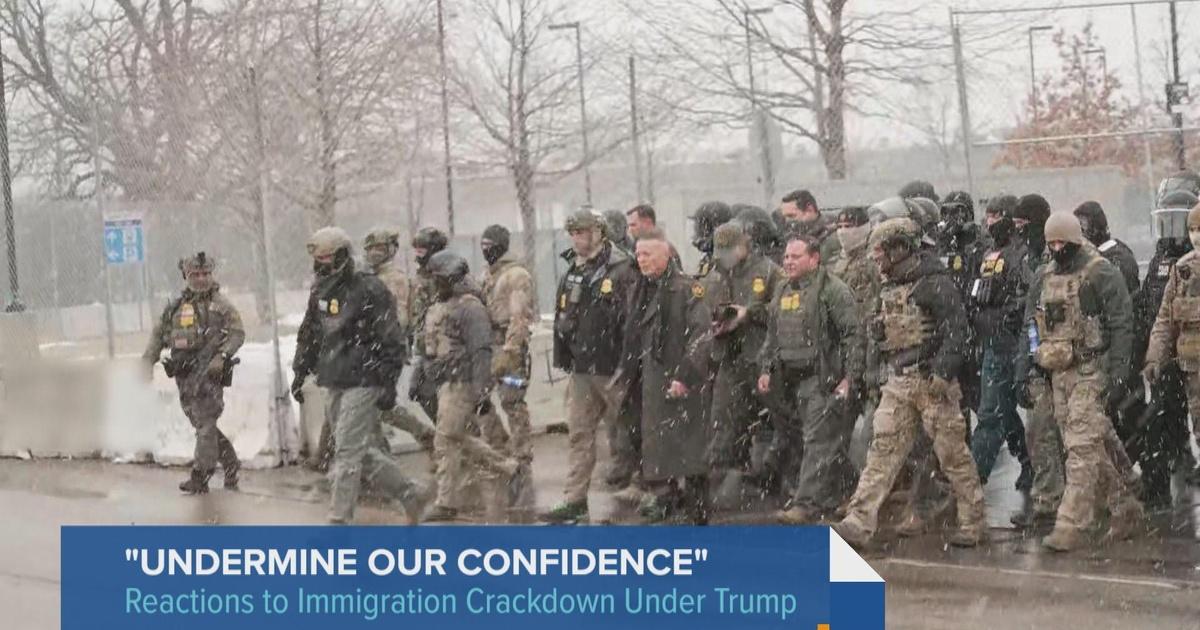
Trump Signs $70 Billion Immigration Enforcement Funding Bill
Last week, President Donald Trump enacted a $70 billion funding bill aimed at immigration enforcement, which will support the operations of Immigration and Customs Enforcement (ICE) and Border Protection through the remainder of his term. This significant funding allocation occurs as communities in Chicago continue to manage the repercussions of Operation Midway Blitz and ongoing immigration enforcement actions.
Concerns Over Congressional Oversight
The funding decision has raised alarms among Democrats who fear that such long-term financial support may undermine Congressional oversight authority. The implications of this legislation on immigration policy and enforcement practices are already being scrutinized across various sectors.
Community Impact and Enforcement Tactics
Gail Montenegro, who served as a spokesperson for ICE and its predecessor agency, the Immigration and Naturalization Service (INS), from 1996 to 2017, has voiced notable concerns about the current state of immigration enforcement. Having experienced first-hand the operations in the Chicago area, Montenegro expressed shock at the aggressive enforcement tactics employed by ICE and other agencies, especially as they resonated eerily close to home.
Changes in Enforcement Protocols
In her observations, Montenegro noted that tactics previously governed by a framework of humanity and community sensitivity seem to have vanished. The enforcement protocols guiding agents have shifted significantly, with practices such as racial profiling becoming increasingly prevalent. Additionally, the targeting of sensitive locations—like schools and churches—has emerged as a disturbing trend in current operations.
Concerns Surrounding Detention Conditions
Montenegro also highlighted troubling conditions faced by detained migrants. She emphasized that the removal process is civil in nature, rather than punitive, questioning the justification of deporting individuals to third countries, such as El Salvador, where they may face imprisonment despite not having committed any crimes.
The Evolution of Immigration Enforcement
Reflecting on her tenure, Montenegro shared her initial role as the sole media representative for the INS in the Midwest and addressed the organizational changes that occurred with the establishment of the Department of Homeland Security (DHS). She pointed out a stark shift from targeted enforcement—grounded in thorough surveillance and intelligence—to a broader, less regulated crackdown on undocumented individuals.
Impact of Political Changes on Judicial Appointments
The ongoing transformation within immigration courts has also raised significant concerns. Montenegro lamented the mass layoffs and abrupt terminations of experienced immigration judges under the Trump administration, noting that such actions erode the very foundation of due process, leading to a climate of distrust in the judicial system. As the administration actively seeks to replace judges with a focus on deportation, the implications for justice and fairness in the immigration system remain troubling.
ICE’s Reputation and Future
The erosion of ICE’s reputation has become a focal point for public discourse, with recent polls indicating that a majority of Americans disapprove of the agency’s actions. Montenegro posited that despite the significant damage done, it may be difficult to repair the agency’s standing with the public. The challenges lie not only in public perception but also in addressing the internal dynamics of enforcement practices that have become controversial.
