


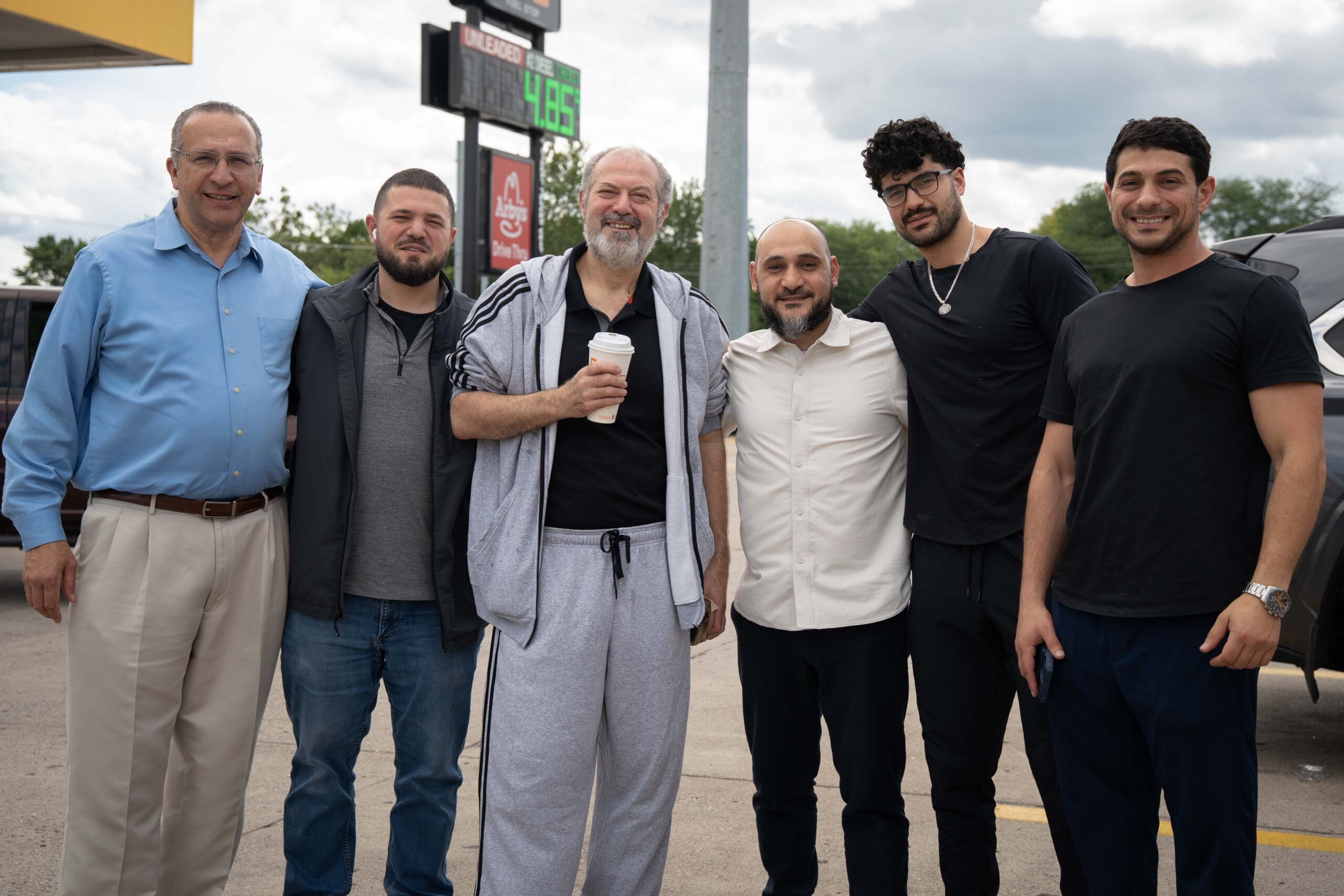
Palestinian Activist Released from ICE Custody Following Court Ruling
Salah Sarsour, a prominent Palestinian activist and legal permanent resident, was released from U.S. Immigration and Customs Enforcement (ICE) custody on the morning of June 18, following a U.S. district judge’s order for his immediate release. Sarsour, who has been a leader within Wisconsin’s largest mosque, had spent 80 days in custody before his release.
Speaking with the Milwaukee Journal Sentinel, the 53-year-old expressed relief as he made his way back to Wisconsin from the Clay County Jail in Brazil, Indiana. Upon arriving at the Islamic Society of Milwaukee around 8 p.m., Sarsour appeared visibly thinner, having reportedly lost 30 pounds during his time in custody.
Upon stepping out of a black Toyota adorned with a Palestinian flag, Sarsour joyfully declared, “He’s back!” to the warm reception of over 100 supporters gathered at the mosque. Osman Ata, the executive director of the Islamic Society of Milwaukee, accompanied Sarsour and noted that he was eager to pray before returning home.
After embracing his brother, Sarsour greeted his mother and addressed the crowd, which was filled with placards and celebrated his return with resounding cheers and music. “I’m very happy. Words can’t express how I feel right now,” he stated. “This is because of the community that has done such great work for justice. This is what makes Milwaukee unique. I’m coming back to serve the community.”
Sarsour, who chairs the Islamic Society of Milwaukee board of directors, was apprehended by ICE agents in Milwaukee on March 30. His legal team argues that the government is infringing on his First Amendment rights, seeking to deport him due to his pro-Palestinian activism.
U.S. District Judge James P. Hanlon’s ruling highlighted that Sarsour’s First Amendment claims are “substantive and may render his detention unlawful.” The judge affirmed that Sarsour’s expression supporting Palestinian rights is protected under the First Amendment, further emphasizing the significance of his case in the broader context of civil liberties.
Although Sarsour has been released, his legal challenges persist. While his immediate request for release has been granted, a decision on his habeas corpus request remains pending, separate from his ongoing deportation case, which is set for a hearing on June 24. The complexities of his situation illustrate the intersection of immigration law and free speech rights in the United States.
Judge’s Ruling Highlights Potential First Amendment Violations
In his detailed 29-page ruling, Judge Hanlon refrained from making a determination regarding the specific outcome of Sarsour’s habeas corpus claim or whether he should face charges related to “removable crimes.” However, he acknowledged the presence of a substantial claim of First Amendment retaliation that could render Sarsour’s detention unlawful, facilitating his release.
Judge Hanlon also referenced a memo from Secretary of State Marco Rubio, issued in June 2025, which classified Sarsour as eligible for deportation based on actions that might “undermine the foreign policy of the United States.” This memo raises important concerns about the broader implications of Sarsour’s arrest amid calls for the dismantling of organizations advocating for Palestinian rights.
Furthermore, the decision underscored the government’s awareness of Sarsour’s past interactions with Israeli authorities, which had been on record for 25 years, but had not led to detention until this year. His release conditions include residing in Wisconsin and attending all scheduled court appearances unless otherwise exempted by a court order.
Support for Sarsour Grows Among Community and Advocacy Groups
The support for Sarsour’s release has been palpable, with members of Milwaukee’s Muslim community and various advocacy groups rallying for his freedom. The Milwaukee City Council recently passed a resolution denouncing his detention, echoing widespread community sentiment against what they perceive as unjust actions by ICE.
Fauzia Qureshi, executive director of the Wisconsin Muslim Citizens League, attributed Sarsour’s release to the collective efforts of community members who mobilized through calls, hearings, and petitions to challenge the normalization of such detentions. Meanwhile, Congresswoman Gwen Moore, who visited Sarsour during his detention, actively campaigned for his release, expressing concerns over his health and living conditions within ICE custody.
In celebrating his release, Nihad Awad, national executive director of the Council on American-Islamic Relations, called this development “long overdue.” He urged ICE to cease its pattern of targeting marginalized communities, including Muslims and Palestinians, for detention and intimidation. As the community welcomes Sarsour back, the broader conversation about civil rights and immigration policy in the U.S. remains urgent and complex.
