


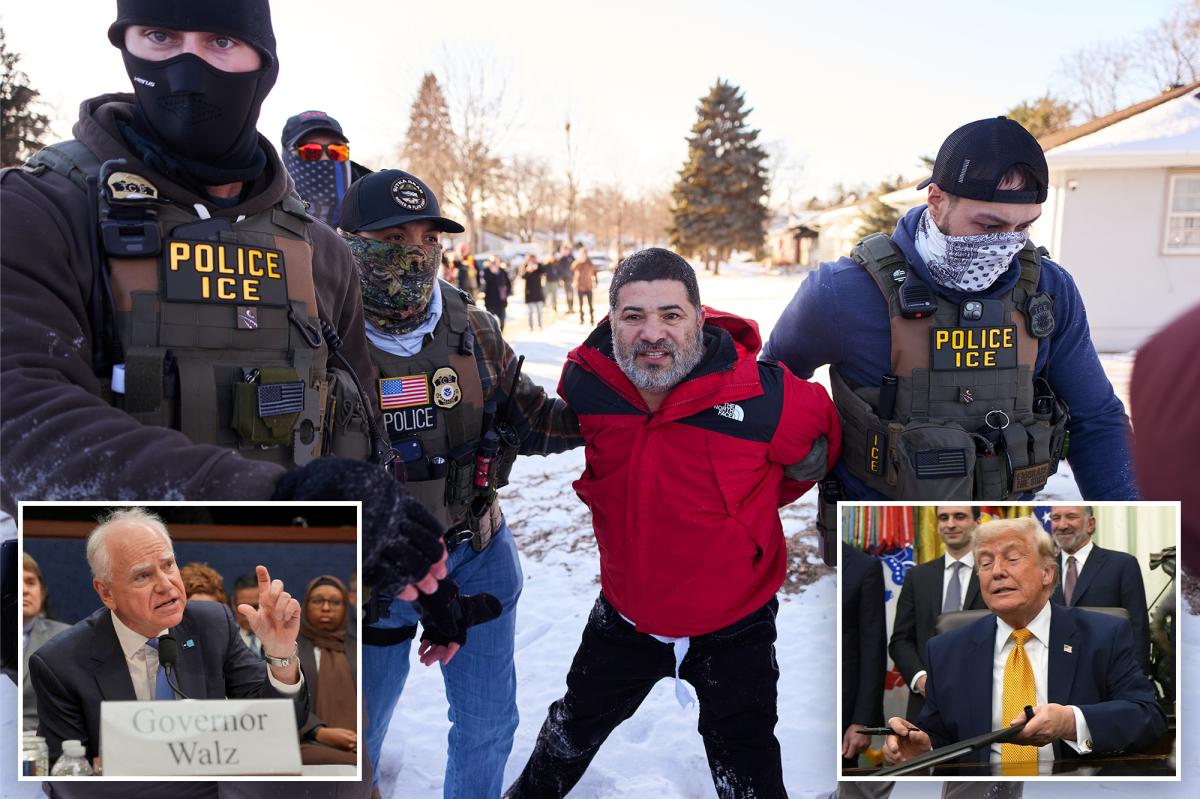
Federal Judge Rejects Attempt to Subpoena Minnesota Officials
A federal judge in Minnesota has overturned the Justice Department’s efforts to subpoena Democratic Governor Tim Walz and several state officials, concluding that the Trump administration aimed to intimidate political adversaries rather than pursue a legitimate inquiry.
The ruling, issued by U.S. District Judge Patrick Schiltz, was made last week but only became public on Monday. His 29-page order critiques the Justice Department’s approach, stating that initiating a criminal investigation to target a political opponent constitutes an unethical misuse of the grand jury process.
Schiltz emphasized the gravity of the situation, saying, “The only question, therefore, is whether the challenged subpoenas were issued for any prohibited purposes. The court has no doubt that they were issued for any of the prohibited purposes.” Schiltz, who was appointed by George W. Bush, indicated his strong conviction regarding the inappropriate nature of the subpoenas.
The Justice Department had set its sights on multiple state leaders, including Walz, Minnesota Attorney General Keith Ellison, Minneapolis Mayor Jacob Frey, St. Paul Mayor Ka’Auley Herr, and the Ramsey and Hennepin County Boards of Commissioners.
Subpoenas Target High-Profile Officials
Schiltz characterized the subpoenas as excessively broad, targeting a wide spectrum of Minnesota’s political landscape, including the state’s top leaders and major city mayors. He noted that the material being requested was primarily related to constitutionally protected activities.
Earlier this year, during the Operation Metro Surge immigration enforcement initiative in Minnesota, Justice Department officials issued these subpoenas. Local backlash against this crackdown intensified following the fatal shootings of Renee Good and Alex Preti by federal immigration agents.
Justice Department’s Justification Lacks Merit
To justify the subpoenas, the Justice Department cited examples of advocacy from Minneapolis City Council members, claiming these actions could be linked to criminal activity. However, Schiltz rebuked this premise, asserting, “Their connection to potential criminal activity is as remote as it is spurious.” He pointed out that the Department’s rationale relied heavily on unfounded speculation.
Walz welcomed the judge’s decision as a significant affirmation of democratic principles and the rule of law. He expressed concern about the Justice Department conducting a criminal investigation targeting a political opponent of the president. “While this incident is just one example, we see events every day in Minnesota and across the country that remind us of this administration’s lawlessness,” he stated.
