


Ancient Insights and Modern Challenges in Unraveling Herculaneum Scrolls
An unknown author in a recently studied passage warns against excessive impulses and emphasizes the importance of phronesis, an ancient Greek term meaning “practical wisdom.” This author reflects on a fundamental truth: “We search for something, but if we become disconnected from our true selves, we cannot comprehend it.” Such insights resonate profoundly with researchers today.
The Cultural Connection to the Past
Brent Shields, a computer science professor at the University of Kentucky and an authority on the digital restoration of cultural artifacts, notes the timeless relevance of these ancient texts. “It has been a long time since the classical period, and we may feel distant from that culture, but reading these words quickly bridges that gap,” he tells NBC News. He adds that the ancients focused on living a good life and understanding the world, a pursuit that remains relevant today.
Difficulties in Deciphering Ancient Texts
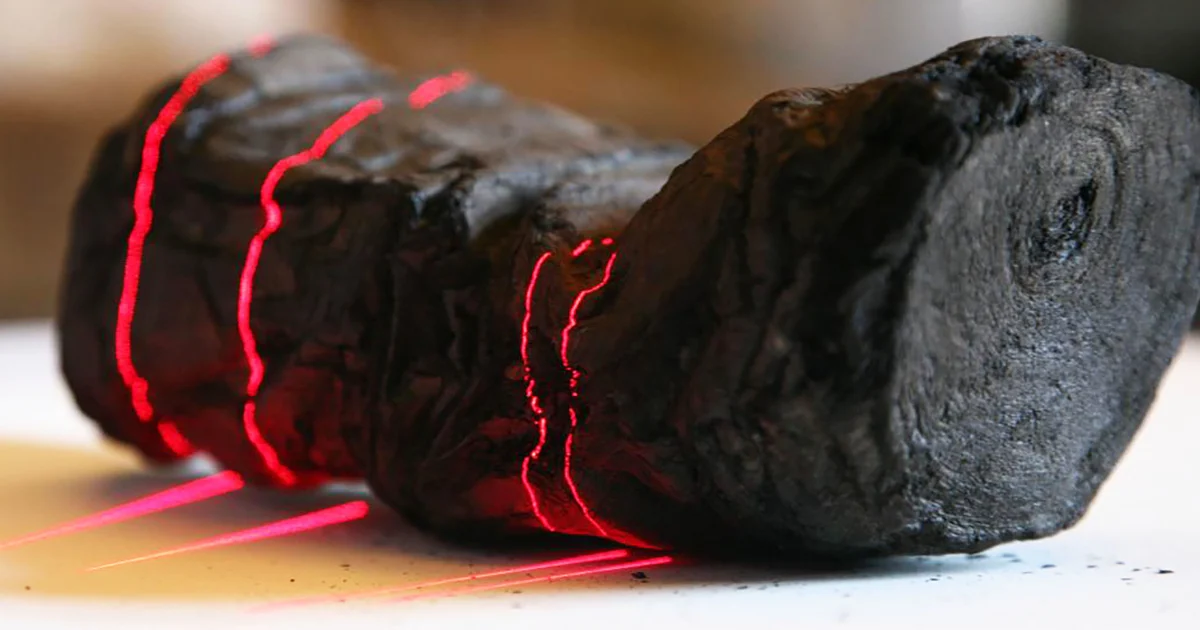
Efforts to decode the Herculaneum scrolls, discovered in ruins believed to belong to Julius Caesar’s father-in-law, have yielded mixed results. Historical attempts to unroll the text were labor-intensive and time-consuming. The 18th-century Italian monk Father Antonio Piaggio developed a device to slowly unfold carbonized papyrus, a project that spanned four years for the first scroll and many more for about 500 additional volumes. Unfortunately, the carbonization often made the texts too fragile to analyze systematically.
Ongoing Restoration Efforts and Discoveries
Since that time, scholars have worked diligently, piecing together fragments of text from the scrolls, revealing one letter at a time. An additional 600 heavily charred scrolls, preserved in the National Library in Naples, remain unopened due to their fragile condition, prohibiting mechanical attempts at unrolling them.
Technological Advances in Text Extraction
Modern 3D X-ray technology has facilitated some understanding of the scrolls’ content, yet the task of extracting readable text is still daunting due to the inky darkness of the images. However, a significant breakthrough in 2023 allowed three students to employ machine learning algorithms to extract ancient Greek letters from a “virtually unsealed” scroll. This achievement earned them a $1 million prize and has spurred rapid advancements in text extraction techniques.
Transformative Discoveries in Herculaneum
Now, with these advanced methods, the pace of deciphering has dramatically accelerated. Gianluca del Mastro, a professor of papyrus studies at the Luigi Vanvitelli University of Campania, expressed his enthusiasm: “Previously, deciphering a single phrase could take more than a month. Now, we have the entire text.” He highlights the extraordinary access to the thoughts of philosophers from the 3rd to 1st centuries BC as creating “a whole new world” for scholars.
Future Prospects for Herculaneum Research
Some unexpected findings have emerged during these research efforts. For instance, one scroll that was previously cataloged as lacking ink has now been identified as having ink, potentially making it one of the oldest Roman scrolls discovered. So far, researchers have only managed to read about 10% of the scrolls. In an exciting announcement, the University of Kentucky has launched a new $1 million prize for anyone able to decipher the complete text of one of the scrolls by next June, pushing the boundaries of what was once thought to be impossible.
