


Here’s what you need to know today.
The Supreme Court rules in favor of the Trump administration on immigration policies
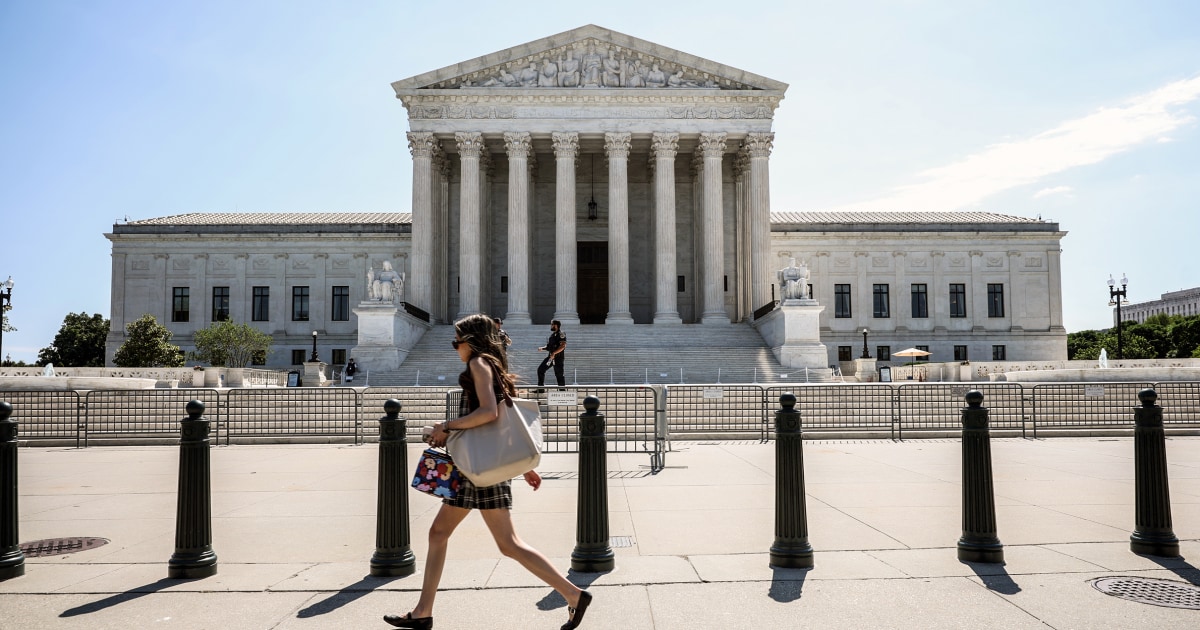
In a significant decision yesterday, the Supreme Court permitted the Trump administration to revoke legal protections for thousands of Haitian and Syrian immigrants. This ruling paves the way for broader efforts to target other vulnerable groups seeking refuge in the United States.
With a narrow 6-3 vote along ideological lines, the court upheld the administration’s directive to eliminate temporary protected status for approximately 35,000 Haitians and 6,000 Syrians. The Temporary Protected Status program has been a vital humanitarian relief effort since its inception in 1990, aiding individuals from countries devastated by conflict and disasters.
Former Homeland Security Secretary Kristi Noem asserted that the conditions in Haiti and Syria no longer warranted legal protections, despite the State Department categorizing both nations as “no travel” destinations. This contradiction raises fundamental questions about the safety of returning individuals to these regions.
In a related decision, the Court reinforced the administration’s stringent asylum policies at the U.S.-Mexico border. A 6-3 ruling determined that individuals must be present in the U.S. to apply for asylum, disallowing applications from those who approach authorities while still on Mexican soil.
European leaders alert on Russian disinformation infiltrating AI platforms
European officials are sounding alarms about pro-Russian groups infiltrating popular AI systems with propaganda aimed at disseminating Kremlin narratives, particularly in the lead-up to the U.S. midterm elections. Estonia’s Minister of Justice and Digital Affairs, Liisa Pakosta, highlights the rapidity with which Russian disinformation is spreading and categorizes it as a global concern.
This situation represents a new dimension in Russia’s ongoing campaign of disinformation throughout the European Union, a threat that feels particularly acute for nations bordering Russia. Pakosta underscores the existential risk posed by these tactics, which seek to manipulate public perception through AI-generated content.
US men’s national soccer team faces loss but remains in contention
Last night, the U.S. men’s national soccer team experienced a setback with a narrow 3-2 loss to Turkey, a match that turned dramatic in the final moments. Having already secured advancement as group winners, the team managed to experiment with its lineup while resting key players, including star Christian Pulisic, who returned from injury during the match.
Next, the team will face Bosnia and Herzegovina in the round of 32, a high-stakes knockout match on July 1st. While this game marked the first loss in the tournament for the U.S. team, the build-up to the knockout stage remains optimistic, as they aim to continue their World Cup journey.
Devastating earthquakes strike Venezuela
Frantic recovery efforts are underway in Venezuela following a devastating doublet earthquake sequence that wreaked havoc across Caracas. The country’s health minister confirmed that the current death toll stands at 235, with thousands more injured. Rescue operations continue amidst the rubble, as video footage reveals individuals, including children, being saved from debris.
Seismologists noted that the second earthquake, measuring 7.5, struck just 39 seconds after the first, which registered 7.1. This unique geological phenomenon, termed a ‘doublet,’ poses distinct challenges for recovery efforts due to the rapid succession of seismic shocks.
Secrets of ancient scrolls from Vesuvius revealed through technology
In a groundbreaking achievement, researchers have utilized AI-assisted technology to uncover texts from ancient scrolls that were buried by the eruption of Mount Vesuvius nearly 2,000 years ago. This incredible feat has unveiled philosophical discussions on ethics, art, and theology, drawing from a treasure trove of ancient knowledge.
This endeavor reflects over three centuries of scholarly pursuit, with recent advancements in technology significantly accelerating the deciphering process. Correspondent Claudio Labanga provides insights into this fascinating journey of restoring lost historical texts.
