


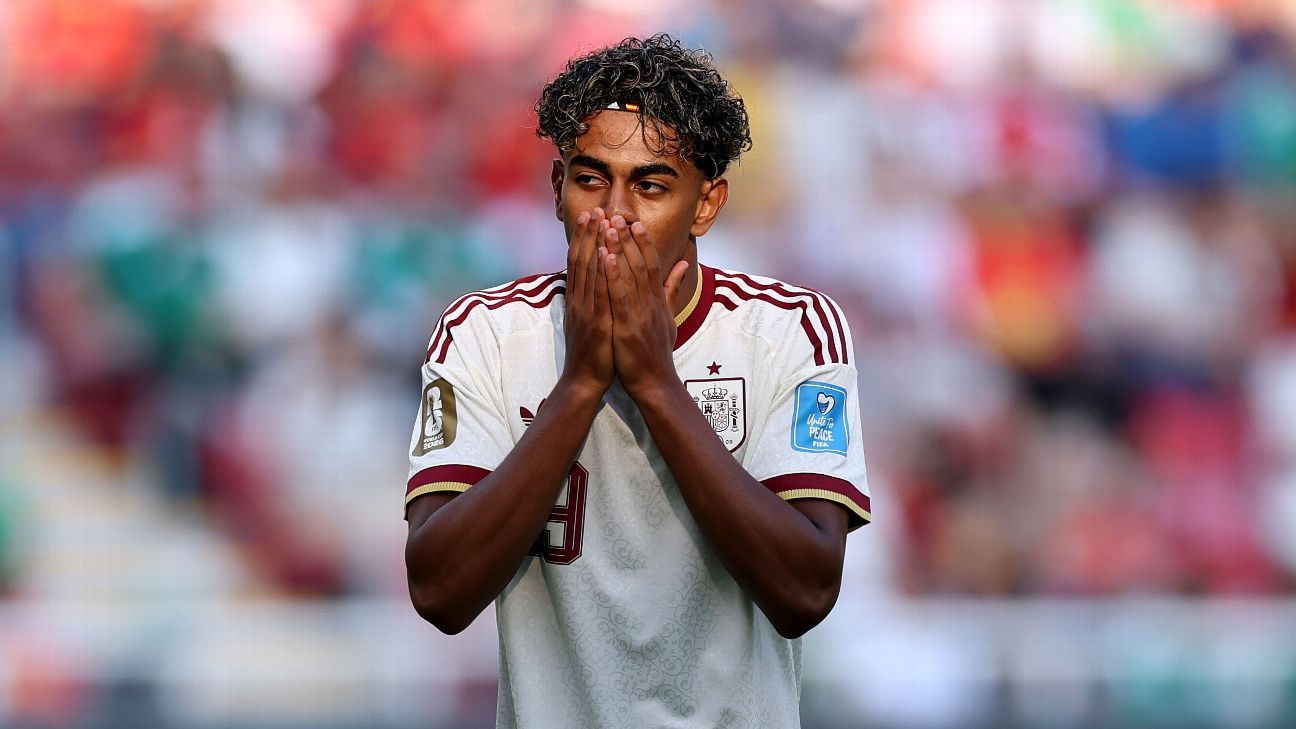
GUADALAJARA, Mexico – Uruguay’s national coach Marcelo Bielsa praised Luis de la Fuente’s Spain team for their “exquisite” style of play, admitting it surpasses his own achievements. This statement came ahead of a crucial World Cup Group H match. However, the anticipated flair was absent in Spain’s gritty 1-0 victory on a sweltering and stormy night in Guadalajara.
After Spain’s commanding 4-0 triumph over Saudi Arabia in Atlanta, which featured Lamine Yamal’s return to the starting lineup, expectations ran high. Unfortunately, this match mirrored Spain’s earlier 0-0 draw against Cape Verde, with better results appearing elusive.
The match could have ended without a goal if not for Uruguay’s goalkeeper Fernando Muslera deflecting Alex Baena’s shot into his own net during the first half. Following the game, Bielsa revealed that Muslera asked to be substituted at half-time, clarifying, “I didn’t make that decision. It was Muslera’s choice.”
High Stakes for Both Teams
This highly anticipated clash had been marked on the calendar since the 2026 World Cup draw, pitting Europe’s champions against the storied teams from South America. The stakes were immense: the winning team would avoid facing Argentina in the Round of 32, while also earning a more manageable path through the tournament.
However, Uruguay’s earlier draws against Saudi Arabia and Cape Verde altered their trajectory. They were not just contending for the top of the group but also struggling to stay in the tournament altogether. A loss would spell elimination, and even a draw wouldn’t ensure a spot among the third-place teams.
Spain’s Performance Raises Concerns
In contrast, Spain’s spirits were buoyant following their performance against Saudi Arabia. With Yamal back in form, the team seemed to be gaining momentum as the tournament approached. Yet, that expectation didn’t translate to success in Guadalajara, resulting in what Bielsa described as a false start.
Following the game, de la Fuente acknowledged, “Maybe we didn’t perform as well as we would have liked, but this was a very tough game. We aimed to be responsible, focused, and calm.” Despite making two changes to his starting eleven—Marcos Llorente replacing Pedro Polo at right-back and Mikel Merino stepping in for Dani Olmo—Spain struggled to find their rhythm. Llorente’s integration with Yamal was not seamless, and Olmo’s absence was keenly felt.
Uruguay’s Approach and Defensive Strategy
Bielsa’s Uruguay had a more proactive game plan. The experienced coach, set to depart from his role, emphasized the need for his team to be aggressive rather than simply defending against Spain’s attacks. “It’s important that Spain doesn’t have too much possession. The more they get the ball, the worse it gets for us,” Bielsa noted, as Uruguay sought to disrupt Spain’s gameplay from the outset.
Spain saw 76% of the possession, yet managed only two shots, neither on target. An unfortunate mishap from Muslera resulted in Spain’s only goal at the 42nd minute, when he inadvertently redirected a straightforward shot into his net. The match took a dark turn after the break, with Uruguay’s Juan Sanabria shown a yellow card for a careless tackle on Yamal, and later, Agustin Canobbio was sent off for a reckless challenge, leading to chaos on the pitch.
Spain’s Missed Opportunities and Future Challenges
Spain’s struggles continued as they made poor decisions under pressure. Substitute Olmo missed a golden opportunity inside the box, while Yamal’s creativity fell flat. In the game’s closing moments, Ferran Torres struck the crossbar, leaving Spain frustrated with their failure to capitalize on their chances.
Despite flashes of individual talent from Yamal, Mikel Oyarzabal, and Pedri, concerns linger about Spain’s overall performance. Unai Simón’s goalkeeping raised doubts; he seemed uncertain at times, missing crucial crosses in the first half. Meanwhile, Rodri’s lackluster display in midfield failed to instill confidence, even as he led the team in touches and completed passes.
The Road Ahead for Both Teams
While Yamal played 76 minutes, he was unable to replicate his previous impact. On the other hand, Uruguay faced a far more daunting situation. Bielsa’s team had their chances but managed only one notable opportunity with an expected goals (xG) rating of 0.20, losing discipline in the latter stages. “We set out to collect seven points and ended with two. That reflects my management and performance,” Bielsa stated, acknowledging his team’s struggles.
The atmosphere in the stands took a turn as local fans began chanting for Cape Verde, aware that they were watching a contest that would determine which nations would advance. For Spain, securing the top position in the group meant successfully avoiding Argentina. However, as they face increasingly formidable opponents, they will need to raise their game significantly to progress further in the tournament.
