


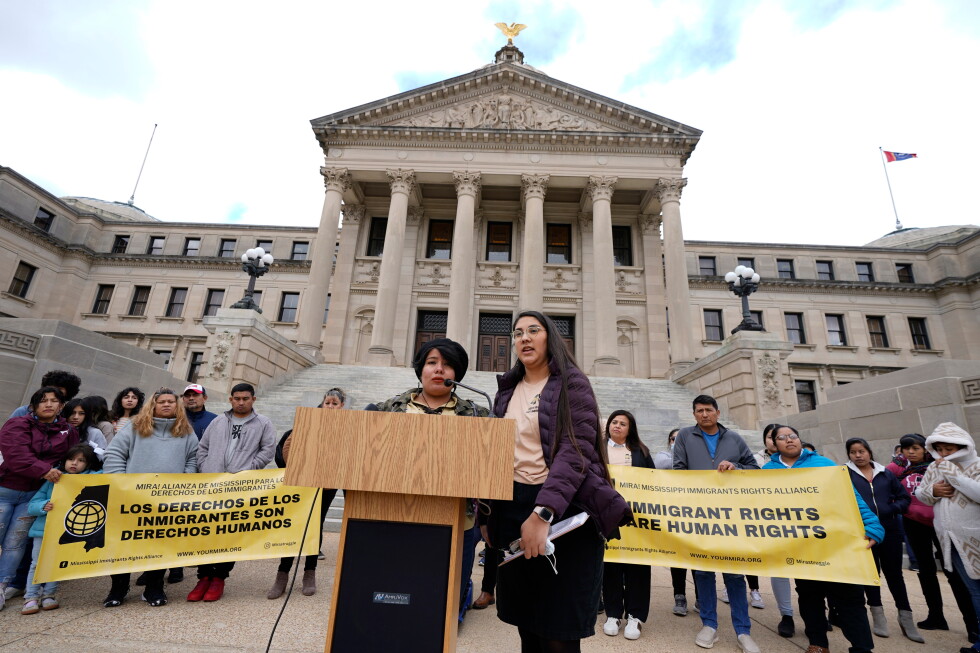
A new law in Mississippi grants the state’s leading law enforcement agency the authority to compile a comprehensive list of immigrants residing in the state without legal status. Set to take effect on Wednesday, this legislation has raised concerns among immigration advocacy groups, who view it as a potential method for targeting individuals, echoing the immigration policies favored by President Donald Trump. Millions of people living in the United States currently lack legal recognition.
The Mississippi Department of Public Safety has stated that it may utilize “all reasonable lawful investigative means” to identify and quantify the number of individuals classified as “illegal aliens” in the state. This process may involve collecting personal details, including names, addresses, countries of origin, and whether individuals are adults or minors. Additionally, it will encompass records pertaining to criminal histories and deportation proceedings.
As part of the law, the department is mandated to share information about suspected violators with state and local authorities. Importantly, the legislation neither requires nor prohibits the sharing of this data with U.S. Immigration and Customs Enforcement (ICE).
Growing Legislative Focus on Immigration Issues
According to a report by The Associated Press, over 100 immigration-related laws have been enacted in the U.S. this year. In states led by Republican lawmakers, these laws typically support the broader policies aligned with Trump’s agenda, such as requiring local sheriffs to collaborate with ICE, tightening eligibility for public benefits, and mandating checks of federal voter rolls for non-citizen status.
In contrast, Democratic-led states are introducing legislation to counteract these policies, often prohibiting collaborations with ICE and restricting immigration enforcement actions in sensitive areas, including schools and hospitals.
Comparative Laws: Mississippi and Beyond
Mississippi’s law bears resemblance to a 2021 executive order by Florida Governor Ron DeSantis, which instructed state law enforcement to utilize all lawful methods to determine the identities of “illegal aliens” removed from Florida. Requests for information regarding the implications of Florida’s executive order went unanswered by state officials.
Amid these state-level changes, the Trump administration has intensified the enforcement of longstanding federal regulations requiring non-citizens to register with the government.
Challenges to Enforcement and Implementation
This new Mississippi law does not count immigrants as a one-time measure; rather, it facilitates ongoing efforts to monitor those unlawfully entering the state over the next two years. It could become increasingly complex as individuals apply for new visa statuses, overstay their visas, or relocate between states.
Efren Olivares, vice president of litigation and legal strategy at the National Immigration Law Center, expressed skepticism about the feasibility of the law. He noted, “You can be undocumented today, eligible tomorrow, and lose your status again the following month.” Olivares added that the approach risks echoing troubling precedents set in other nations, where lists of specific population groups have been compiled.
Jessica Vaughan, director of policy research at the Center for Immigration Studies, emphasized the need for state officials to devise a reliable and systematic means for determining an individual’s immigration status. While she noted that the law has its merits, she also reflected on its potential to increase scrutiny on individuals in the country without legal status.
Concerns Regarding Community Trust
Mississippi ranks among the states with the fewest undocumented immigrants, approximately 28,000, representing less than 1% of the population, according to American Immigration Council data utilizing the latest Census Bureau figures. Victoria Francis, deputy director at the organization, expressed alarm over the law’s implications, suggesting it could divert law enforcement’s focus from public safety to the investigation of foreigners who are economically contributing to society.
Francis cautioned that such initiatives may inadvertently lead to profiling and undermine trust within entire communities. Lydia Grizzell, policy and advocacy manager for the American Civil Liberties Union of Mississippi, echoed these concerns, arguing that the law could damage the relationship between police and community members, ultimately discouraging individuals in need from seeking police assistance.
