


Rapid Response Team Mobilizes Amid Immigration Enforcement Concerns
Marita Canedo had just woken up when her phone began to ring. On the early morning of March 11, Canedo was on call as part of a crisis response team for Migrant Justice, a statewide organization advocating for immigrant rights.
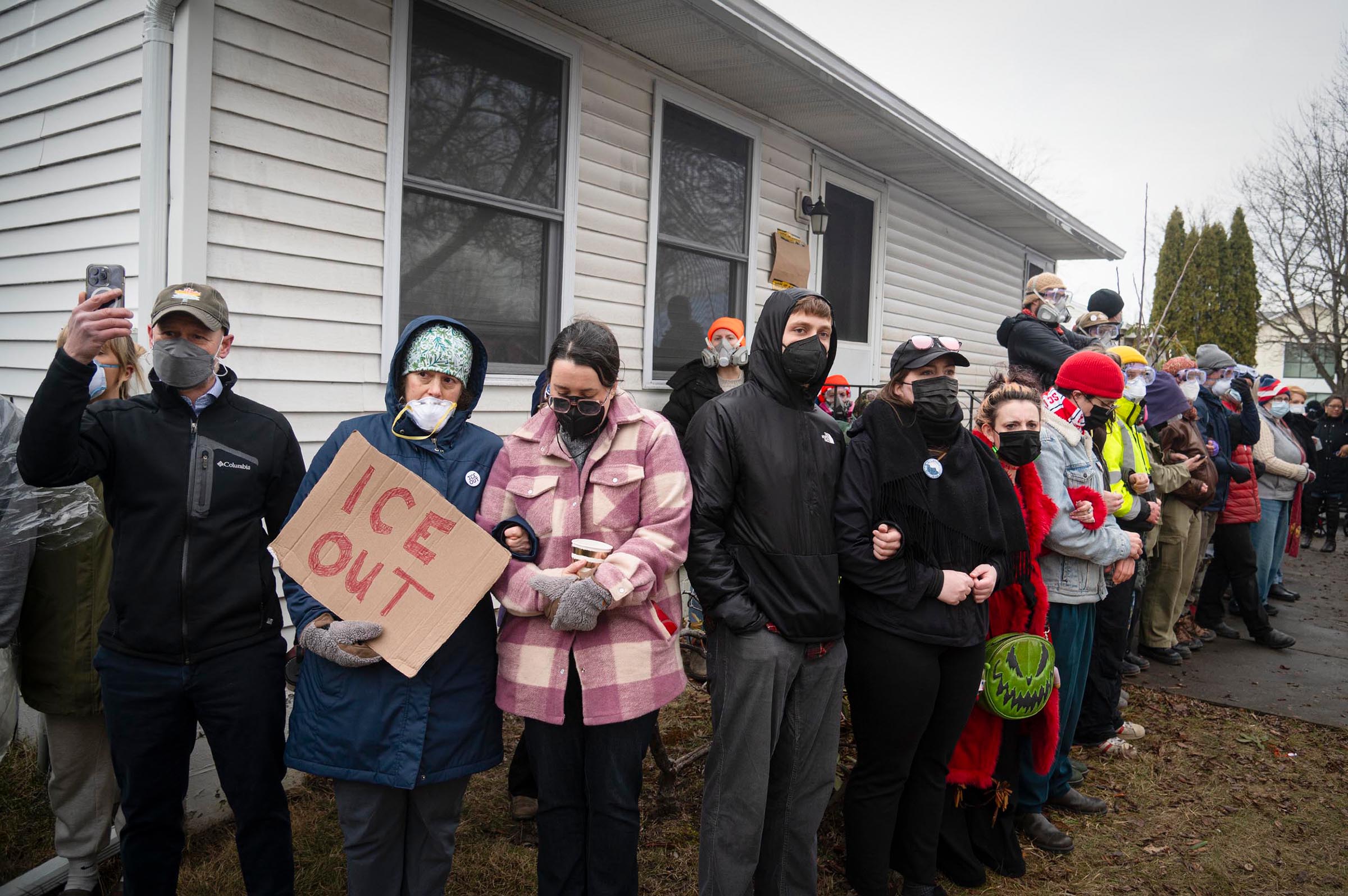
Receiving multiple calls simultaneously, Canedo was informed that U.S. Immigration and Customs Enforcement agents had gathered outside a residence on Dorsett Street in South Burlington. Despite the hour, she was prepared for the situation.
Migrant Justice’s rapid response infrastructure was already in place. Trained volunteers ensured ICE agents were monitored while Canedo made critical phone calls to individuals inside the home, advising them of their rights and the importance of deleting personal data in case of arrests.
At around 8:30 a.m., a text alert was sent to Migrant Justice’s network in the area, urging residents to gather and observe the situation. The message spread rapidly, emphasizing the need for community presence in response to ICE actions.
Over the past year and a half, Migrant Justice has focused on modernizing and expanding its rapid response capabilities. This effort includes employing several paid staff members, mobilizing around 80 trained volunteers to document immigration enforcement, and rallying over 3,500 individuals to receive alerts on ICE activities.
While Vermont has not experienced the drastic immigration enforcement spikes seen in major cities like Minneapolis and Los Angeles, activists report growing concerns over increasing ICE activity stemming from neighboring Massachusetts. The heightened immigration climate has instilled fear among many immigrants and people of color in Vermont, worrying that they may be victims of racial profiling.
Documenting Detentions to Combat Misinformation
Immigrant justice organizations have maintained a rapid response network since the early days of President Trump’s administration, according to Rachel Elliott, an organizer within the group. Although the network became less active during the Biden presidency, it was reinvigorated following the news of Trump’s re-election.
Recognizing that potential emergencies could be swiftly addressed with on-the-ground support, Elliott and her team revitalized their strategy and significantly expanded the response network. The organization operates an emergency hotline staffed with bilingual personnel ready to assist immigrants in distress and to report sightings of immigration officers.
When a report about ICE or Customs and Border Protection activity is received, the organization mobilizes its network of about 80 trained volunteers in the state to verify the information. This proactive approach helps avoid misinformation and equips immigration judges to make informed decisions regarding next steps.
Elliott noted that community members occasionally misidentify local law enforcement as ICE agents, leading to heightened vigilance borne from fear and sensationalized media reports. “It is crucial that we do not disseminate false information,” they emphasized.
Robin Morgan, an activist with Lost River Racial Justice in Brattleboro, Vermont, shared her experiences in verifying reports. Together with fellow volunteers, she engages in training focused on immigration justice, learning how to evaluate reports of ICE activity and expand the network into underrepresented areas.
When alerted to a possible ICE presence in her vicinity, Morgan swiftly coordinates a response with her network, often dispatching volunteers in pairs for safety. They collect detailed information about government personnel by observing uniforms and vehicle markings, promptly sharing this with the Immigrant Justice Team for further action.
Supporting Detainees and Their Families
Behind the scenes, activists are also engaged in tracking the whereabouts of individuals detained in Vermont. Leif Taranta is part of a dedicated group that maintains a public dashboard detailing immigration detainees within Vermont prisons and their transfer locations, using state and federal data as a foundation. Taranta aims to track detainees in real time, ensuring that those in custody remain in contact with their families and legal representatives.
This grassroots initiative is designed to prevent ICE from operating below the radar. “These individuals are part of our community. When they are taken, it is our responsibility to try to find them,” Taranta stated.
The emergency phone line established by Migrant Justice also facilitates connections to legal representation for those detained. “The sooner legal assistance is engaged, the better the outcomes can be for the detainees,” noted Elliott.
Immigration attorney Kristen Connors highlighted the critical importance of swift legal action, which can prevent deportations and keep individuals within supportive jurisdictions. She represented Johana Patin Patin, who was arrested by ICE on March 11. After learning that Patin had been transferred into ICE custody, Connors quickly filed a habeas petition to secure a ruling that kept her detained in Vermont.
The following week, a courtroom filled with community supporters witnessed a federal judge grant her release, highlighting the importance of both community mobilization and informed legal representation during critical moments.
