


Thompson to Introduce Farm Worker Immigration Legislation
House Agriculture Committee Chairman Glenn “GT” Thompson (R-Pennsylvania) is set to reveal his anticipated farm worker immigration bill on Tuesday. The Secure Agricultural Workforce Act of 2026 (SAWA) will be published online at 12:30 p.m., followed by a press conference with Thompson at 1:15 p.m.
Although the full text of the bill has yet to be released, Thompson has hinted at several key provisions in comments made to Farm Journal’s The Packer. These insights indicate a focused approach to addressing agricultural labor shortages, particularly through legislative reform.
At a press conference earlier today, Farm Bureau President Zippy Duvall emphasized the urgent need for Congress to pass the bill. He highlighted that a consistent immigrant workforce is vital, especially since American workers are increasingly reluctant to take on farm labor jobs.
Duvall further detailed that the proposed legislation aims to modify many aspects of the H-2A program, which permits farmers to employ foreign workers. Key changes would include extending the duration of employment to 350 days, reducing wage requirements, and simplifying the process for agricultural employers to recruit workers.
Opposition to the bill comes from the United Farm Workers and the United Food and Commercial Workers International Union, who have sent a letter to lawmakers expressing their concerns. They argue that SAWA mirrors wage-reducing measures from the Trump Administration and constitutes an example of executive overreach that undermines workers’ protections.
One significant obstacle Thompson faces is that immigration policy falls under the jurisdiction of the House Judiciary Committee rather than the Agriculture Committee. Farm Bureau lobbyist John Walt Boatwright acknowledged at the press conference that they anticipate the bill will likely be sent to the House Judiciary Committee, which is currently chaired by Rep. Jim Jordan (R-Ohio), known for his critical stance on immigration issues.
Complicating matters further, the House Freedom Caucus—led by Agriculture Appropriations Chairman Andy Harris (R-Md.)—is also hesitant to endorse any legislation that would potentially broaden the pool of foreign workers. Despite these challenges, Boatwright confirmed that Farm Bureau members lobbying in Washington this week will directly discuss the bill with members of the House Judiciary Committee.
Another point of advocacy comes from Rep. Daniel Newhouse (R-Wash.), who previously spoke at the International Fresh Produce Association, urging support for Thompson’s legislation. Newhouse had co-authored the Farm Workforce Modernization Act, which passed in the House but was ultimately stalled in the Senate in previous congressional sessions.
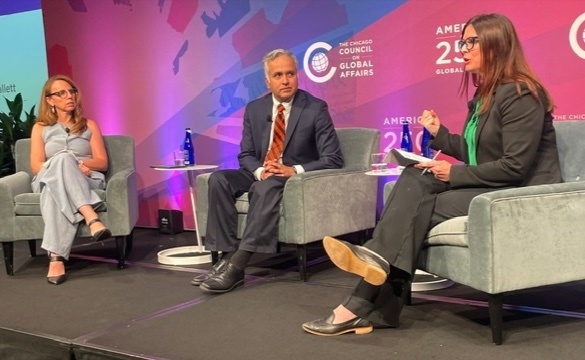
Historically, congressional Democrats have advocated for comprehensive immigration reforms; however, substantial achievements in this realm have remained elusive for decades. In a recent panel at the 250 Global Forum America’s Chicago Council on International Affairs, Karthik Ramakrishnan, a Berkeley-based immigration researcher, suggested that focusing on smaller, piecemeal reforms may yield better results. Nicole Hallett, a clinical law professor at the University of Chicago, concurred that while she recognizes the need for reform, meaningful solutions to the ongoing challenges facing agricultural laborers are essential.
