


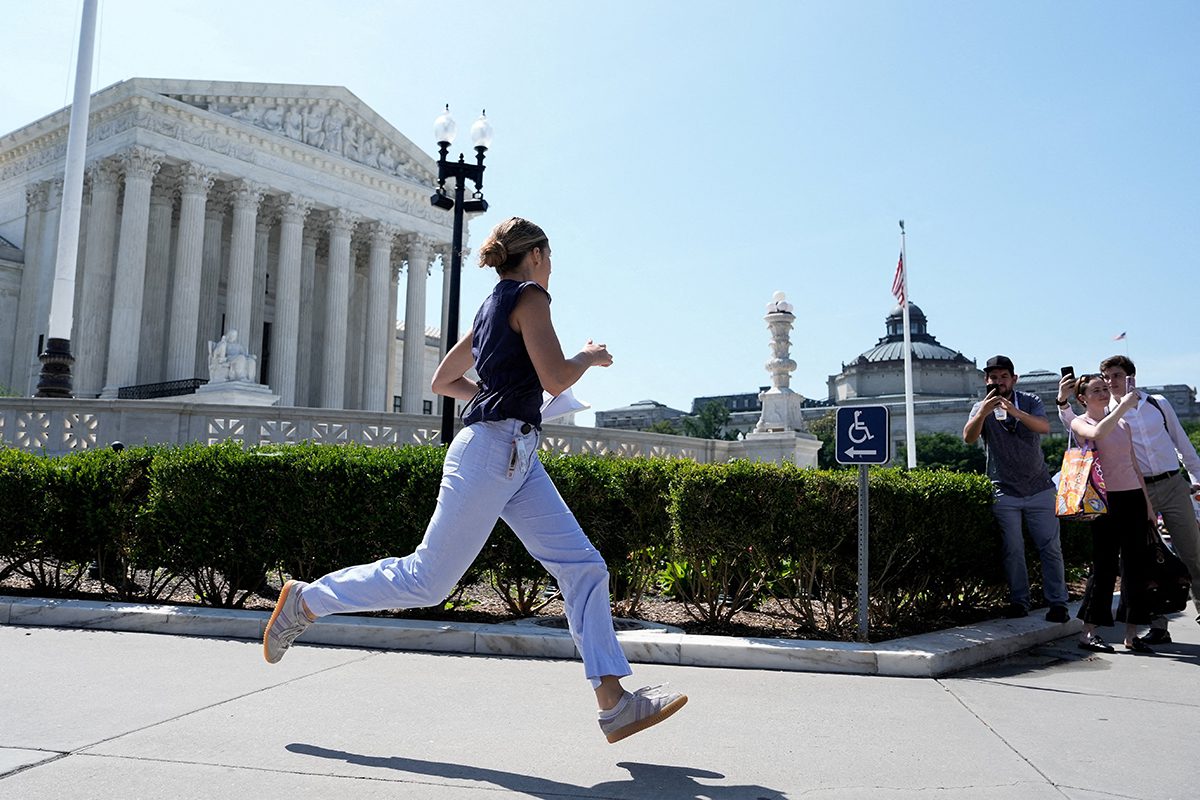
Supreme Court Overturns Trump’s Birthright Citizenship Executive Order
On June 30, the U.S. Supreme Court struck down an executive order from former President Donald Trump that aimed to restrict birthright citizenship, determining it unconstitutional under the 14th Amendment. This landmark decision represents a significant setback for Trump’s immigration policies and marks a rare instance of a sitting president attending oral arguments—a notable event recorded by the Supreme Court and the Supreme Court Historical Society.
Chief Justice Roberts Highlights the Importance of Citizenship
In the majority opinion, Chief Justice John Roberts stated, “Citizenship then, and now, was the right to have rights and to participate freely in our political community.” Roberts emphasized that this promise, originally extended in the text of the 14th Amendment, continues to hold true today.
Background of the Controversial Executive Order
The challenge centered around an executive order signed by Trump shortly after he returned to the Oval Office on January 20, 2025. The order sought to alter the long-standing interpretation of the 14th Amendment, which asserts that “all persons born or naturalized in the United States are subject to the jurisdiction of the United States and are citizens.” Trump’s directive aimed to limit citizenship to children born in the U.S. solely to parents with permanent legal status or temporary visas, effectively reshaping the criteria for citizenship.
Legal Arguments and Challenges
Following the issuance of the executive order, legal challenges mounted quickly. The Supreme Court previously restricted the ability of federal judges to enact nationwide injunctions against the order during the ongoing litigation, while avoiding a direct assessment of its substantive merits. The Trump administration defended its approach, arguing that the phrase “subject to jurisdiction” justified the move. However, Roberts countered by noting that the term had minimal relevance to the understanding at the time the amendment was ratified.
Dissenting Opinions Highlight Ongoing Debate
In his concurrent opinion, Justice Brett Kavanaugh expressed disagreement with the court’s interpretation of the 14th Amendment but argued that the executive order was illegal based on federal law governing birthright citizenship. He pointed out that while Congress could, in theory, change existing laws, it has not done so. Meanwhile, Justices Samuel Alito, Clarence Thomas, and Neil Gorsuch dissented, with Thomas asserting that the majority’s decision perpetuates historical inequities related to the 14th Amendment’s intent.
Reactions and Implications for Immigration Policy
Following the ruling, Trump took to social media to express disappointment, urging Congress to act swiftly to address birthright citizenship through legislation rather than a lengthy constitutional amendment process. The potential path for such legislation remains unclear, particularly with the Senate’s filibuster rule creating hurdles for passage.
Expert Insights on the Ruling’s Significance
Legal experts hailed the decision as a victory for the rights of children born to immigrants in the United States. Ashley Feasley, a resident legal expert at the Immigration Law and Policy Initiative, stated that the ruling upholds essential principles of citizenship. Many advocates, including representatives from the Catholic community, emphasized that this decision reinforces the inherent dignity of individuals and the importance of maintaining strong family units within the immigration framework.
