


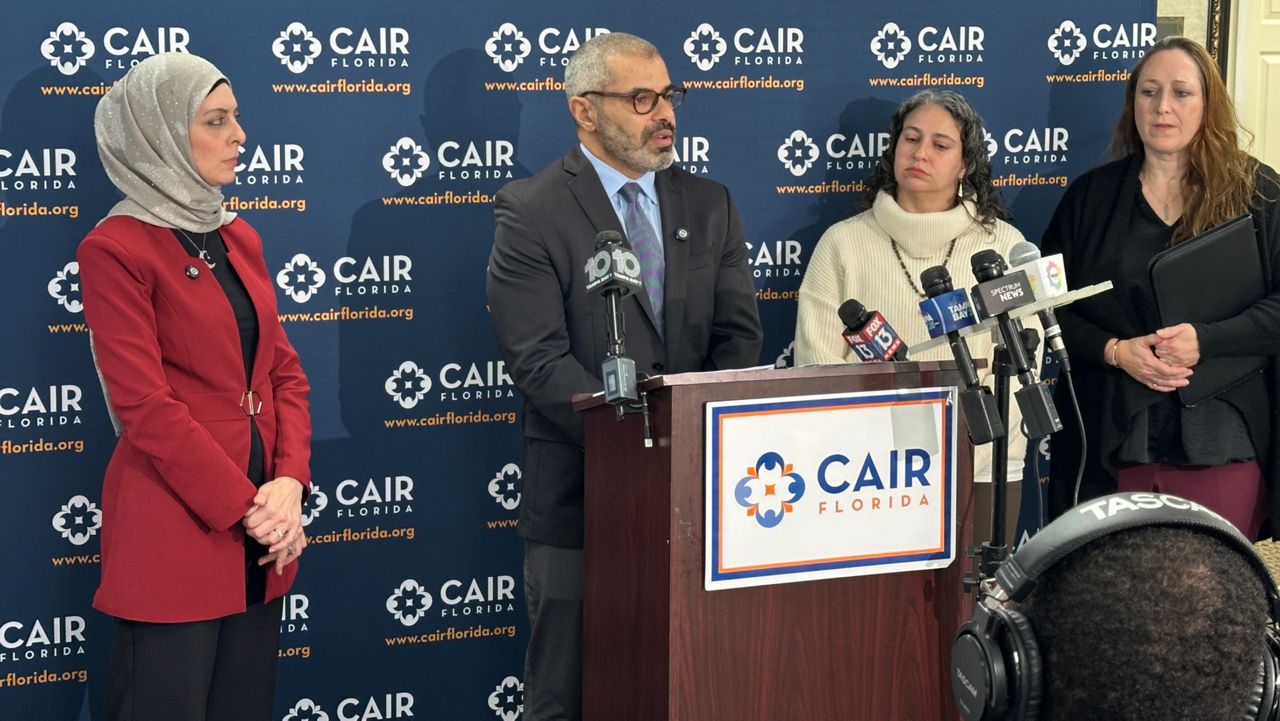
The Council on American-Islamic Relations (CAIR) has initiated legal action against the state of Florida, challenging Governor Ron DeSantis’ recent declaration labeling the organization as a terrorist group. This comes on the heels of the Florida Board of Education’s controversial decision to prohibit undocumented immigrants from enrolling in public universities.
CAIR Challenges Terrorist Group Designation in Florida
CAIR and its Florida chapter are taking a stand against the state’s designation, which was announced by Governor DeSantis. This declaration classifies CAIR among a list of terrorist organizations, a power newly granted to the governor through legislation that took effect this week.
According to CAIR, this categorization is baseless and threatens the organization’s ability to function effectively. Traditionally, terrorist designations fall under federal jurisdiction, but the DeSantis administration has embarked on a state-led initiative to label various groups as terrorists.
This authority stems from House Bill 1471, passed earlier this year, which enables the governor to add specific organizations to a designated list. Currently, over 90 groups are classified in this manner, including various entities ranging from Mexican cartels to Antifa, culminating in the inclusion of CAIR, the nation’s largest Islamic advocacy organization.
The legal ramifications of this designation are significant. Organizations on this list are barred from accessing public funds and contracts, and the consequences extend to students at Florida’s public universities. If these students do not sever ties with the designated groups, they risk expulsion from their institutions.
While state officials argue that these designations are protective measures for Floridians, critics assert that they infringe on free speech rights. Hiba Rahim, president of CAIR Florida, highlighted the chilling effect this could have on student expression, stating, “This system creates a framework where individuals feel compelled to self-censor to avoid potential repercussions on their funding and scholarships.”
The next step in the process requires approval from Florida’s Republican-controlled Cabinet for the designation to take effect fully. Governor DeSantis hinted at the possibility of convening an emergency Cabinet meeting to expedite this action.
Backlash Against Immigrant Education Policy in Florida
In a parallel controversy, immigrant advocacy groups are voicing their dissent against the Florida Board of Education’s recent ruling that bars undocumented students from enrolling in public universities. The Board of Governors determined earlier this week that all 28 public universities in Florida must confirm students’ citizenship status prior to granting admission.
This rule similarly applies to many general education programs across the state. The American Immigration Council estimates that approximately 49,000 undocumented students are currently pursuing higher education in Florida, underscoring the potential impact of this policy shift.
A coalition of corporations and advocacy organizations convened via Zoom on Thursday, denouncing the Board’s decision as both “cruel” and “potentially illegal.” Concerns have also been raised regarding the financial implications and logistical challenges universities will face while implementing this new rule.
According to immigration and labor analysts at the Florida Policy Institute, the anticipated cost of adapting to this restriction could be staggering. “Our analysis shows that this rule could cost the University of Florida System around $50 million in lost tuition and fees from young immigrants,” stated Alexis Tsoukalas, an immigration and labor analyst. Despite these concerns, the Board has yet to release its financial estimates related to the enforcement of this policy.
Governor DeSantis has reiterated his belief that only legally recognized U.S. citizens should be granted access to higher education in the state. At present, this regulation applies solely to state public universities, but similar restrictions are under consideration for institutions within the public university system.
