


Nigeria and China’s Agricultural Partnership Gains Momentum
The ongoing collaboration between Nigeria and China in agricultural science and technology has made significant strides with the recent delivery of advanced cassava farming machinery. This initiative aims to boost cassava production by minimizing the reliance on manual labor while enhancing efficiency across the entire production value chain.
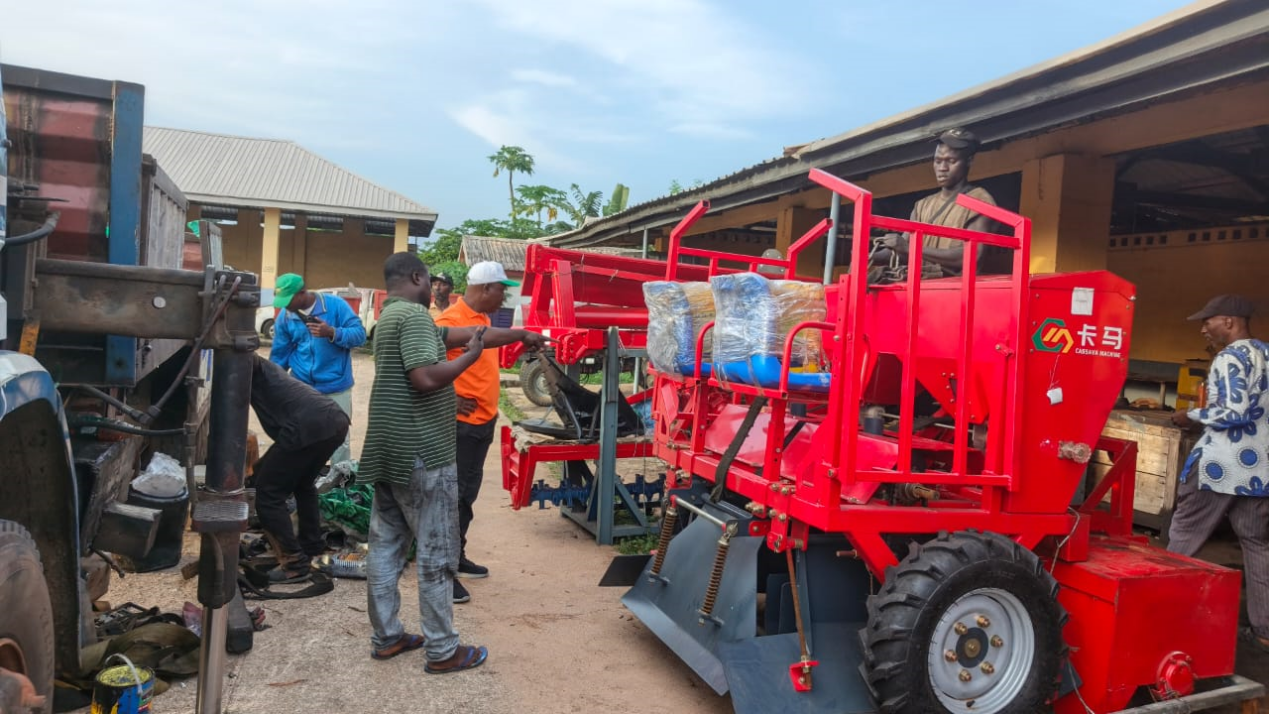
The Chinese Embassy in Abuja announced that the shipment, which arrived on June 17, comprises four specialized sets of equipment tailored to mechanize every phase of cassava cultivation. The machinery includes a deep plow for land preparation, a rotary tiller for soil cultivation, a combination row and cassava planter for optimized planting, and a vibrating chain harvester for efficient harvesting.
This integrated system will enable farmers to complete the entire cassava production cycle using modern technology, significantly shortening production time and reducing labor costs. Additionally, it promises to increase operational efficiency and overall production capacity.
The introduction of this equipment is poised to revolutionize cassava farming practices in Nigeria. By promoting standardized production methods, the initiative is expected to enhance farm productivity, making commercial cassava cultivation more lucrative for farmers.
This effort is part of a broader collaboration between the Chinese Academy of Tropical Agricultural Sciences (CATAS) and the National Root Crops Research Institute, supported by the Hainan International Science and Technology Cooperation Project. Over the years, this partnership has focused on advancing cassava research through improved germplasm development, sustainable agricultural practices, and capacity building for both researchers and farmers.
Furthermore, the institutions are working together to establish a China-Nigeria joint research institute dedicated to cassava. This platform aims to accelerate the development of improved cassava varieties, locally adapted production techniques, and innovative solutions designed to enhance yields and bolster the country’s cassava value chain.
The recent equipment delivery is among the first achievements of the African Cassava Yield Doubling Initiative (ACYDI), which was launched by CATAS in 2023 under the Forum on China-Africa Cooperation (FOCAC) Beijing Action Plan (2025-2027). This initiative is expected to double cassava yields across Africa by integrating improved seed varieties, modern farming techniques, mechanization, farmer training, and technology transfer.
As the world’s leading producer of cassava, Nigeria’s crop is a vital element of its food system and agro-industrial development. However, much of the domestic cassava cultivation continues to rely on traditional farming methods, resulting in lower productivity despite high production volumes. Stakeholders are optimistic that implementing full-cycle mechanized farming systems will help address the productivity gap, reduce post-harvest losses, facilitate large-scale commercial production, and enhance the competitiveness of Nigeria’s cassava industry in both regional and global markets.
