


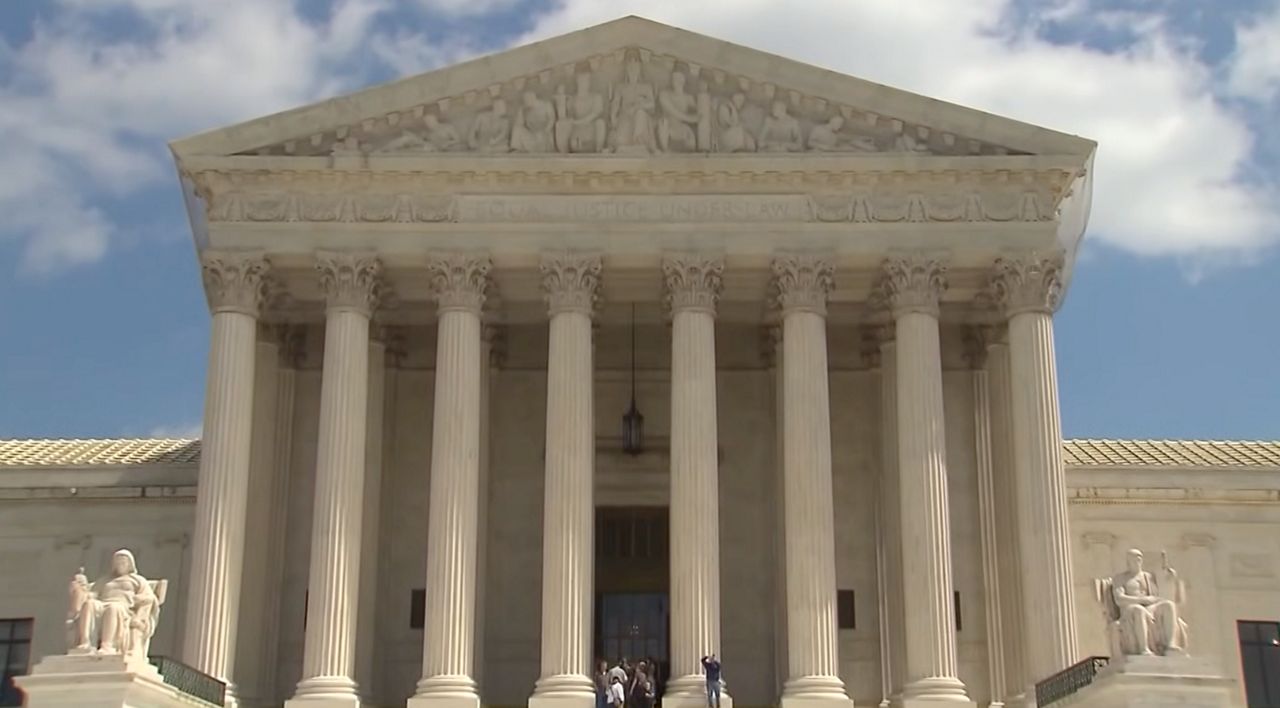
Immigrant Rights Advocates React to Supreme Court Decisions
PORTLAND – Recent U.S. Supreme Court rulings have ignited strong reactions from immigrant rights advocates, who express concern over the implications for immigrants in the country. The ACLU of Maine and the Portland Immigration Advocacy Project have voiced their positions following significant decisions last week, including a ruling that upholds birthright citizenship.
Birthright Citizenship Upheld
On June 30, the Supreme Court delivered a 6-3 decision affirming birthright citizenship, effectively invalidating an executive order from former President Trump aimed at denying citizenship to children born in the United States to undocumented parents. Carol Girvan, legal director for the ACLU of Maine, emphasized the ruling’s significance, noting that it reaffirms a longstanding principle that almost all babies born on U.S. soil are citizens, barring very few exceptions.
Criticism of Temporary Protected Status Rulings
In the same week, two other rulings drew ire from advocates. On June 25, the court decided to end Temporary Protected Status (TPS) for migrants from Haiti and Syria, impacting thousands. Sue Roche, executive director of the Portland Immigration Advocacy Project, cautioned that while the birthright citizenship ruling is a positive development for vulnerable children, many still face significant risks, including family separation due to the court’s TPS ruling and the ongoing mass deportation efforts by the government.
National Reactions and Implications
The ACLU characterized the birthright citizenship decision as a “huge victory,” with National Legal Director Cecilia Wang arguing the case before the Supreme Court. Conversely, James Percival, general counsel for the U.S. Department of Homeland Security, praised the ruling on TPS for Haitians and Syrians, viewing it as a step towards upholding the rule of law. He cited the necessity of maintaining order within the nation’s immigration framework.
Consequences for Vulnerable Populations
Roche highlighted that approximately 1.3 million individuals currently reside under sheltering conditions in the U.S., with “hundreds” of them located in Maine. She warned that the Supreme Court’s decisions could lead to significant destabilization for these communities. The implications are vast, as the administration gains increased authority to terminate TPS, potentially tearing families apart and disrupting local businesses reliant on immigrant labor.
Asylum Policy and Its Impact
Also on June 25, the Supreme Court voted 6-3 to uphold Trump’s administration policy that restricts the number of immigrants allowed to apply for asylum each day. This decision, according to Percival, is a critical measure for bolstering the security of the U.S. southern border. However, Girvan condemned this ruling, asserting that it represents a serious attack on a long-standing asylum system. She stressed that such policies unjustly limit the rights of individuals seeking refuge.
Risks to Asylum Seekers
Roche elaborated on the risks faced by migrants coming from Mexico, warning that those turned away at ports of entry are increasingly vulnerable to violence, including assault and trafficking. This adds another layer of challenges for families and individuals seeking safety and stability in the U.S.
The Path Forward
While Girvan expressed relief over the birthright citizenship decision, she underscored that its close nature signals ongoing challenges for immigrant rights. Advocates agree that vigilance and continued advocacy are essential as the landscape of immigration policy shifts amidst judicial rulings.
