


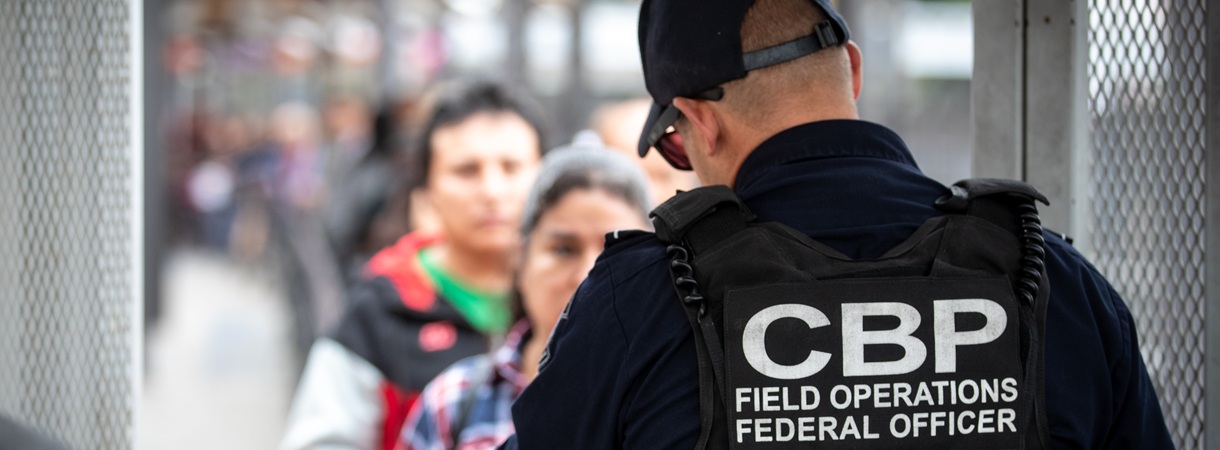
After years of legal battles, the U.S. Supreme Court rendered a 6-3 decision on June 25 in favor of the government in the case of Marin v. Al Otro Lado. This lawsuit, filed in 2017, challenges the policy implemented during the Trump administration that denied access to asylum seekers at southern border entry points.
The Situation Prior to the Court’s Ruling
According to the Immigration and Nationality Act (INA), government officials are mandated to screen specific noncitizens who are “arriving in the United States.” Legally, those who are “physically present” can apply for asylum. Historically, this entitlement meant that individuals fearing persecution had the right to reach a port of entry in order to initiate their asylum applications. The 1980 Refugee Act supports this principle, establishing that people fleeing danger should be able to seek asylum and cannot be returned to countries where they may face harm.
Evolution of the Turnback Policy
The current turnback policy started in 2016 when an influx of Haitian asylum seekers at California’s San Ysidro Port of Entry prompted the Obama administration to implement “metering.” This practice involved sending asylum seekers back to Mexico instead of processing them lawfully. This policy was formalized in 2018 under the Trump administration, which directed Customs and Border Protection (CBP) officers to restrict entry to ports of entry, effectively preventing individuals from stepping onto U.S. soil to begin their asylum claims. Consequently, many asylum seekers were left stranded in precarious conditions in Mexican border towns, often facing violence and extortion while awaiting their chance to apply for asylum. The Biden administration attempted to reverse the meter policy in 2021 but introduced new measures, including the now-defunct CBP One application.
The Allegations in the Lawsuit
Since 2017, the nonprofit organization Al Otro Lado (AOL) has been at the forefront of this lawsuit, with support from various legal organizations. The case represents 13 individuals who sought asylum processing but were denied by CBP officers without adequate screening or evaluation. The plaintiffs argued that the turnback policy violates the Administrative Procedures Act (APA) by unlawfully delaying or withholding necessary screening and processing of asylum seekers arriving at ports of entry.
Lower Court Decisions
The district court and the Ninth Circuit determined that noncitizens halted by CBP officers had effectively “arrived” in the United States and were hence eligible to apply for asylum. They concluded that by refusing to process these individuals, the Department of Homeland Security (DHS) unlawfully withheld its obligations as mandated by law. The Ninth Circuit’s ruling emphasized that the government’s actions amounted to a complete negation of its legal responsibilities, rather than merely a delay, resulting in a declaratory judgment against the return policy for current and future asylum seekers.
Supreme Court Review
Justice Alito authored the Supreme Court’s majority opinion, which reversed the lower court’s ruling and sided against asylum seekers and AOL. The decision hinged on a narrow interpretation of the term “to arrive,” asserting that a person is only deemed to have arrived in the U.S. after physically entering the country. The court argued that the inspection and processing requirements only come into play once an individual is on U.S. soil. They maintained that Congress’s use of the phrase “arriving in the United States” meant that individuals must not only approach the border but also physically enter it to access asylum. The court dismissed concerns that such a requirement renders the other parts of the statute, which also allow for claims from those “physically present,” redundant.
Opposing Views
Justice Sotomayor, joined by Justices Kagan and Jackson, articulated a dissenting opinion emphasizing the need to consider the broader context of immigration law. The dissent criticized the majority for overlooking established principles that have historically allowed individuals “in the immediate vicinity” to seek entry. Justice Sotomayor insisted that such a restrictive interpretation of the term “arrive” creates dangerous incentives for people to enter the country illegally. The dissent raised historical comparisons to U.S. obligations stemming from previous refugee crises, warning of the potential human fallout from the ruling and highlighting the devastating consequences it could have on vulnerable populations seeking safety.
Future Implications
Although the repatriation policy has not been active for years, the current administration has employed other methods to inhibit asylum seekers from entering the U.S. The Supreme Court’s ruling does leave space for future legal challenges regarding policies that could obstruct asylum seekers. However, critics argue that these possibilities may allow the executive branch to sidestep legal obligations imposed by Congress, raising concerns about the ongoing treatment of individuals seeking refuge.
