


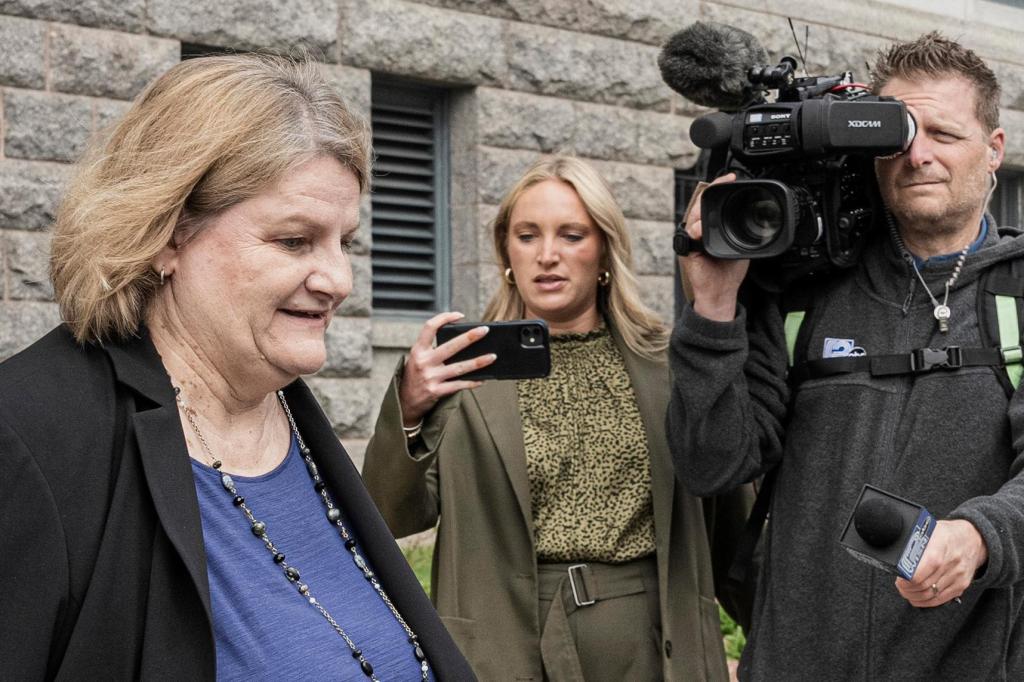
Written by Scott Bauer
Hannah Dugan, a former Wisconsin judge convicted of a felony for assisting Mexican immigrants in evading federal agents, is set to be sentenced in federal court on Wednesday. Dugan’s case became emblematic of the intense immigration enforcement policies under President Donald Trump.
At 67 years old, Dugan faces a potential sentence of up to five years in prison, following her December 19 conviction. Shortly after the jury’s decision, she resigned from her position as Milwaukee County circuit judge amid threats of impeachment from Republican legislators. Dugan had served on the bench for nine years.
Trump Administration’s Target on Dugan
The Trump administration aggressively pursued Dugan after Immigration and Customs Enforcement (ICE) officials initiated a strategy to detain immigrants attending court proceedings nationwide. Critics from the Republican party labeled her as an activist judge, while her defense argued that the administration was making an example of her to promote compliance with its strict immigration agenda.
Tom Tiffany, a Republican representative and staunch Trump supporter campaigning for the governorship in Wisconsin, called for Dugan to be imprisoned in a recent social media post, emphasizing the political dimensions of the case.
Dugan’s attorney refrained from commenting prior to the sentencing. Although she did not take the stand during her trial, her legal team indicated that she intends to address the court on Wednesday, marking her first public statement on the matter in over a year.
Prosecution Advocates for Severe Sentencing
Dugan’s defense team contended that her judicial role granted her immunity from prosecution. However, U.S. District Judge Lynn Adelman dismissed her motion to overturn the obstruction conviction during the upcoming sentencing hearing.
Prosecutors have asserted in a recent sentencing memo that Dugan breached her judicial oath, jeopardizing both public safety and law enforcement initiatives. Assistant U.S. Attorney Richard Frohling emphasized the gravity of Dugan’s actions, stating, “Judges are given tremendous discretion, but there are lines they must not cross. The defendant crossed that line.”
Dugan’s legal representatives countered that she had already faced significant repercussions, including her resignation and threats to her safety. They urged that any sentencing should not include additional jail time beyond her time already spent in federal custody.
Federal sentencing guidelines suggest a sentence between 15 to 21 months in prison, although judges have the discretion to impose different sentences. While prosecutors noted that the average sentence for business obstruction cases is approximately 16 months, they did not recommend a specific penalty.
Frohling highlighted the seriousness of the offense, asserting, “This is a serious crime and deserves a suitably severe sentence.” Regardless of the outcome, Dugan’s attorney confirmed her plans to appeal the conviction following the sentencing.
A Landmark Trial in Wisconsin
Dugan’s trial is notable as the first instance of a state judge in Wisconsin facing charges related to interference with immigration enforcement. Jurors found her guilty of felony obstruction but acquitted her of a related misdemeanor charge for concealing identity to avoid arrest.
The case traces back to April 18, 2025, when immigration officials arrived at the Milwaukee County Courthouse to apprehend Eduardo Flores-Ruiz, who was scheduled for a state assault hearing before Dugan. Upon encountering the investigators, Dugan allegedly directed them to the presiding judge’s office, challenging the validity of the administrative warrant against Flores-Ruiz.
After the officials left, Dugan reportedly assisted Flores-Ruiz and his attorney in exiting through a private door, allowing him to evade immediate arrest. Investigators subsequently tracked Flores-Ruiz down and arrested him following a foot pursuit. A week later, Dugan was arrested in court, visibly handcuffed.
Flores-Ruiz was deported in November, concluding a case that has stirred significant political and legal discussions surrounding the intersection of judicial discretion and immigration law.
