


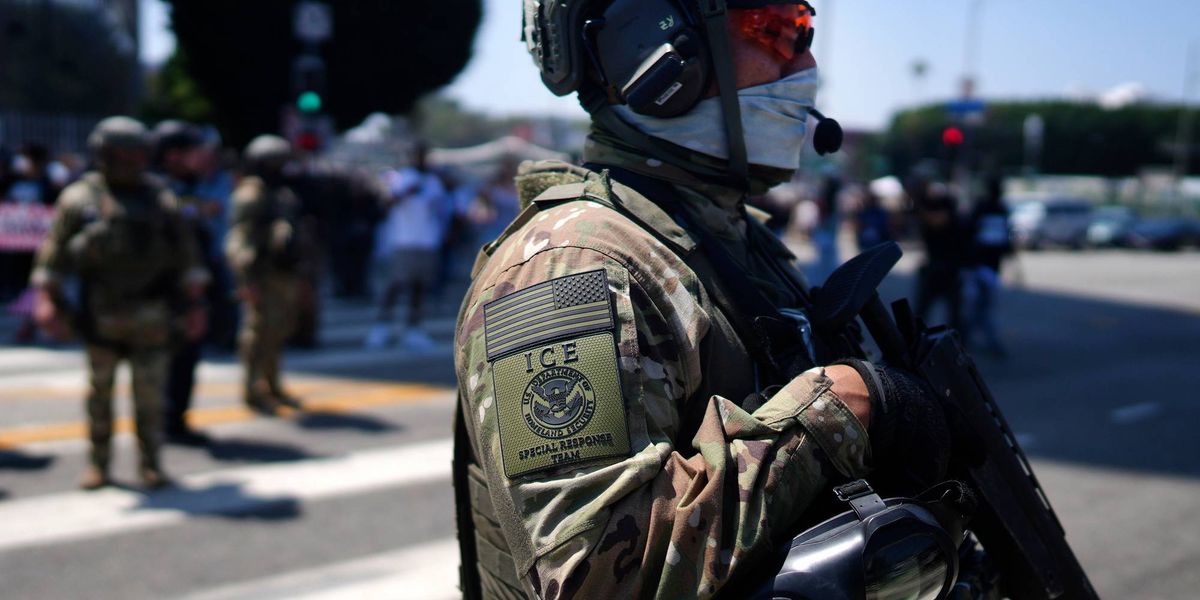
WASHINGTON (AP) – Following the tragic shootings of two Americans in Minneapolis earlier this year, former Homeland Security Secretary Kristi Noem asserted that the Department would “quickly acquire and deploy” body cameras for employees nationwide. Yet, nearly six months later, that commitment remains unfulfilled, coinciding with another conflict-related shooting that has drawn scrutiny towards the department.
The Department of Homeland Security (DHS) reported that the Immigration and Customs Enforcement (ICE) officers involved in the shooting death of Lorenzo Salgado Araujo—a Mexican national who had lived in the U.S. for over 35 years—were not equipped with body cameras. Despite DHS’s claim that the officers responded to Araujo ramming the ICE vehicle in pursuit, witness accounts contradict this narrative. The absence of body camera footage raises serious questions about accountability in such incidents.
As arrests continue to rise, the scrutiny surrounding ICE has intensified, particularly as DHS receives billions of dollars in funding sanctioned by Congress. Some of these funds were designated specifically for equipping police officers with body cameras. Representative Sylvia Garcia, a Democrat from Houston, emphasized this point at a recent press conference, highlighting that, despite being allocated $20 million for body cameras, ICE agents in Houston lack necessary equipment.
Body Cameras: A Critical Concern in Trump’s Second Term
Just days after the death of Alex Preti during an ICE-related protest in Minneapolis, Noem announced a nationwide initiative to issue body-worn cameras to all Homeland Security agents. She envisioned this as the first step towards equipping police officers across the country as funding becomes available.
Noem asserted that DHS would “rapidly acquire body cameras and deploy them to DHS law enforcement agencies across the country.” Recently, the DHS announced that body cameras have been installed in over half of ICE’s field offices, with plans to equip the remaining locations within the next two months. Garcia expressed concern during a phone call with Acting ICE Director David Venturera about the insufficiency of body camera distribution, noting that he revealed less than a third of police officers nationwide are currently issued the devices.
Michelle Gross, president of Communities United Against Police Brutality in Minnesota, stated that ICE should suspend enforcement operations until all officers are equipped with body cameras. She argues, “If they’re going to be running around with guns and stopping people, they better have body cameras,” highlighting the lack of accountability for an agency receiving significant taxpayer funds.
Body Camera Policies Following Mass Shootings
DHS confirmed that four Border Patrol agents were equipped with body cameras at the time of the Preti shooting. This footage, along with other sources, enabled Customs and Border Protection investigators to verify that several officers discharged their weapons during the incident. However, the department has not disclosed whether any ICE officers were wearing cameras during the killing of Renee Good, a 37-year-old mother, earlier in January. Witness videos from both incidents have sparked further public outrage, intensifying calls for transparency.
Todd Lyons, a former acting director of ICE, highlighted in Congressional testimony following the Minneapolis incident that body camera footage would eventually be released, but it remains undisclosed. He asserted his commitment to transparency, stating, “I fully support the implementation of body cameras across the spectrum in all of our law enforcement operations.” However, when about 2,000 ICE agents were stationed in Minnesota, officials testified that deportation officers were not equipped with body cameras, informing that full equipment and training for all officers would take approximately six months.
DHS Blames Democrats for Equipment Delays Amid Political Tensions
In their defense, Homeland Security officials have pointed fingers at Democrats for the slow distribution of body cameras to police officers. They indicated that the officers involved in the Houston incident were not outfitted with body cameras due to consecutive Democratic administrations leading to shutdowns sparked by opposition to President Trump’s immigration policies.
Despite these accusations, there appears to be bipartisan consensus regarding the necessity of body cameras for police involved in immigration operations following the Preti and Good shootings. In April, Congress allotted $20 million to DHS for the purpose of “procurement, deployment, and operation of body-worn cameras” for immigration officials. Garcia dismissed the claim that Democrats are to blame for the lack of equipment, calling it “ridiculous” and stressing that the promise made by DHS remains unmet.
