


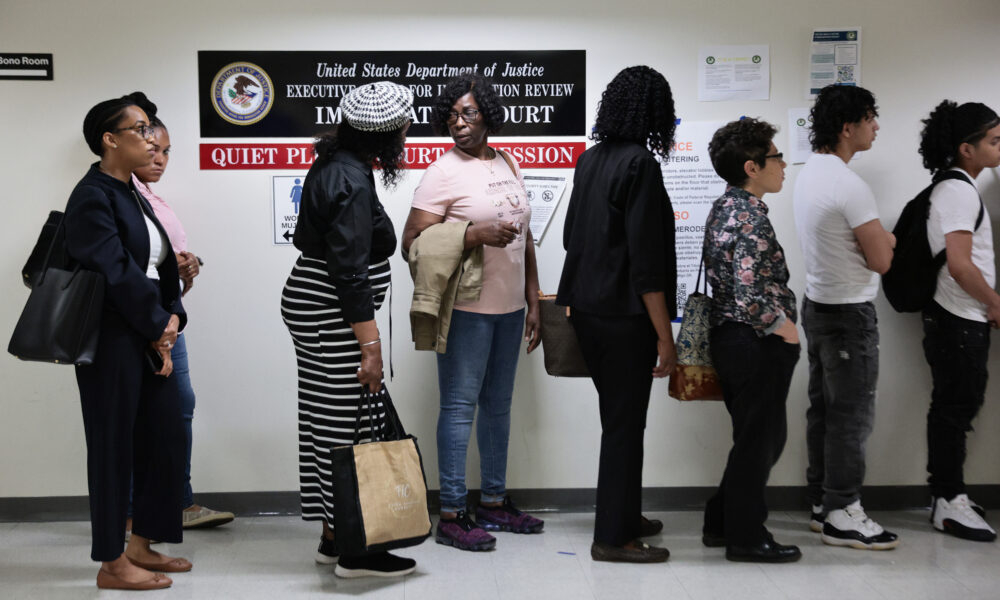
Immigration Judges Implement Mass Deportation Tactics
The Trump administration has introduced a new strategy that allows immigration judges to expedite the deportation of multiple immigrants in a single session. This approach, referred to as megamaster hearings, enables judges to reschedule numerous cases from months away to just days or weeks later. During a single session, one judge can handle over 100 cases.
Legal experts across the nation are raising concerns that many immigrants are not receiving timely notifications about changes to their hearing dates. As a result, judges frequently issue deportation orders against those who do not appear in court. Immigration court analysts Joseph Gunther and Brandon Murrow reported that approximately 40% of individuals scheduled for megamaster hearings in late May failed to show up. On two separate occasions, judges ordered all absentees deported.
Research indicates that courts rescheduled hearings with short notice, typically between nine and 35 days before the megamaster date. Gracie Willis, a rapid response coordinating attorney for the National Immigration Project, emphasized that inadequate notice fails to afford individuals a fair opportunity to attend their hearings.
An anonymous spokesperson for the Executive Office for Immigration Review (EOIR) asserted that the agency prioritizes the expeditious handling of cases, particularly those involving unaccompanied minors. The spokesperson noted that unnecessary delays can impede both immigrants with legitimate claims and American citizens who wish to see swift deportations for those without valid claims.
The term “megamaster” denotes the sheer volume of cases being scheduled simultaneously, while “master” refers to the initial check-in meetings that typically precede individual hearings. These master calendar hearings are meant for administrative purposes, while detailed proceedings that address the specifics of each case are generally reserved for individual court dates.
Vanessa Dojaquez Torres, a practice and policy advisor for the American Immigration Lawyers Association, pointed out that attorneys nationwide are struggling to reopen cases for immigrants who were unaware of their scheduled hearings until judges ordered their deportations in absentia. “It is physically impossible for a judge to manage 100 cases in one sitting while ensuring each case receives the due process it requires,” she stated.
The spread of megamaster hearings has been evident across several states, including California, Georgia, Illinois, and New York, with reports indicating their occurrence as far away as North Carolina and Tennessee. The trend is becoming increasingly prevalent in U.S. immigration courts, as demonstrated by the San Diego Immigration Court, which held its first megamaster hearing on June 12, resulting in the deportation of 50 individuals for failing to appear.
During these group hearings, some individuals, such as those who speak languages other than Spanish or English, may face significant communication barriers, exacerbating the risk of misunderstandings and wrongful deportations. Dojaquez Torres noted that when cases are handled en masse, the likelihood of errors increases, undermining the principles of due process that should guide immigration proceedings.
As the megamaster hearing trend spreads, the challenges within immigration courts continue to mount. With heavy caseloads and often inadequate courtroom facilities, many individuals waiting to present their cases face the possibility of being deported simply for not being in the courtroom at the time their names are called.
In San Diego, security protocols restrict the number of individuals allowed in the courtroom, further complicating matters for aspiring immigrants and their legal counsel. A recent analysis indicated that in Chicago’s immigration court, judges frequently handle an average of 122 cases at once, prompting critics to label the court as a “default removal order factory.”
Amid these challenges, it is clear that the current system’s limitations are adding strain on both immigrants and legal representatives alike, often leaving vulnerable individuals to navigate a complex and rapidly shifting legal landscape without the necessary support and resources.
