


Investigation into License Plate Reader Usage in Beavercreek
City officials in Beavercreek are scrutinizing the implementation of automatic license plate readers (ALPRs) following revelations about the extensive use of Flock cameras by local police and other agencies. A recent inquiry by the Dayton Daily News uncovered alarming data showing that these systems were accessed hundreds of times for unclear reasons, highlighting potential issues regarding misuse and privacy.
Extensive Data Access Raises Concerns
Data obtained by the Dayton Daily News indicates that in May alone, Beavercreek’s camera system was accessed over 622,000 times by government agencies nationwide. This spike in usage included more than 33,000 incidents categorized as related to traffic violations, with Beavercreek Police involved in over 50 specific accesses. Alarmingly, hundreds of these accesses were specifically labeled as related to immigration.
Official Statements Clarify Intended Use
According to Beavercreek’s official website, the Flock camera system was designed to assist in post-event investigations rather than for continuous traffic enforcement, such as monitoring for speeding or red-light violations. In light of recent scrutiny, city officials updated their website to clarify that the cameras are not intended for real-time surveillance nor can they serve as the sole basis for issuing traffic citations.
Law Enforcement Perspectives
Beavercreek Police Lieutenant Scott Molnar emphasized that the Flock system is strictly an investigative tool, asserting that officers do not monitor the cameras in real-time. He pointed out that several courts have ruled the use of automatic cameras for scanning plates in public spaces compliant with the Fourth Amendment.
Moreover, Beavercreek Mayor Don Adams acknowledged the potential benefits of Flock cameras in law enforcement, citing a recent murder case where the technology proved crucial. However, he expressed surprise upon learning about the system’s use for immigration-related purposes, stating, “When we installed the flock cameras, there was nothing immigration-related going on.”
Responses to Broader Immigration Issues
This scrutiny of license plate reader usage comes amid wider concerns over immigration enforcement practices in various cities. For example, the City of Dayton has halted its use of fixed-site ALPRs after uncovering that third-party agencies were using this data for immigration enforcement, against city policies. Other agencies, such as Kettering Metroparks, have revised their ALPR policies to ensure compliance.
Usage and Installation Details of Flock Cameras
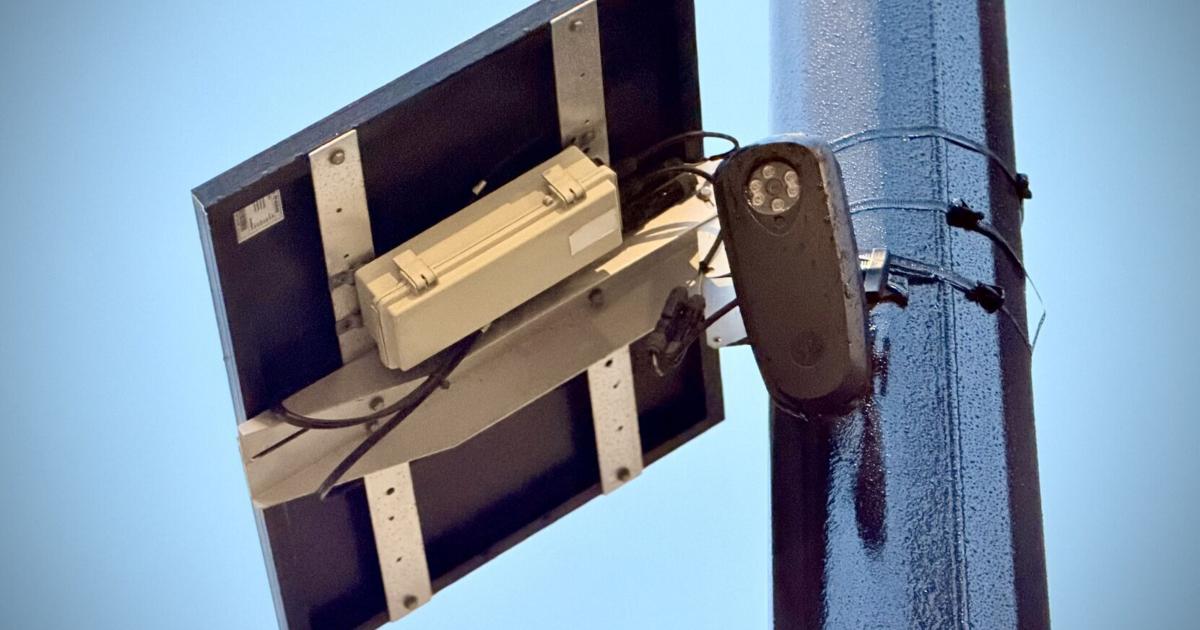
As of early 2025, Beavercreek has 21 Flock cameras strategically positioned across the city. These cameras were initially installed in 2022 for a total cost of $11,000, with additional funding allocated for maintenance and future installations. Police Captain Molnar explained the cameras serve as an extension of officers’ observational capabilities, aiding in investigations of diverse crimes ranging from theft to more severe offenses.
Future of the Flock System in Beavercreek
Despite the growing usage of the Flock system, Beavercreek Police Chief Chad Lindsey assured that no citations would be issued based solely on camera data. Any traffic violations identified will be thoroughly investigated with additional evidence beyond the Flock camera records. While a portion of captured data is not retained for more than 30 days, this retention policy is dictated by Flock and remains a crucial point of contention as agencies review their usage policies.
