


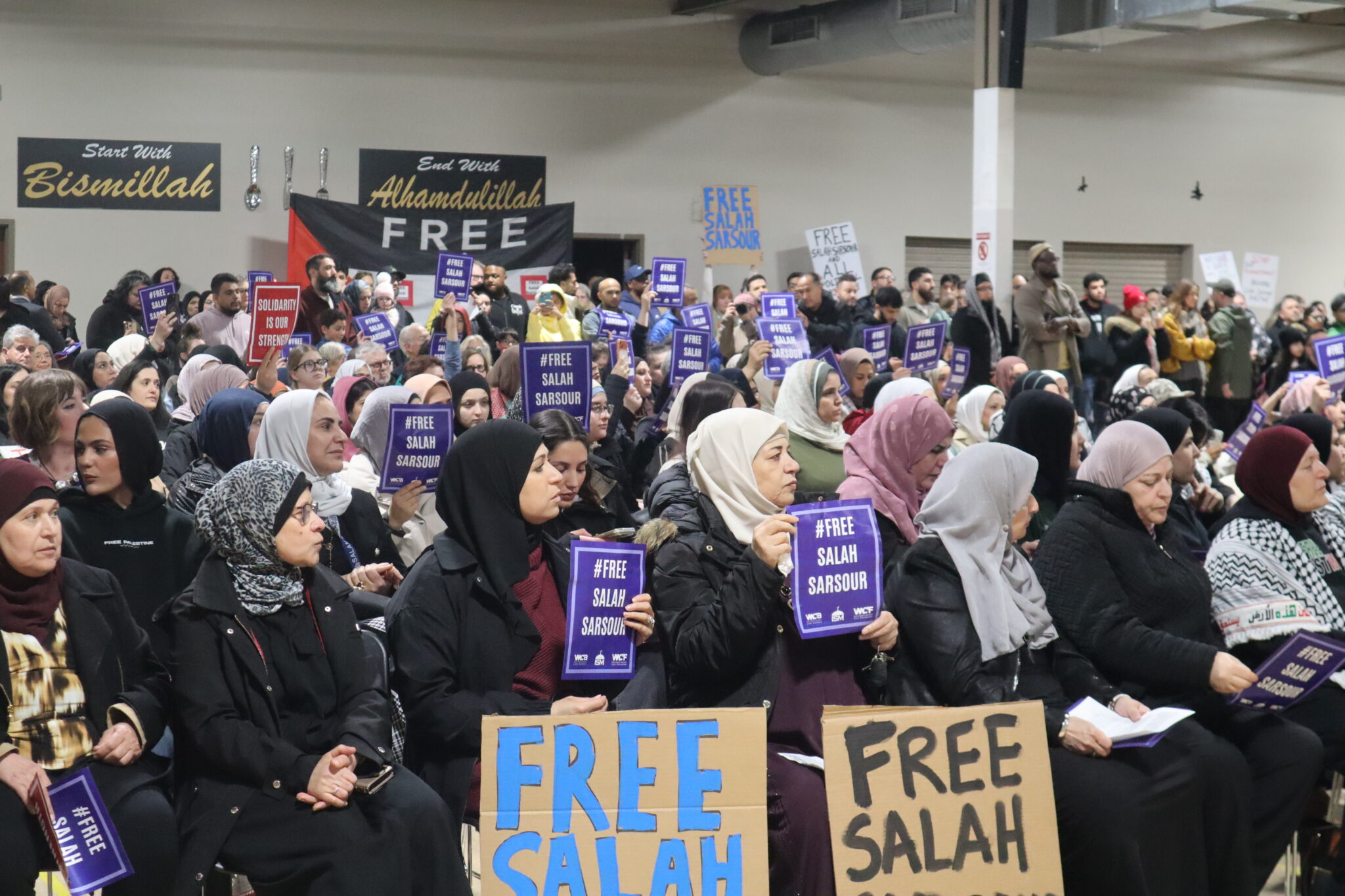
Arguments Presented in Salah Sarsour’s Deportation Hearing
A federal immigration judge convened a deportation hearing on Wednesday for Salah Sarsour, the president of the Islamic Society of Milwaukee. Earlier this year, Sarsour was apprehended by Immigration and Customs Enforcement (ICE) agents and subsequently detained in a facility in Indiana for several months. He was released in June following a federal court ruling that deemed his arrest a form of retaliation under the First Amendment, stemming from his advocacy for Palestinian rights and his criticism of the Israeli government.
Deportation Hearing Adjourned for Further Review
The hearing, expected to last all day, has been adjourned until next week. The session will determine whether Sarsour’s deportation order will be upheld. Having resided in the United States for decades and maintaining a clean criminal record, Sarsour is regarded as a community leader. He became a legal permanent resident in 1998, and his naturalization application was approved in 2002 during the presidency of George W. Bush.
Accusations from the Department of Homeland Security
Upon his arrest, the Department of Homeland Security (DHS) accused Sarsour of misrepresenting facts on his 1993 green card application, alleging that he had been convicted by an Israeli military court for throwing a Molotov cocktail at an Israeli officer’s home. Additional accusations included attempts to illegally possess weapons and ammunition. Sarsour’s family asserts that he was tortured into confessing during his detention in Israel, with prosecutors referencing Sarsour’s legal troubles stemming from 1988 to 1995.
Testimonies Highlighting Conditions of Detention
During the hearing, Sarsour’s defense team called his brother, Mohammad, who is a U.S. citizen and lives in Oak Creek. Mohammad testified that he assisted in hiring a prominent lawyer for his brother in the West Bank and denied having ever seen Sarsour supporting any terrorist activities. He noted the physical deterioration Sarsour exhibited during their encounters, pointing to his weight loss and overall poor health as signs of inadequate care while in custody.
Expert Insights on Interrogation Practices
The defense also called upon Alan Hirsch, an expert in false confessions and director of the Justice and Legal Studies Program at Williams College. Throughout his testimony, Hirsch faced scrutiny from prosecutors questioning his qualifications regarding Israeli interrogation methods. He stated that aggressive interrogation tactics were employed while Sarsour was in custody and emphasized that there was no evidence connecting Sarsour’s confession to corroborated facts. Notably, he pointed out that Sarsour was merely a juvenile at the time of his initial detention.
Human Rights Violations in Israeli Military Courts
The defense presented Salibashi, an Israeli lawyer and human rights investigator, who testified remotely about the treatment of Palestinian detainees. Bashi described the circumstances surrounding Sarsour’s arrest during the first intifada, citing the wide-ranging military control exercised by Israeli authorities in the West Bank. She argued that charges faced by Palestinians are often vague and can encompass benign activities, which, during heightened conflict periods, can result in arbitrary arrests.
Questionable Legal Processes and Torture Claims
Bashi asserted that the Israeli military employs euphemisms for torture, such as “moderate physical pressure,” while actual tactics include physical abuse, sleep deprivation, and psychological manipulation. Reflecting on the high conviction rates in Israeli military courts, which exceed 90 percent, she delineated how evidence and legal processes often lack basic due process standards. Despite being unfamiliar with Sarsour personally, Bashi acknowledged that the experiences described by him regarding torture are prevalent among Palestinian detainees.
