


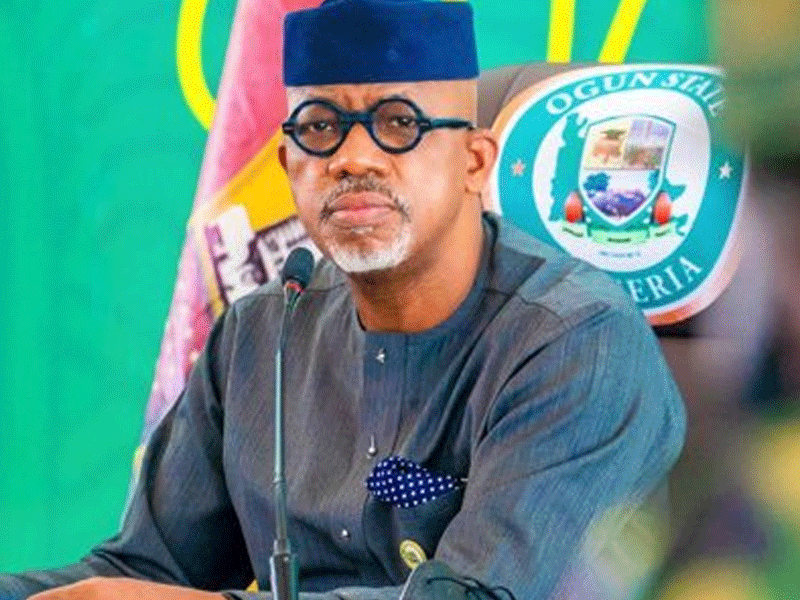
APC Endorses Governor Abiodun for Ogun East Senate Candidacy
The All Progressives Congress (APC) has officially endorsed Governor Dapo Abiodun as its consensus candidate for the Ogun East Senate seat, an initiative aimed at fostering unity and stability within the party. This consensus approach has garnered considerable backing from party members who value continuity, infrastructure development, and cohesion. However, some critics have launched smear campaigns against the governor, suggesting that the process marginalizes other capable contenders and stifles essential debates typically associated with primaries.
These negative campaigns appear to be an effort to sway public opinion against Governor Abiodun, despite the broad support he enjoys among stakeholders. They underappreciate the fact that attempts to manipulate the narrative through media can be ineffective against an electorate that prioritizes proven leadership. The prevailing sentiment in communities such as Ijebu and Remo highlights this reality, with local gatherings and market associations advocating for Abiodun’s continued representation in the Senate.
Voter Preferences Favor Abiodun’s Governance Approach
In comparing the current governor with former Senator Gbenga Daniel (OGD), analysts identify significant differences in governance style, core priorities, and track records. Five key factors are believed to drive voter support for Abiodun: the integration and continuity of infrastructure, economic transformation initiatives, alignment with federal governmental policies, industrial development, and strong grassroots engagement. Supporters cite the rapid expansion of infrastructure, including the Gateway International Airport and an extensive road network, as crucial achievements that differentiate Abiodun’s administration from his predecessor.
The Abiodun administration has actively engaged in public-private partnerships (PPPs) to bridge infrastructure gaps while alleviating financial pressure on state resources. This strategy has attracted over $2 billion in investments for projects such as the airport, the Sagami Interchange Industrial Hub, and the Orokola Free Trade Zone. Observers regard this PPP model as a more sustainable approach to ensuring long-term growth compared to a debt-financed model that has left some legacy projects uncompleted.
Leveraging Ogun’s Strategic Location for Economic Growth
In the South West region, the focus is on capitalizing on Ogun’s proximity to Lagos. The administration is diligently expanding industrial corridors between the two states to create a more integrated economic landscape, thereby facilitating job creation and regional development. The presence of major projects—including the Dangote Refinery, Lekki Deep Sea Port, and the Lagos Blue Line Railway—within a 70km radius underscores Ogun’s evolving role as a vital industrial hub. Notable infrastructure undertakings like the Ijebu-Ode-Epe Expressway and Gateway International Airport serve as tangible testaments to the commitment towards enhancing connectivity and fostering growth.
Moreover, proponents of the current administration often highlight its structured, process-oriented governance model as a sharp contrast to the grassroots-focused, populist style associated with Senator Daniel’s era. Advocates for the technocratic approach argue that it yields consistent governance and aligns more effectively with contemporary fiscal management practices. Whereas OGD’s term was marked by philanthropic city hall initiatives and reactive policies, Abiodun’s governance is characterized by comprehensive audits, project concessions, and a dramatic increase in Internally Generated Revenue, which surged from N50 billion in 2019 to over N130 billion projected for 2025.
Political Unity Critical for Developmental Continuity
The rationale behind the consensus candidacy links directly to sustained political stability and the ongoing developmental trajectory of the state. Party leaders aim to preserve APC unity and ensure that projects initiated during their leadership are completed without disruption. Strategists warn that fragmented primaries could potentially revive old rivalries and empower opposition forces. Discussions surrounding Governor Abiodun’s succession plan suggest a forward-looking approach, with an eye toward transitioning power to Ogun West while retaining representation in Ogun East.
By effectively addressing the demand for power shifts and harmonizing the interests of various regions, Abiodun aims to create an environment conducive to political consensus. Whether this unity translates into electoral success will depend on whether voters prioritize the continuity of development projects over nostalgic sentiments from OGD’s tenure.
Broad Support for APC’s Consensus Strategy
In Nigerian politics, consensus agreements often serve to streamline candidate selection, enabling parties to avoid primaries by selecting a mutually agreed-upon candidate. When this strategy aligns with a widely accepted candidate, it can strengthen party solidarity and enhance electoral prospects. Successful consensus formation requires collaboration among key stakeholders—including power brokers, party elders, and grassroots organizations—to coalesce support around popular candidates, thus minimizing internal tensions and campaign costs.
Governor Abiodun and his designated successor, Senator Solomon Olamilekan Adeola, have garnered significant endorsement across the state. Their joint appeal reinforces the narrative of unity within the party, presenting candidates as the most viable pathway to electoral success. This broad backing not only complicates opposition challenges but also underscores the APC’s commitment to collective goals over individual ambition.
The unanimous endorsement of Governor Abiodun as the consensus candidate for the 2027 Senate elections was publicly announced at a rally held at the Adeola Odutola Hall in Ijebu Ode. The event showcased a united front, with participation from a diverse coalition of party leaders and grassroots figures, emphasizing the widespread support for Abiodun’s anticipated senatorial bid. Notable attendees included former senators, local government officials, and grassroots campaign leaders, solidifying his position as a candidate with broad appeal and electoral potential.
