


Protest March Highlights Concerns Over Immigration Detention Centers
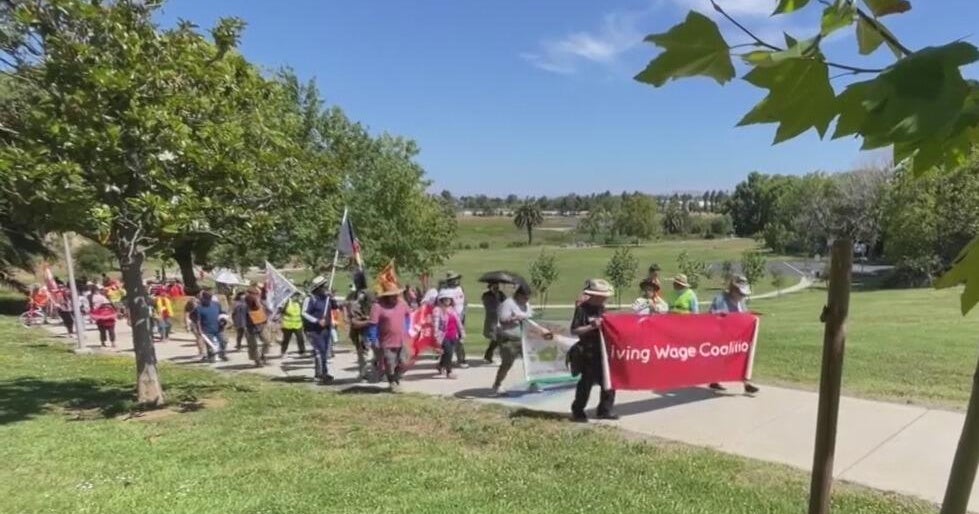
On Sunday, activists embarked on the second day of a three-day march to protest the presence of U.S. Immigration and Customs Enforcement (ICE) in the Bay Area. This year’s event, known as Caminata, spans 50 miles from Napa’s famed wine region to the proposed site of an ICE detention center in Dublin.
Participants Reflect on the March’s Significance
“This was the year we had to do it,” said marcher Aldo Solano. He emphasized the broader implications of the march, stating, “We’re witnessing significant events across the country, and it’s crucial for us to engage, even if it means walking 50 miles.”
Physical Challenges and Motivation
Although Solano had heard of the Caminata, he found the physical demands of the march exceeded his expectations during his first break. “I thought it would be a brisk walk, but it’s physically taxing. You feel it in the balls of your toes,” he explained. “However, the ideals driving us forward and the music along the way keep us motivated.”
Escalating Tensions in Immigration Policy
This annual event has its roots in the Biden administration’s push for a pathway to citizenship for immigrants. Organizer Rene Saucedo noted that tensions have intensified significantly due to the previous administration’s aggressive deportation policies. “We’re marching to emphasize the urgency of this issue,” she stated, underscoring the community’s concerns about a new immigration detention center in Dublin and nearby Gilroy.
Community Support as a Central Theme
As participants passed through Vallejo, organizer Danny Zelaya highlighted the march’s broader message. “The community’s support is the most important thing,” he remarked. “It’s vital for people to know we stand with them and that we are advocating for immigrant rights.”
Interfaith Participation and Broader Impact
The march was organized by the Northern California Coalition for Fair Immigration Reform, which comprises over 17 immigrant rights and faith-based organizations. Pastor Chris Fortin, a Buddhist monk from Sebastopol, joined the trek as part of an interfaith alliance. She expressed faith in the potential impact of such protests, saying, “While it may not immediately change minds, it operates on a level that fosters good amidst troubling circumstances. I believe it will effect change in ways we may not yet understand.”
Personal Stories of Advocacy
The march commenced in Solano’s hometown of Napa, a region heavily reliant on migrant labor. He expressed concerns about the treatment of these essential workers, stating, “Immigrant labor is often utilized when convenient and sidelined when not. It feels like a disposable workforce. As the child of immigrants, I’m here to advocate for our rightful place in this community.”
The marchers crossed the Carquinez Bridge into Contra Costa County, continuing their journey toward Dublin, underscoring the urgent need for reform in immigration policies.
