


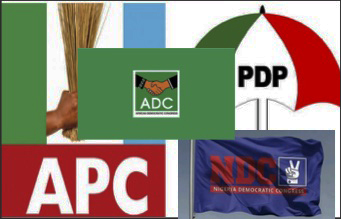
Nigeria’s 2027 Election Landscape: A Diverse Contender Field
As Nigeria gears up for the 2027 election cycle, the presidential race has become increasingly crowded and dynamic. Several aspirants have emerged from major political parties, including the All Progressives Congress (APC), the African Democratic Congress (ADC), the Nigeria Democratic Congress (NDC), the Peoples Democratic Party (PDP), the Social Democratic Party (SDP), the Allied People’s Movement (APM), along with several smaller platforms. Each candidate is striving to articulate their vision for governance amid a backdrop of national uncertainty.
The candidates vary widely; some are established political figures, while others are technocrats, regional power players, or reform-minded newcomers hoping to shift the national narrative.
APC’s Dominance Amid Internal Factions
President Bola Ahmed Tinubu remains a central figure within the APC, enjoying support from party insiders and many citizens who endorse the continuity policy. However, internal factions are quietly exploring various strategies, indicating a complex political landscape.
In the ADC, Atiku Abubakar continues to negotiate influence with various important blocs. He is the most notable national figure to pursue the presidency again. Meanwhile, the NDC is primarily focused on Peter Obi, whose governance-centered message continues to resonate with voters seeking reform. Candidates from the SDP, APM, and other smaller parties will further diversify the race, even if their influence on the national stage varies.
Policy Models Take Center Stage in 2027
This expansive roster highlights a critical reality: the upcoming election will hinge not merely on individual personalities but rather on competing policy models and institutional philosophies. Voter sentiment is evolving; individuals are increasingly skeptical, economically anxious, and politically engaged. They are demanding clarity, consistency, and credibility in governance. The pivotal question is no longer simply who wants to lead Nigeria but which candidates can effectively articulate governance projects that are both ambitious and achievable given Nigeria’s structural constraints.
Understanding the positions of Tinubu, Atiku, Obi, and emergent coalitions becomes imperative not as isolated figures but as representatives of various reform pathways vying for national legitimacy.
The Incumbent’s Economic Reform Challenges
As Nigeria approaches the 2027 elections, it grapples with significant economic pressures and institutional uncertainties. The Tinubu administration has initiated extensive economic reforms, including the elimination of fuel subsidies, foreign exchange liberalization, and a commitment to fiscal discipline. These reforms represent a sharp shift from the previous government’s interventionist policies and illustrate a willingness to address long-standing structural issues.
However, the rapid implementation of these reforms, particularly the abrupt removal of subsidies, has generated substantial economic strain. The country faces soaring inflation, diminishing purchasing power among households, and heightened uncertainty for businesses navigating a volatile currency landscape. Though the reforms have garnered positive assessments from entities such as the World Bank and IMF, grassroots Nigerians are left questioning the long-term vision of these initiatives.
Atiku Abubakar’s Technocratic Vision
Atiku Abubakar has consistently framed himself as a proponent of technocratic reform. His policy framework aligns closely with the current government’s pro-market direction, prioritizing liberalization, privatization, and enhanced economic competitiveness. Atiku emphasizes the need for institutional restructuring and decentralization to foster lasting change.
He asserts that Nigeria’s overly centralized governance model hampers efficiency, and that devolving power to states could bolster regional competitiveness and improve service delivery. This perspective sharply contrasts with the incumbent’s focus on macroeconomic stability without addressing the need for structural political reform.
Peter Obi’s Governance-Centric Approach
Peter Obi brings a different perspective to the table as he centers his political identity on fiscal health, anti-corruption, and efficient public spending. He shares a commitment to eliminating subsidies but emphasizes a governance-first approach. For Obi, the core challenges facing Nigeria extend beyond economic mismanagement to include issues of state capacity.
Obi advocates for data-driven decision-making, increased transparency, and measurable performance metrics to enhance public sector efficiency. His approach distinguishes him from both the incumbent and Atiku, whose focus remains largely on macroeconomic implications rather than bureaucratic reform.
The Emergence of Diverse Coalitions
Beyond the leading candidates, various emerging coalitions are exploring their roles within the political spectrum. While these groups contribute to the vibrancy of Nigerian democracy, many are anchored in individual-led initiatives rather than policy-driven engagement. Their proposals, even if articulate, often lack the coherence necessary to significantly impact national governance. As a result, their influence may be more pronounced in coalition movements than in actual governance outcomes.
As the 2027 elections approach, the overarching challenge remains clear. Nigeria’s political and economic landscape demands not just reforms, but coherent, organized initiatives grounded in credible strategies. Key issues—such as economic stabilization, inflation control, job creation, security sector reform, state capacity improvement, and energy sector revitalization—require commitments that transcend mere rhetoric. They necessitate ambitious yet feasible governance projects that can drive meaningful change.
