


Maryland Man’s Illegal Arrest Reveals Flaws in Deportation Network
An undocumented man from Maryland recently recounted a harrowing 12-hour experience following an arrest that a federal judge later deemed illegal.
Government-Charged Deportation Flights on the Rise
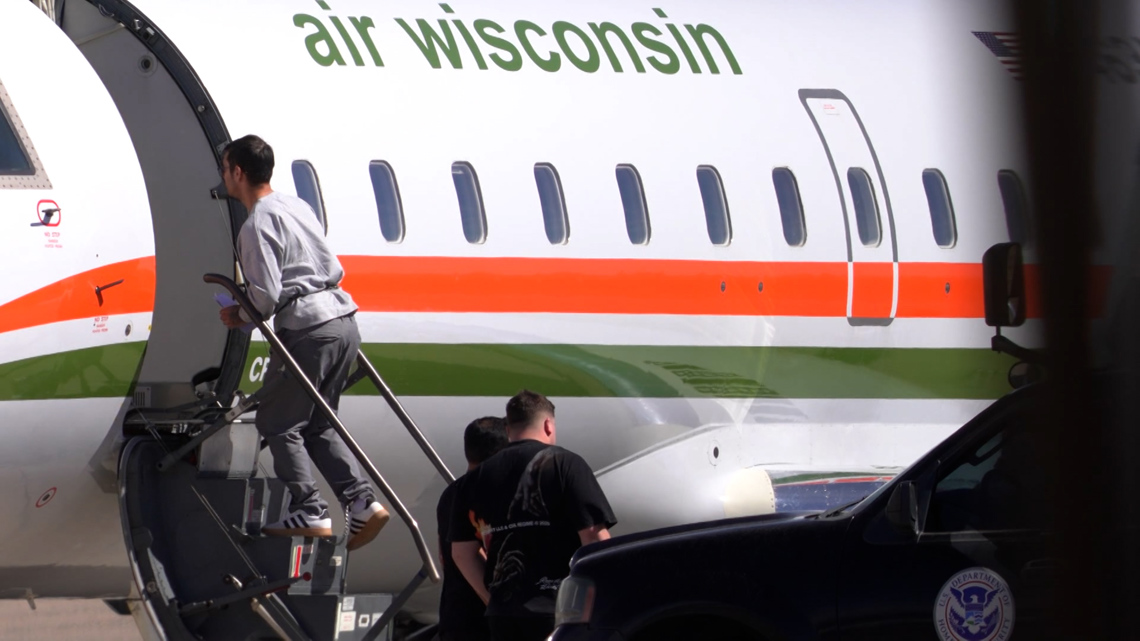
In Washington, D.C., the WUSA9 investigative team has been monitoring the transport of shackled detainees onto government-chartered planes at Baltimore-Washington International Airport. These flights are part of a program known as ICE Aviation, rather than traditional commercial flights.
The footage captured by WUSA9 highlights the rapid expansion of a deportation network, characterized by unprecedented growth and costs in U.S. history. For one Maryland resident, this marked the beginning of an ordeal that a federal judge would later declare illegal from the outset.
Family and Legal Challenges Intersect
Fabelle Lemus has been a resident of Maryland for nearly three decades, working in home improvement and raising five children. Despite being in the country illegally, he was living under an ICE supervision order, allowing him to stay while awaiting his immigration case’s progression.
ICE, however, has characterized him differently. In a statement to WUSA9, authorities labeled Lemus a “criminal illegal alien,” citing numerous convictions, including immigration fraud and DUI, alongside arrests for theft and identity theft.
His attorney, Ronald Ritchie, firmly challenges this depiction. Ritchie asserts that the immigration fraud charges stem from 1994, and the DUI did not lead to a conviction under Maryland law because Lemus was placed on probation before sentencing. He also argues Lemus has never been convicted of theft or identity theft. Notably, Lemus has cooperated with law enforcement as a crime victim, contributing to the arrest of violent offenders, bolstering his pending applications for a U visa.
Enduring Inhumane Conditions During Transports
On February 13, Lemus attended his annual ICE check-in, intent on complying with regulations. Instead, he was arrested and shackled before being transported by van to BWI Airport.
During the flight to Louisiana, Lemus remained shackled, and as a diabetic, he faced challenges when provided with sealed food packaging that he was unable to open. As a result, he completed the flight without nourishment or medication.
Despite his suffering, ICE defended the restraint practices as essential safety protocols that have long been standard procedure.
Legal Actions Emphasize Violations of Rights
Upon arriving in Louisiana, Lemus spent three hours in a waiting van before being transported to a detention facility, still in shackles and without access to medication. In total, he was detained for roughly 12 hours.
After his ordeal, Ritchie filed an emergency motion in federal court, contending that Lemus’s arrest was unlawful. Eighteen days later, a federal judge ruled in favor of Lemus, concluding that ICE violated his Fourth and Fifth Amendment rights, mandating his immediate release.
In response, ICE indicated that the case involved a “Biden-appointed activist judge” while assuring that Lemus would receive due process.
Rapidly Expanding Deportation Networks Pit Costs Against Humanity
The journey from BWI to a Louisiana detention was just one example of a larger, increasingly frequent operation. Data from WUSA9 and partner stations indicate a significant increase in immigration flights departing from BWI; from a solitary flight in February 2025 to 18 the following month. Nationally, such flights exceeded 1,600 in February, marking a staggering 155% increase from the previous year. The number of ICE-chartered aircraft grew from 16 to 81 within a year.
The financial implications are profound. Under the Trump administration, a contract with CSI Aviation covers $673 million for charter flight services, with expenditures potentially reaching $1.5 billion.
Criticism from Advocacy Groups Highlights Inefficiencies
Greg Chen, the senior director of government relations at the American Immigration Lawyers Association, argues that the expenditure on transportation is exorbitant, suggesting that the billions could be better utilized to support needy families. Chen also points out the inefficiencies, indicating that around 13,000 federal employees have been diverted from critical law enforcement duties to assist with immigration operations.
Savi Avery, a director with Human Rights First, asserts that the convoluted structure of subcontracted airlines obscures financial tracking, potentially misusing taxpayer dollars without accountability.
While ICE declined to comment on specific operations citing security protocols, Lemus is back home in Maryland, awaiting the resolution of his immigration case with another ICE check-in scheduled for a year from now.
For Lemus, the immediate ordeal might have concluded, but the expansive transport system, ferrying detainees daily to various destinations, continues to escalate, drawing scrutiny from federal courts regarding its practices and implications.
