


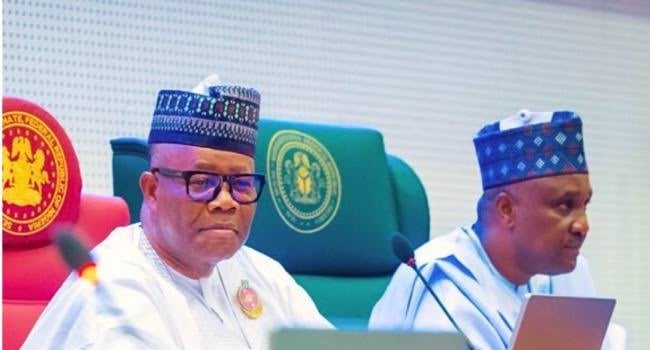
Senate President Defends National Assembly’s Achievements
ABUJA — Senate President Godswill Akpabio has defended the performance of Nigeria’s 10th National Assembly, urging citizens to familiarize themselves with the laws passed by the parliament before voicing criticism. Speaking at the opening of the 2026 Parliament Open Week, Akpabio emphasized the importance of informed discourse regarding legislative actions.
Speaker Highlights Legislative Productivity
During the same event, Speaker Tajudeen Abbas unveiled a comprehensive three-year parliamentary scorecard, claiming it to be the most productive period since Nigeria transitioned to democracy in 1999. He announced that the House of Representatives would support an executive bill introduced by President Bola Tinubu while also repealing a previously accepted state police bill.
Promoting Transparency and Public Engagement
Held under the theme “Three Years of the 10th Parliament: Advocacy, Transparency, Inclusion, and Reform,” this week’s activities aim to enhance transparency, accountability, and public participation within Parliament. Akpabio argued that much of the criticism directed at the National Assembly arises from misunderstandings of the legislative process, urging that lawmakers should be evaluated based on an informed assessment of their work.
Criticisms Stem from Incomplete Knowledge
Akpabio referenced a recent television appearance where a university professor criticized a newly enacted tax reform law without having read it. He used this example to stress the importance of understanding the legislative texts before furthering public commentary. “Take the time to understand our work before engaging in social media debates,” he advised.
Focus on Long-Term Development
The Senate President reiterated that the National Assembly is committed to enacting legislation aimed at Nigeria’s long-term growth rather than seeking short-term political wins. He claimed that the current assembly is the most peaceful and productive since Nigeria’s return to democracy, a testament to the collaborative efforts between the Senate and the House of Representatives.
Legislative Achievements and Future Plans
In presenting the legislative scorecard, Speaker Abbas noted that the House has considered 2,747 bills, passing 363 and obtaining presidential assent on 72, marking a significant achievement. He emphasized the importance of the legislation in improving citizens’ lives and announced the withdrawal of the earlier state police bill to prioritize the executively proposed version, which offers enhanced provisions and safeguards.
Call for Increased Transparency and Oversight
Chief of Staff to the President, Femi Gbajabiamila, urged lawmakers to bolster transparency and inclusivity as essential components of a credible parliament. He asserted that the annual Open Week should serve as a genuine invitation for scrutiny and dialogue rather than a mere ceremonial gesture. Simultaneously, stakeholders like Clement Nwankwo, executive director of the Policy and Legal Advocacy Center, called for an independent oversight of the executive to safeguard public resources effectively.
Engagement and Accountability Emphasized
Cardinal John Onyekan, former Archbishop of Abuja, also stressed the importance of continuous engagement between legislators and their constituents, highlighting that effective representation depends on ongoing communication with the public. The event attracted numerous prominent figures, including former Speaker Aminu Masari and other notable government officials, reflecting the event’s significance in promoting a constructive legislative agenda.
