


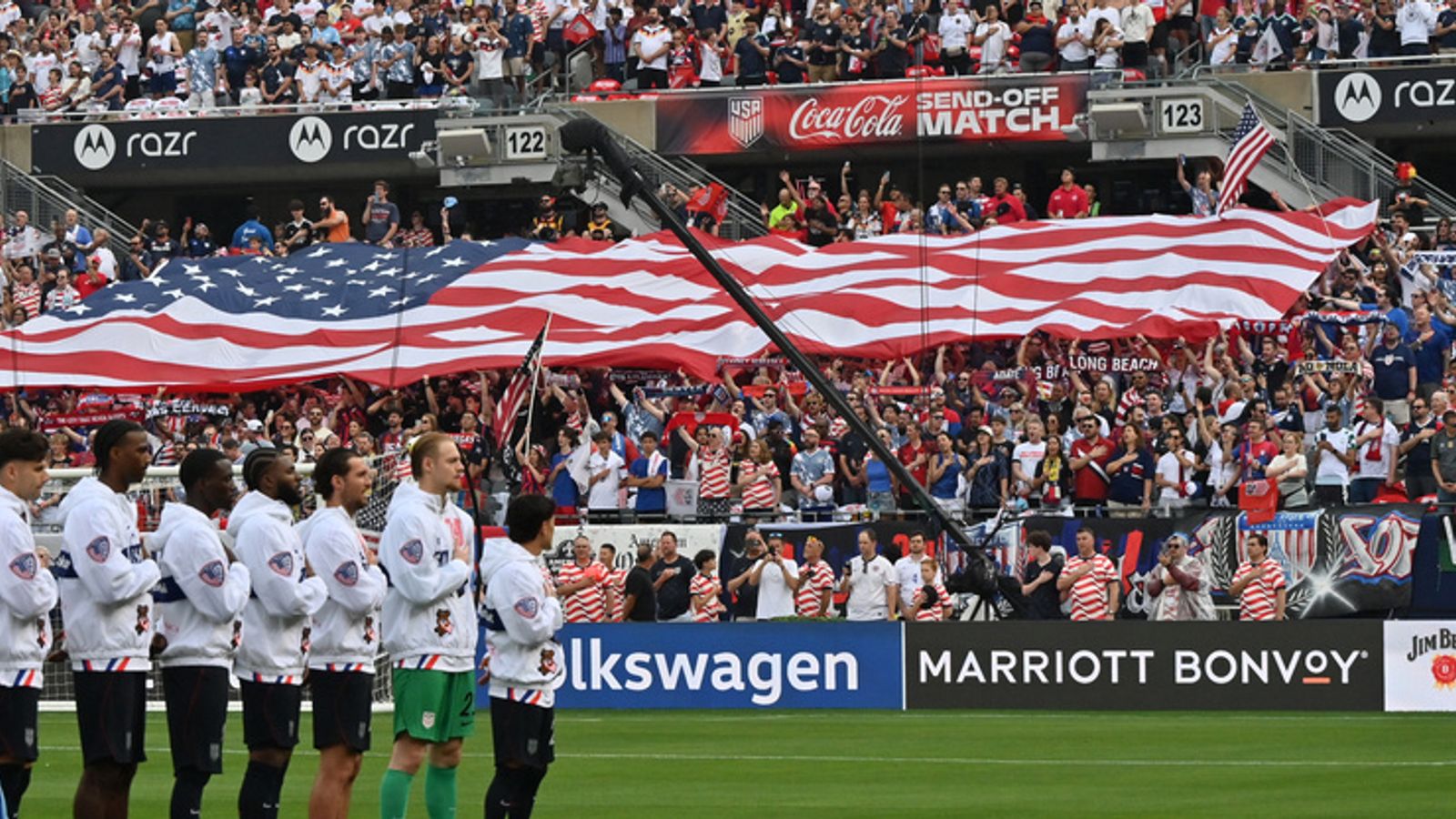
Football’s presence in the United States is on the rise, and its impact on American football is becoming more pronounced. As the U.S. gears up, alongside Mexico and Canada, for this summer’s World Cup, the moment when the global game may fully resonate with American audiences appears to be close at hand.
While women’s soccer has firmly established its roots, men’s soccer is increasingly capturing mainstream attention. The upcoming World Cup will mark the third major tournament hosted in the U.S., following the 2024 Copa America and the 2025 Club World Cup. Viewership for the Premier League continues to grow, and La Liga is actively seeking to tap into the U.S. market by organizing transatlantic matches.
Emerging American Influence on Global Soccer
The U.S. is not only embracing soccer but also influencing how the sport is perceived and managed on a global scale. The relationship between soccer and the American public has never been clearer. U.S. President Donald Trump has become a high-profile supporter of the sport, recently questioning whether “football” might be a more appropriate term, thus sparking discourse around the nomenclature of the game. His association with soccer seems to align with his desire to link himself to a sport experiencing rising popularity.
Trump’s attendance at events like the Club World Cup final, where Chelsea triumphed over Paris Saint-Germain in front of a packed New Jersey stadium, highlights his engagement with the sport. The strong showing of U.S. fans at the last World Cup, exemplified in their rallying cries of “It’s called soccer,” speaks to a growing acceptance and passion for the game among the American populace.
Shifting Viewership Patterns
This season’s Premier League opener achieved record viewership in the U.S., with a notable 13% increase over the last three years. Twelve matches from the 2024/25 season drew over one million viewers—a modest figure but indicative of an upward trend. The league’s summer series has already shown promise, drawing substantial crowds for matchups such as Manchester United against West Ham.
La Liga is making strides as well, with plans for official matches in the U.S. that reflect aspirations for wider international reach. Although a recent initiative to host a match in Miami faced cancellations amid pushback, the league remains optimistic about penetrating the American market in the future. The sentiment among officials is that missed opportunities like these could diminish overall competitive visibility in a growth-oriented environment.
Major League Soccer’s Evolving Landscape
Meanwhile, Major League Soccer (MLS) finds itself at a crucial juncture with the signing of global star Lionel Messi. As the league capitalizes on Messi’s presence, it also paves the way for the emergence of new talent in the American soccer landscape. Despite only four Americans participating in the Premier League last season, hopes are high for a future where local players gain significant traction on the international stage.
The upcoming World Cup will undoubtedly elevate soccer’s profile in America, especially as iconic locations like Times Square prepare to host high-stakes matches. This moment serves as a significant opportunity for sports marketers aiming to harness soccer’s rising popularity in the U.S. Chicago Fire sporting director Greg Broughton emphasized this potential, noting that the World Cup is poised to serve as a transformative force for soccer in America.
The Cross-Pollination of Ideas and Investment
The American approach to soccer is increasingly reflective of a two-way exchange, where traditional European models are intertwining with American innovations. The Club World Cup offered glimpses into this evolving dynamic, introducing elements like player walk-ons and a halftime show inspired by the NFL.
Furthermore, the uptick in American ownership among European clubs—11 of the 20 Premier League teams being majority-owned by Americans—signals a profound shift in how soccer is structured and managed globally. Notable figures such as Tom Brady and Snoop Dogg have also made headlines with their investments, establishing new connections and drawing more attention to the sport.
The potential for further change is considerable—the future of promotion, relegation, and budget management could very well be shaped by newfound American influences. If America fully embraces soccer, as suggested by Trump’s remarks, we may soon witness a new era for the sport, one that holds immense promise for future growth and evolution.
