


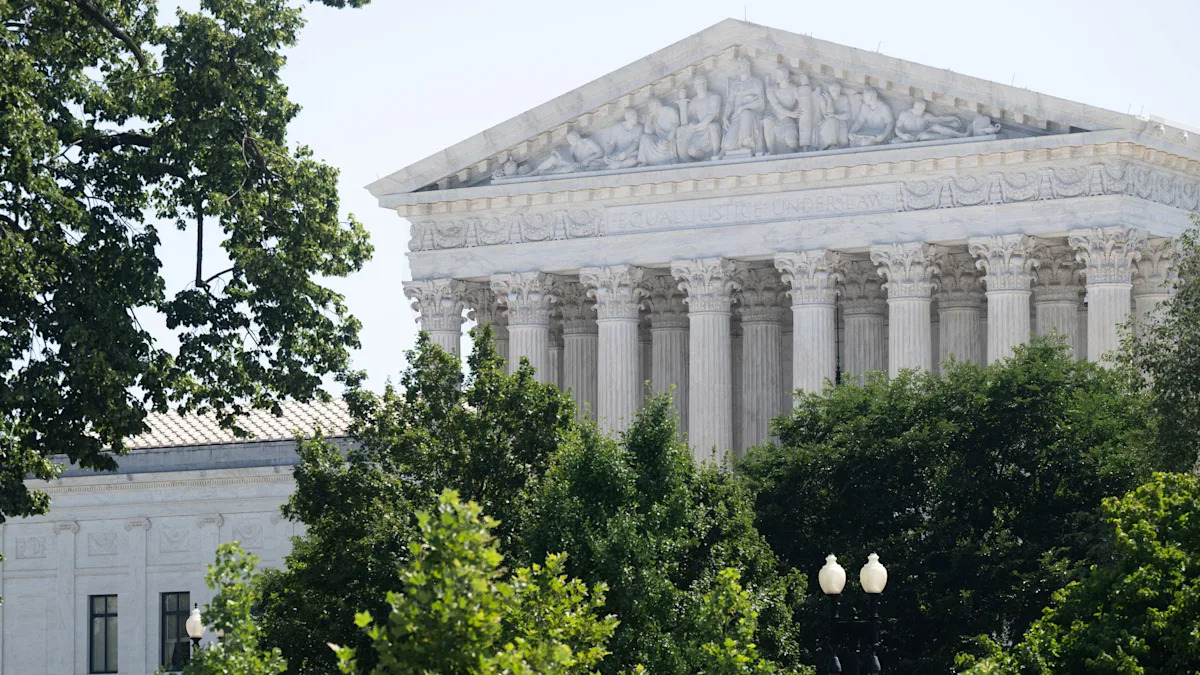
The Supreme Court is poised to wrap up a crucial term marked by its consideration of several controversial policies enacted during President Trump’s administration, alongside some of the nation’s most heated debates. Traditionally, justices reserve their most significant rulings for the final stages of their terms, and this year is no different.
With only a handful of cases remaining, the court’s docket includes pivotal issues such as President Trump’s attempts to eliminate birthright citizenship, restrictions on transgender participation in sports, and Republican efforts to limit mail-in voting.
Thus far, President Trump has emerged victorious in most of the decided cases. The court’s conservative majority has ruled favorably for Republicans on matters related to immigration, gun rights, and various electoral disputes. Notably, the court rejected Trump’s tariffs, determining that he lacked the legal authority to impose them.
Outstanding Cases Awaiting Resolution
Birthright Citizenship Debate
Currently under review is a case stemming from President Trump’s executive order aimed at ending universal birthright citizenship, a practice that grants automatic citizenship to individuals born in the U.S. The proposed changes would determine an infant’s citizenship based on the immigration status of their parents, effectively disenfranchising children born to undocumented immigrants or those on temporary visas unless one parent is a citizen or lawful permanent resident.
The implications are significant; an estimated 255,000 infants born in the U.S. each year could lose crucial citizenship rights if the courts side with the administration. Furthermore, the justices will need to consider whether the president has the authority to unilaterally redefine the Fourteenth Amendment’s guarantee of birthright citizenship.
Early oral arguments indicate skepticism among the justices, even from conservative members, regarding the administration’s rationale.
Regulation of Federal Employment
The court is reviewing two cases involving President Trump’s ability to execute mass layoffs of federal employees, specifically targeting officials who assert they were unlawfully dismissed. This includes significant figures from the Federal Reserve and the Federal Trade Commission, both of whom are protected by laws aimed at maintaining independence from political influence.
The outcomes of these cases will have substantial implications for executive power and the restructuring of critical federal agencies. Should the court rule in favor of Trump, it would enhance presidential authority significantly over vital aspects of the federal government.
Transgender Rights in Sports
The Supreme Court is also evaluating challenges to laws in 27 states that restrict transgender athletes from participating in girls’ or women’s sports. The cases brought forth by transgender athletes argue that such laws violate their constitutional right to equal protection.
While the number of transgender athletes is small, the laws are seen as part of a broader effort to limit the rights of transgender individuals, which includes restrictions on gender-affirming care and policies concerning identification documents. Previous rulings have allowed similar restrictive measures to stand, leading many legal analysts to anticipate a consistent response regarding sports as well.
Contesting Mail-In Voting Laws
Another significant case involves Republican efforts to prevent states from accepting mail-in ballots received after Election Day. Certain states permit late-arriving ballots as long as they are postmarked by Election Day, a policy under challenge by the Republican National Committee.
Should the court favor the Republican stance, ballots received post-Election Day would no longer be counted. This decision could have far-reaching implications for elections, especially in close races, amidst broader Republican initiatives to limit mail-in voting, showcasing a trend that could lead to increasingly stringent voting regulations.
Key Decisions Already Made
Supreme Court Reversal of Tariffs
Despite a series of victories for Trump, a significant ruling opposed his tariffs. In February, the court annulled sweeping tariffs the president had enforced on imports from numerous countries, signaling a considerable setback for his economic policies. This verdict has ongoing effects on the global marketplace, with the administration now tasked with refunding up to $166 billion collected from these tariffs.
Immigration Policy Endorsements
President Trump has consistently pushed the boundaries of his legal authority concerning immigration. This term, the Supreme Court has upheld various policies aimed at expelling immigrants and restricting entry into the U.S. recently, including rulings that facilitate the removal of protected status for Haitian and Syrian nationals, along with limiting asylum applications.
Redistricting Developments
In a contentious redistricting battle between the two parties, the Supreme Court recently loosened legal restrictions governing the redrawing of congressional maps, empowering state legislatures to revise districts for political gain. This ruling, arriving late in the election cycle, raises concerns regarding future electoral fairness, with potential implications for congressional representation of minority populations.
Rulings on Conversion Therapy
In a surprising move, the court indicated a possible repeal of laws banning conversion therapy. In March, justices ruled that such bans could infringe on First Amendment rights, setting a concerning precedent for LGBTQ rights despite strong opposition from medical experts regarding the practice’s validity and safety.
Gun Rights Affirmed
The Supreme Court recently upheld gun rights by overturning Hawaii’s restrictive gun laws, asserting their unconstitutionality. This ruling is part of an ongoing trend of affirming Second Amendment protections.
Copyright Case Impact
In an important copyright case, the court unanimously rejected attempts by Sony to hold Cox Communications liable for illegal activities of its users. Had the court ruled differently, it could have drastically altered the online ecosystem and the liability landscape for internet service providers.
Health Regulations and Monsanto
In a high-profile case, the court favored Monsanto Co. regarding liability claims associated with its herbicide, Roundup. This ruling may shield the company from further financial repercussions while simultaneously igniting debate among various political factions concerning public health safety and corporate accountability.
