


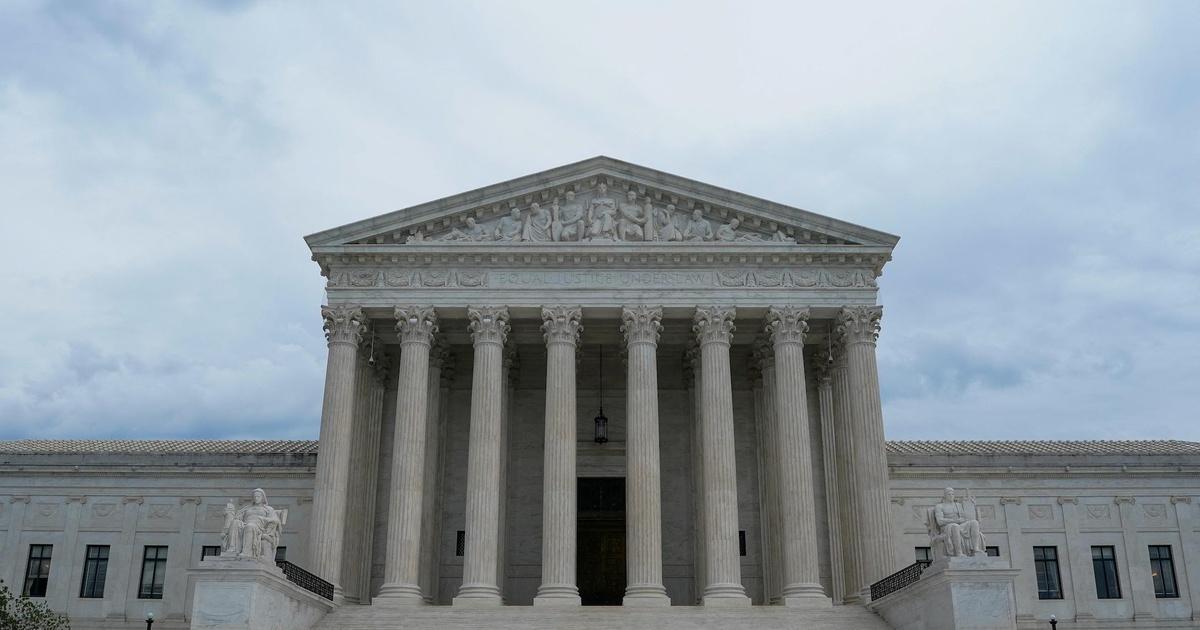
Supreme Court Delivers Key Rulings on Immigration, Corporate Liability, and Gun Laws
The Supreme Court announced four significant decisions today that will have far-reaching implications. Among these rulings is a controversial allowance for the Trump administration to rescind deportation protections for numerous Haitians and Syrians, as well as a green light for authorities to continue sending asylum seekers back at the southern border.
In another pivotal decision, the justices ruled that Monsanto cannot be held liable in thousands of lawsuits related to its herbicide, Roundup. Additionally, the court struck down Hawaii’s gun laws, a move that could have repercussions for similar regulations in other states.
Amy Howe, Supreme Court analyst for The NewsHour and co-founder of SCOTUSblog, offers insights into these decisions. Starting with the immigration case, the court upheld the Trump administration’s ability to revoke the temporary protected status (TPS) for Haitians and Syrians, a move initiated last year.
The court’s ruling did not delve into whether former Secretary of Homeland Security Kristi Noem appropriately concluded the designations for these countries. Instead, the justices noted that the law establishing the TPS program contains a provision that prevents judicial challenges to the Secretary’s decisions regarding TPS status. Justice Alito emphasized that this applies to claims from Haitian and Syrian nationals, who argued that their case revolved around procedural compliance, rather than the decision itself.
The claimants pointed to legal requirements mandating consultations with other agencies before such designations are made. However, Justice Alito concluded that these procedural aspects are intrinsic to the decisions that TPS recipients cannot contest. A further contention from Haitian TPS beneficiaries cited racial animus in the decision to revoke protections, referencing former President Trump’s disparaging remarks about Haitian immigrants. Justice Alito dismissed this claim, stating that the decision was not motivated by racial hostility.
Another immigration issue addressed by the court involved “metering,” a practice where border officials turn back individuals before they can apply for asylum in the U.S. The plaintiffs argued that even being turned away constituted an arrival under refugee law, but the court’s conservative justices disagreed. Justice Alito interpreted “arrival” in its strictest sense, as a physical entry into the country, reinforcing their position through a sports analogy.
On the other side of the bench, Justice Sotomayor provided a dissenting opinion, suggesting that “arrival” could refer to imminent entry. She illustrated her point by likening it to landing at an airport just outside a city and claiming you are arriving at that city, even if you’ve not yet crossed the city’s borders.
The Supreme Court also addressed liability concerns related to Monsanto’s Roundup, resulting in a 7-2 decision that shields the company from lawsuits alleging it failed to include cancer warnings on its product. The ruling hinged on the concept of preemption, which posits that federal law can override state laws in certain instances. In this case, the Federal Insecticide, Fungicide, and Rodenticide Act (FIFRA) governs pesticide labeling, thus removing the ability of states, like Missouri, to impose additional requirements.
Finally, the ruling on Hawaii’s gun laws may significantly affect similar regulations in four other states—California, New York, New Jersey, and Maryland—that also necessitate permits for carrying firearms on private property. While these rulings impact a limited number of states, they have the potential to affect a substantial population and challenge established gun control measures.
