


Challenging Police Ratios Highlight Need for State Police in Nigeria
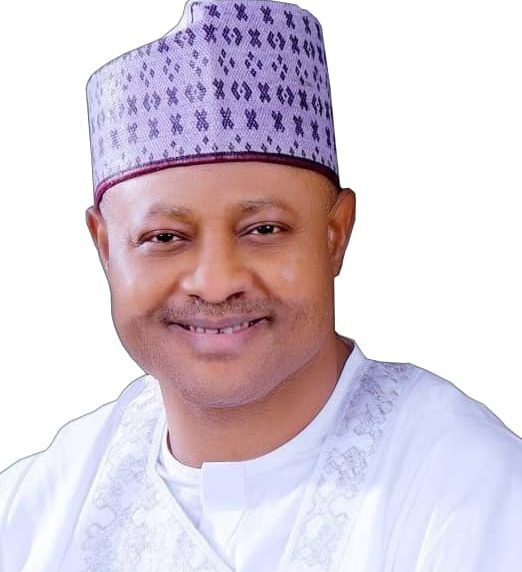
Governor Uba Sani has long emphasized the alarming ratio of police officers to the population in Nigeria—one officer for every 600 citizens. This statistic, which he has discussed for the past decade, underlines his advocacy for establishing a state police force.
Currently, Nigeria is home to between 370,000 and 400,000 police officers tasked with maintaining order among a population exceeding 220 million. Based on the latest insights from the Inspector General of Police, this translates to one officer for approximately every 600 individuals. While police leaders aspire to reach a federal target of one officer per 450 people—often misattributed to “United Nations standards”—fact-checkers have clarified that this figure originates from policing guidelines used in post-World War II Germany. Regardless of its origins, the implications remain stark; according to the IGP’s own calculations, Nigeria is under-resourced by nearly 190,000 officers when compared to the ideal of one officer for every 450 citizens.
Governor Sani’s emphasis on this disparity dates back to his tenure as a senator. During the 9th National Assembly, he introduced two significant bills: the Constitution Amendment Bill (SB 592) and the Police Services Commission Act Bill (SB 594). Both pieces of legislation argued that the current police force—fewer than 400,000 officers—was insufficient to adequately protect 220 million people spread across 36 states. Unfortunately, neither bill was ratified, yet the pressing need for reform remains unchanged.
The national statistics often obscure the severity of the situation in individual states. A recent analysis reveals that over 80% of states fall short of the 1:400 officer-to-population standard previously cited by police officials. At the extreme end of the scale, Bayelsa state reports one officer per 2,300 residents, while in Kano, Nigeria’s most populous state, the ratio is approximately one officer for every 1,600 citizens. Conversely, the Federal Capital Territory (FCT) in Abuja features a markedly higher concentration, with one officer assigned for every 117 individuals, raising concerns that resources are disproportionately allocated. The lack of adequate police presence in states grappling with severe security challenges, such as banditry in northwestern Kaduna, is particularly troubling when many officers are concentrated in lower-risk areas like the capital.
Security forces beyond the police are also stretched thin. Nigeria boasts around 223,000 military personnel, equating to one soldier for approximately every 1,000 citizens—a number that falls short compared to most neighboring countries, save for the Republic of Niger.
Nigeria is not alone in grappling with these issues. Among Africa’s 54 nations, only three—Nigeria, Ethiopia, and South Africa—maintain longstanding federal structures, with Somalia also joining the ranks. Ethiopia’s 1995 constitution permits regions to develop their own specialized police forces alongside federal units, while Somalia’s 2012 constitution empowers its federal member states to manage their own police. In contrast, South Africa’s 1996 constitution maintains a unified police presence nationwide, restricting states from establishing their own policing systems.
Governor Sani’s proposal aligns more closely with the governance models seen in Ethiopia and Somalia, where local policing mechanisms are empowered. According to a bill passed by the Senate on June 24, 2026, while governors would appoint state police chiefs, their authority to remove these officials would require approval from multiple commissions and councils.
For Governor Sani, these statistics represent more than mere numbers; they unveil a critical quality issue within Nigeria’s policing system, as well as the need for a more decentralized approach to security. The examples of Ethiopia and Somalia illustrate how African federations can effectively delegate policing responsibility to states, while South Africa’s model highlights the pitfalls of a centralized approach. The Senate’s passage of the bill now awaits the consent of two-thirds of Nigeria’s 36 state legislatures. If successful, Governor Sani’s long-held vision for state-level policing could finally materialize.
*Danbatta is Senior Special Assistant to the Governor on Print Media
