


Concerns Rise for Messi Following Injury in Miami’s Thrilling Victory
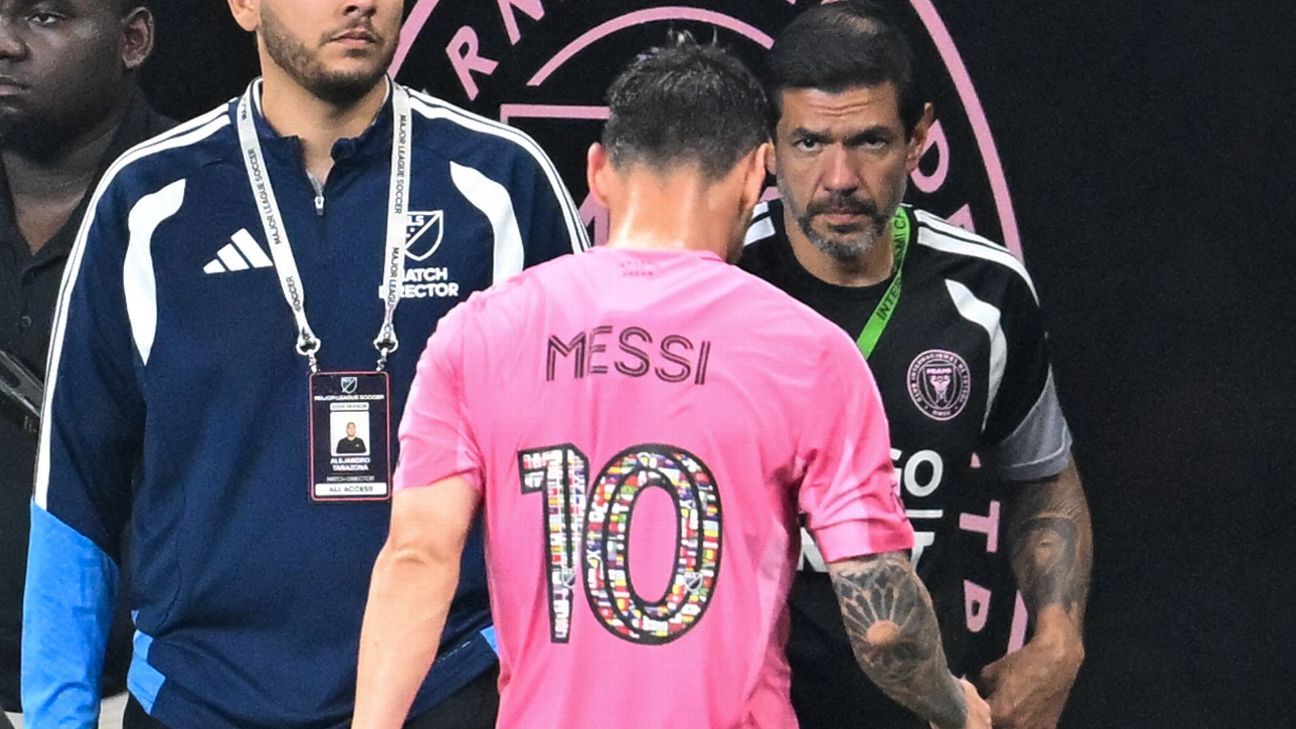
Fans of the Argentina national soccer team held their collective breath after Lionel Messi exited the New Stadium on Sunday night, visibly discomforted by a potential injury to his left foot. Inter Miami CF triumphed over the Philadelphia Union in a high-scoring 6-4 match, but the game’s outcome was overshadowed by concerns surrounding Messi, who is a key player expected to participate in the upcoming 2026 FIFA World Cup.
Messi experienced pain in his upper left thigh during the 70th minute, leading him to request a substitution—a rare occurrence for the star player. He was replaced by Matteo Silvetti and made his way to the locker room unaided, although supporters worried about the implications of his exit.
Messi’s participation in the summer tournament has long been uncertain and will depend on his fitness level by June 1, when Argentina’s coach, Lionel Scaloni, is set to submit the official 26-man roster to FIFA. Previously, Messi expressed, “I want to be there. If I’m there, I want to feel good and play an important role in helping the national team.”
In recent months, Messi had successfully avoided injuries, but the doubts now linger as the summer tournaments approach. He has been working meticulously to balance preparation and injury prevention. Ahead of Sunday’s match, teammate Rodrigo de Paul noted their rigorous training regimen, which included double workout sessions to ensure optimal performance. “We started training more than usual,” De Paul remarked. “We are committing ourselves to twice-a-day schedules with our trainers to stay in peak shape.”
Coaching staff, including former manager Javier Mascherano and interim manager Guillermo Hoyos, have closely monitored Messi’s workload, especially as the schedule has seen Miami playing multiple games in quick succession. Both Messi and De Paul were sidelined during the March 14 match against Charlotte FC, a strategic decision to manage fatigue effectively.
The approach seems prudent, as several players have opted out of final league matches leading up to the World Cup for precautionary reasons. For instance, James Rodriguez and Guillermo Ochoa missed games to prepare early for their national teams. Interestingly, despite precautionary norms, Messi was determined to contribute to his team’s performance against Philadelphia. “Playing matches helps me get into a rhythm,” he has previously stated.
In the game, Messi showcased his skill early on, marking his first assist in the 13th minute and displaying relentless energy on the pitch. However, amid torrential rain that complicated field conditions, he slipped in the 62nd minute before eventually asking to be substituted just moments later. As Messi undergoes evaluations to determine the seriousness of his discomfort, speculation about his recovery timeline is premature and dependent on medical consultations.
Hoyos acknowledged the impact of the challenging weather and the toll it took on players, indicating that Messi’s fatigue played a role in the decision to substitute him. “He was tired, and rather than risk exacerbating any issues, we decided against taking unnecessary chances,” Hoyos explained.
Historically, Messi has shown resilience when facing injury setbacks. This past February, he suffered a muscle strain during a pre-season match and made a swift recovery. His determination to return has been evident throughout his career, with each obstacle often leading to remarkable comebacks. As clarity around his recent injury emerges, Messi’s adaptability will be crucial in determining whether he can once again take the world stage at the foreseeable World Cup.
