


Concerns Raised Over Nigeria’s Missing Public Expenditure
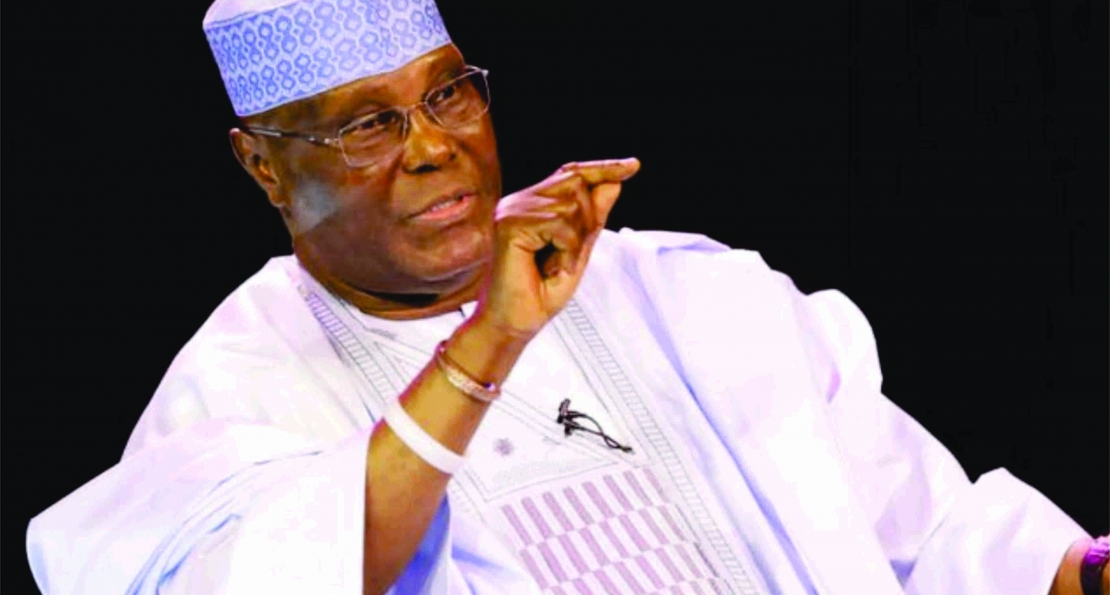
Chuks Okocha of Abuja reports that Atiku Abubakar, the former vice president and presidential candidate of the African Democratic Congress (ADC), is urging an investigation into a reported omission of public expenditure totaling N8.8 trillion. This figure, equivalent to 2% of Nigeria’s gross domestic product (GDP), has drawn the attention of Abubakar, who is calling on the Economic and Financial Crimes Commission (EFCC) and the Independent Corrupt Practices and Other Related Crimes Commission (ICPC) to scrutinize the federal government’s handling of public funds.
Alarm Over Unaccounted Funds
Abubakar highlighted that a July 2026 report from the International Monetary Fund (IMF) indicates that the current administration under President Bola Tinubu has excluded substantial public spending from the most recent official budget. He expressed deep concern over these revelations, urging citizens, media outlets, civil society, and democratic institutions to focus on what he deems a serious act of financial misconduct in Nigeria’s democratic history.
Significant Implications for Public Resources
With Nigeria’s economy valued at approximately N441.5 trillion, the unrecorded expenditure represents a significant amount of public funds being allocated outside the nation’s legal budgeting framework. “These funds are unaccounted for, unaudited, and veiled from public scrutiny,” Abubakar stated in a recent statement. The former vice president underscored that these findings were confirmed by Christian Ebeke, the IMF Resident Representative in Nigeria, during the latest Article IV consultations.
Issues Raised by Off-Budget Projects
Abubakar asserted that the alarming discrepancy stems from large-scale government projects executed entirely off-budget. He emphasized, “The Tinubu administration is awarding multi-trillion-naira contracts and mobilizing extensive public capital without proper legislative oversight or accountability.” This, he argues, presents a troubling parallel financial system that operates independently of constitutional constraints.
Calls for Investigative Action
He recommended that the EFCC, ICPC, and all pertinent law enforcement agencies initiate formal inquiries into the unrecorded expenditures and unauthorized deductions from state allocations, independent of any political pressure from the Presidency. Abubakar believes that this situation mirrors fiscal governance issues he observed in Lagos State under Tinubu’s leadership, where substantial portions of the generated revenue were misappropriated prior to being included in the official budget.
Linking State and National Financial Irregularities
Abubakar accused the current federal administration of leveraging a similar strategy at a national level. “What the IMF has pinpointed at the federal level continues to echo the Lagos model, where significant sums disappear before legislative appropriation. This practice came from the individual who mastered off-budget economics in Lagos and is now affecting 220 million Nigerians,” he stated.
Highlighting Additional Financial Concerns
Furthermore, Abubakar introduced the plight of state governments, pointing out the illegal withholding of N800 billion from statutory allocations. These funds, meant for state development, have been diverted without parliamentary approval or legal justification. He asserted that this illicit activity not only enhances a shadow economy based on unaccounted expenditures but also builds up a substantial political fund ahead of the 2027 general elections.
