


The 2026 FIFA World Cup is currently embroiled in one of its most significant controversies due to FIFA’s unexpected decision to lift the automatic one-match suspension imposed on US striker Folarin Balogun. This ruling will allow him to compete against Belgium in the Round of 16 on Monday.
The move has ignited a wave of outrage within the football community, with the Royal Belgian Football Association (RBFA) calling FIFA’s decision “astonishing” and questioning whether it has violated its own established rules and regulations.
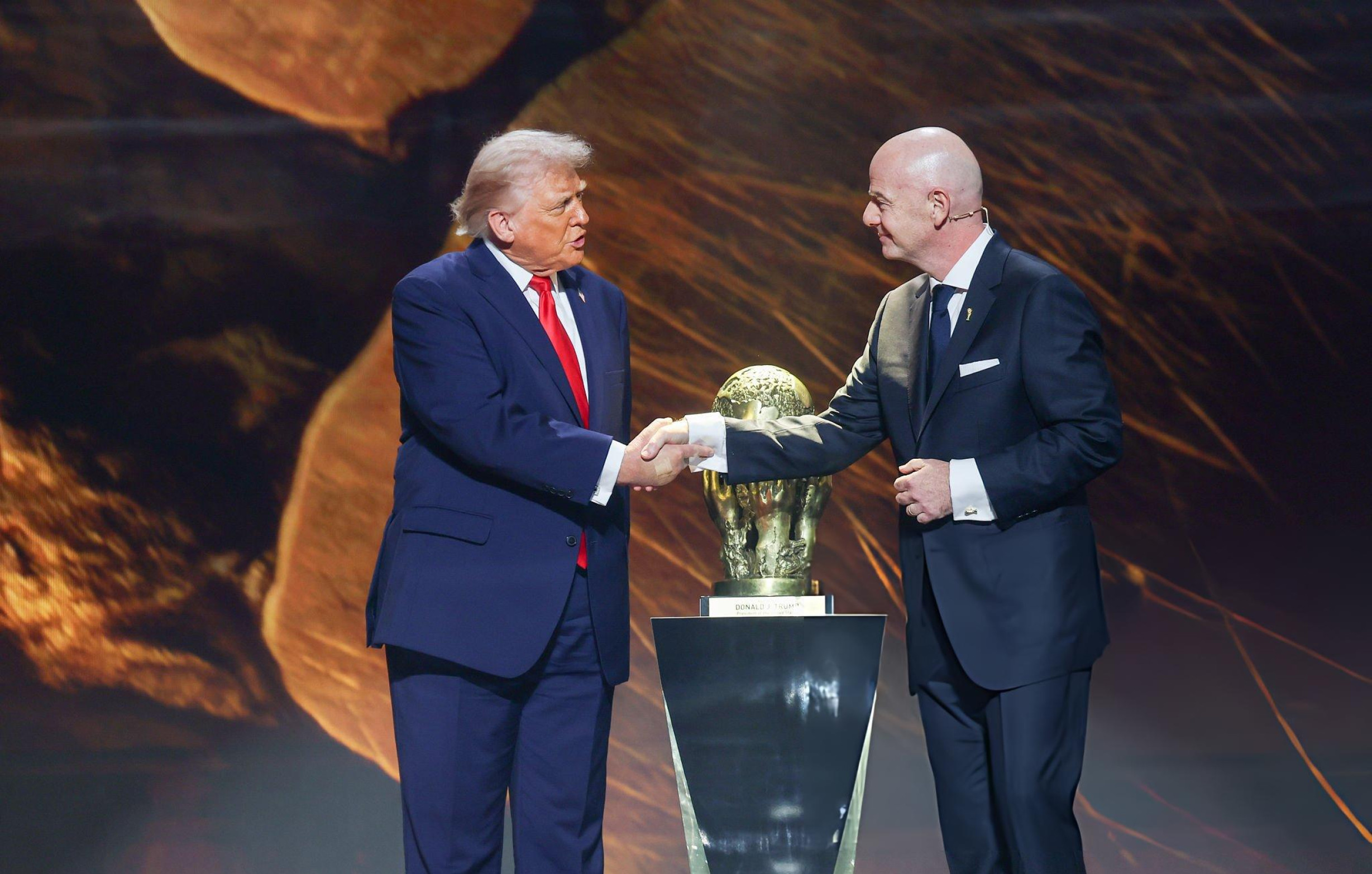
This controversy deepened when reports revealed that, following Balogun’s red card against Bosnia and Herzegovina, former US President Donald Trump directly contacted FIFA President Gianni Infantino to request a review of the decision.
The immediate retraction of Balogun’s suspension was met with a celebratory response from Trump on social media, who praised FIFA for rectifying what he called “a great injustice.”
The timing of this intervention, coupled with FIFA’s unprecedented ruling, has triggered intense discussions globally about whether the governing body acted independently or yielded to political pressure.
Origins of the Controversy
Balogun was shown a red card during the United States’ 2-0 win over Bosnia and Herzegovina in the Round of 32 after a challenge on defender Tarik Muharemovic, which was upgraded to a red card by VAR. Under standard FIFA World Cup regulations, a red card typically results in an automatic one-match suspension.
This absence from the squad would likely have sidelined Balogun during America’s most significant match in over two decades, as the team aimed to advance to the World Cup quarterfinals for the first time since 2002 against Belgium. However, in a shocking announcement, FIFA declared on Sunday that Balogun’s suspension would be postponed.
FIFA issued an official statement indicating that the automatic match suspension would be suspended for a one-year trial period, sparking a backlash of accusations regarding favoritism and inconsistent rule enforcement.
Understanding Article 27
FIFA defended its decision by citing Article 27 of the FIFA Disciplinary Act, which allows the judicial body to entirely or partially suspend disciplinary measures. This effectively places players and officials on probation rather than implementing an immediate suspension.
While Article 27 is infrequently invoked, it has previously benefited several high-profile players, including Cristiano Ronaldo, who received similar leniency after a red card during Portugal’s World Cup qualifying campaign in November 2025. Ronaldo’s suspension was postponed, allowing him to play in subsequent matches for Portugal.
Other notable cases include Argentina’s Nicolas Otamendi and Ecuador’s Moises Caicedo, whose suspensions were extended before their respective tournaments. Yet, critics argue that Balogun’s situation is unique because it unfolded during the World Cup finals.
Belgium’s Reaction
Belgium’s head coach, Rudi Garcia, was initially skeptical about the announcement, jokingly wondering if it was an April Fool’s prank. He emphasized that Belgium’s opposition to the ruling extends beyond protecting its team’s interests; it’s about preserving the integrity of the sport.
Garcia refrained from commenting on the possibility of taking the matter to the Court of Arbitration for Sport, stating the need to focus on the sporting aspects instead.
Belgium’s Federation Takes a Stand
The RBFA reacted decisively, releasing an extensive statement expressing shock at FIFA’s interpretation of its own regulations and announcing that it was considering legal options. They pointed out contradictions in FIFA’s application of Article 27 and the explicit provisions regarding automatic suspensions after red cards.
The Belgian federation’s statement insisted that FIFA’s recent ruling violates existing regulations and expressed disbelief at the decision to allow Balogun to play in the upcoming match.
Balogun’s Availability Complicates Preparations
Belgian goalkeeper Thibaut Courtois remarked that the timing of FIFA’s announcement made it challenging for the team to finalize their game strategies. Courtois acknowledged that while the presence of a player like Balogun adds complexity, the team will still prepare to face the entire opposition, not just one individual.
U.S. Soccer Embraces the Ruling
In stark contrast, the U.S. soccer community celebrated FIFA’s ruling. The federation expressed satisfaction with the decision, proclaiming their readiness for the Round of 16 match against Belgium. Players learned of the reversal on their way to training, with defender Chris Richards initially mistaking the news for a hoax.
Pochettino Addresses Political Concerns
U.S. national team head coach Mauricio Pochettino distanced himself from any alleged political influence in the appeal process, emphasizing that his focus remained solely on preparing the team for their match against Belgium. Pochettino clearly stated that such political lobbying should not be part of disciplinary decisions.
Balogun’s Perspective
Before FIFA’s decision, Balogun had voiced his dissatisfaction with the red card, arguing that it was unjust. Upon learning he could play, he took to social media to celebrate, acknowledging the support of U.S. fans.
Implications for FIFA
The Balogun case now stands as one of the pivotal discussions of the 2026 FIFA World Cup. While some supporters argue FIFA acted to correct an unfair ruling, critics highlight the contradictions present in the Disciplinary Act. The decision raises critical concerns regarding potential political influence on the tournament’s integrity, prompting ongoing debate among players, coaches, and federations alike.
