


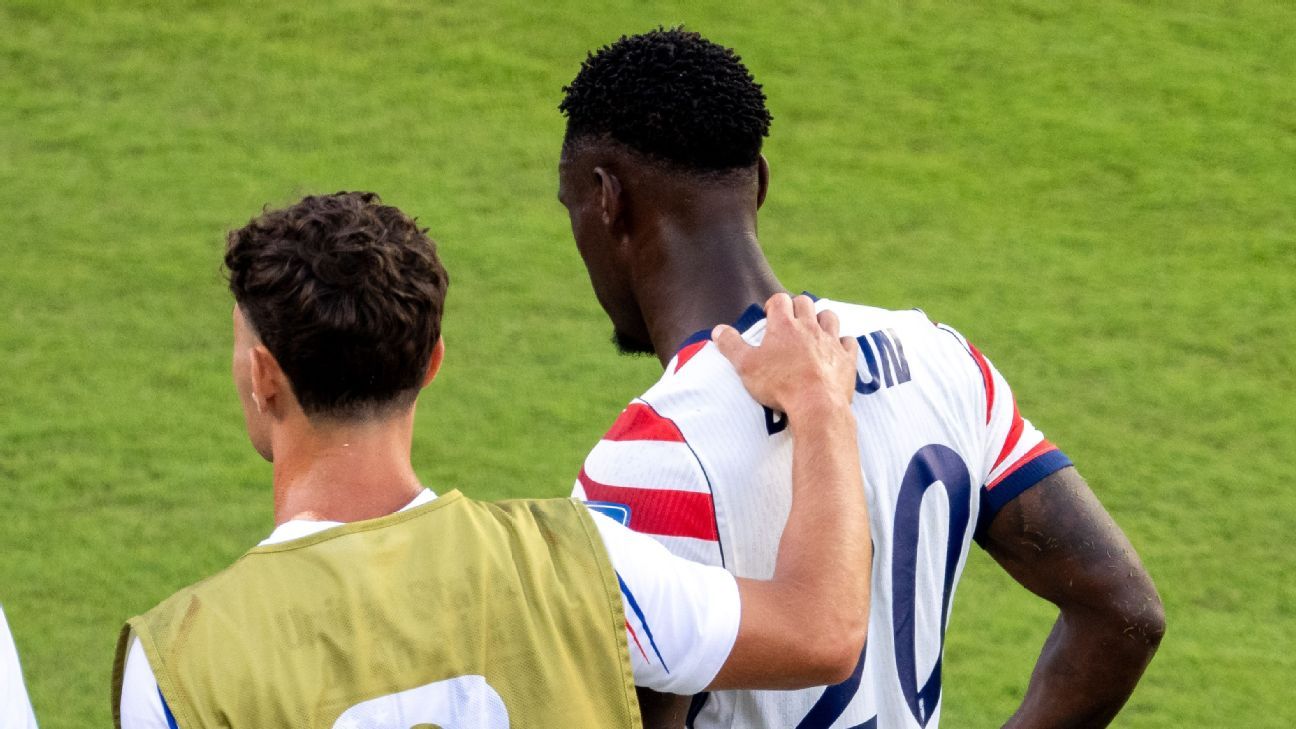
SEATTLE — Navigating the intricate discussions online can be a challenge, especially when it comes to opinions about the U.S. men’s national team and striker Folarin Balogun’s recent situation. The lifting of his one-game suspension has left many fans feeling both surprised and concerned, illustrating the complex emotions surrounding this decision.
This scenario doesn’t necessitate a binary perspective. Balogun’s encounter with Bosnia and Herzegovina defender Tarik Mujaremović in the round of 32 might not have warranted a red card to begin with. Many current and former players, along with referees, argue that the Video Assistant Referee (VAR) system overstepped its boundaries in referring the decision back to the on-field referee. Furthermore, the use of slow-motion replay may have exaggerated what was ultimately a benign incident, making it appear more severe than it was.
While we can debate the nuances of this situation, it’s also heartening to recognize that a sense of justice has been meted out relatively swiftly. In contrast to the protracted announcements often seen from leagues, which tend to intensify the frustration for teams and their fans when mistakes occur, this prompt resolution offers some relief.
That said, the situation is still dripping in controversy. The Belgian Football Federation’s assertion that it was “surprised” by FIFA’s decision has a distinctly hollow ring. This sentiment clashes with FIFA’s historical patterns, which often lack transparency in their processes.
After the controversial red card, FIFA officials made it clear that there would be no opportunity for the United States to contest the automatic one-game suspension. U.S. Soccer has indicated that an appeal is unlikely unless the suspension extends beyond a single match. Even though Balogun expressed his dissent with remarkable professionalism, acknowledging that mistakes can happen, the surrounding circumstances have not gone unnoticed.
Speculation is rife, with reports from ABC News suggesting that the White House has reached out to FIFA officials. While some might interpret this as a patriotic move to support the national team, it also raises questions about how global audiences will perceive this intervention.
FIFA President Gianni Infantino’s understated approach towards U.S. President Donald Trump has already drawn scrutiny, especially as over 50 European leaders have called for an investigation into the recently established FIFA Peace Prize awarded to Trump, which many see as a breach of FIFA’s purported political neutrality.
Balogun’s reinstatement adds fuel to the perceptions of favoritism, which could significantly impact the U.S. team’s trajectory. If he were to score a decisive goal against Belgium, the implications of how this event is viewed internationally would undoubtedly linger.
As the U.S. faces one of the most significant matches in its history, fans are right to celebrate the return of their leading scorer. They should feel no embarrassment in their enthusiasm; indeed, moments like these are rare in World Cup history. However, there exists a troubling undercurrent among players, coaches, and fans who are frustrated by a perceived lack of fairness and transparency in decision-making.
This juxtaposition creates an uneasy sentiment for American supporters who cherish both their national team and the integrity of the sport. The anticipation of Balogun’s presence on the field holds promise, yet many are left wondering about the broader implications of this episode.
