


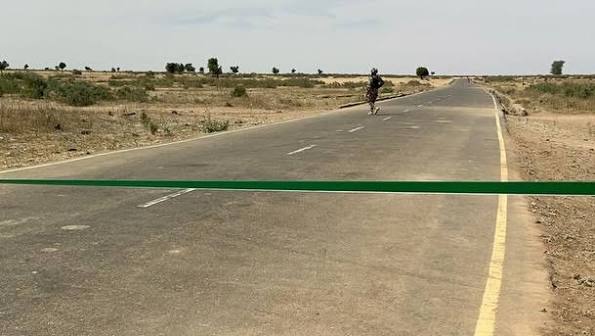
Infrastructure Rehabilitation to Propel Economic Growth in Northeast
The Federal Government has officially launched the rehabilitation of the Bama-Banki and Dikwa-Gamboru-Ngara roads in Borno State, emphasizing the significance of this initiative as a vital artery for trade, agriculture, security access, and post-insurgency recovery in the Northeast. This infrastructure project is deemed essential for fostering long-lasting peace and economic recovery in the region.
Restoring Economic Confidence Through Infrastructure
Vice President Kassim Shettima, representing President Bola Tinubu, underscored the road project as a testament to the administration’s commitment to revitalizing transportation networks, rebuilding economic trust, and reuniting communities that have suffered from years of insecurity and infrastructure neglect. The new corridors are expected to enhance cross-border economic activities while bolstering the reach of security personnel throughout the Northeast.
Impact on Community Access and Trade
Shettima highlighted the critical role of roads in determining whether farmers can access markets, traders can connect with customers, children can attend school, and patients can reach medical facilities. He noted, “Roads serve as the lifelines of our commercial activities,” emphasizing that poor infrastructure can severely hinder progress in these areas.
Infrastructure as a Pillar of Economic Recovery
The Vice President pointed out that inadequate road networks impose substantial costs on households and businesses alike. He noted that deteriorating roads not only hamper commerce and inflate food prices but also isolate communities, deter investments, and weaken local economies. Shettima advocated for road rehabilitation as a strategic economic and security measure in a region still healing from the impacts of insurgency.
Strategic Importance of the Bama-Banki Corridor
Characterizing the Bama-Banki Corridor as strategically important, Shettima revealed that the Dikwa-Gamboru-Ngara road is part of a broader vision to reconnect communities and build confidence across Borno State. The project promises key infrastructural enhancements, including bridges, drainage systems, and safety facilities, all designed with an emphasis on durability and efficient resource utilization.
Collaborative Efforts for Community Empowerment
The Vice President praised Borno State Governor Prof. Babagana Zulum for prioritizing infrastructure in the state’s recovery strategy. This collaboration between the Federal Government and the Borno State Government demonstrates the potential of joint efforts to benefit local communities. Shettima also recognized various officials for their instrumental roles in advancing the project.
Commitment to Completion and Economic Development
Shettima assured residents of Bama, Banki, Dikwa, and accompanying communities that the project will be vigorously pursued until completion. He remarked that fulfilling these promises means enabling citizens to travel safely, access essential services, and foster economic growth. Earlier, Governor Zulum expressed readiness to enhance the state’s business environment, noting that the newly rehabilitated roads will significantly boost economic activities in Borno State and promote trade with neighboring countries.
Public-Private Partnership for Economic Advancement
In a wider context, Senator Mohamed Tahir Mongonu emphasized that completing the roads would act as a catalyst for economic development in the North-East and the entirety of Nigeria. Business leaders such as Aliko Dangote have echoed this sentiment, highlighting the importance of strong public-private partnerships in enhancing connectivity throughout West Africa. As discussions continue around investment and support for the region, the focus remains on transforming infrastructure into a vehicle for economic prosperity.
