


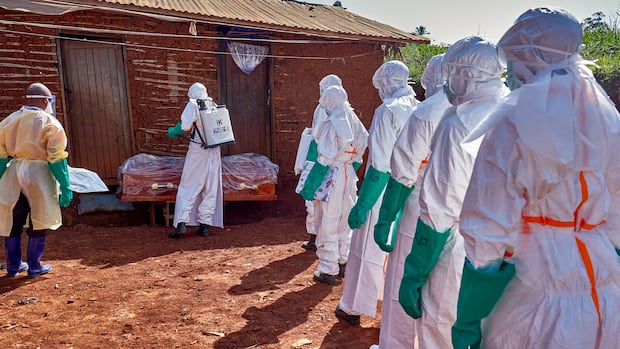
Canada Implements Entry Restrictions Amid Ebola Outbreak
Canadian authorities are tightening travel regulations as the Central African region grapples with a swift surge in Ebola cases. In a press briefing on Tuesday, federal health and immigration officials announced that effective 11:59 p.m. Wednesday, entry documents from nationals of the Democratic Republic of Congo (DRC), Uganda, and South Sudan will be suspended.
This suspension includes various application types, such as permanent resident and temporary resident visas, electronic travel authorizations, study permits, and work permits. Officials indicated that these applications will not be processed for a minimum of 90 days. However, they clarified that this is a temporary measure rather than a full ban on entry.
Applications from individuals already residing in Canada will continue to be processed, and those in transit will be exempt from the suspension. This is the first time the federal government has utilized new powers granted under Bill C-12, which was enacted in March to reform immigration authority, allowing for the mass suspension or cancellation of visas.
As of May 30, additional precautions informed by the Quarantine Act have been implemented. Canadian citizens, permanent residents, and foreign nationals who have recently traveled to the affected countries will be permitted entry into Canada, but they must undergo health screenings. Travelers exhibiting symptoms will be directly taken to hospitals, while others will be required to self-isolate for a period of 21 days.
The government has announced plans to provide isolation facilities for Canadians or permanent residents who do not have suitable space to self-isolate. These arrangements are expected to be operational by Saturday, although the specific locations remain undisclosed for safety and security purposes. Border officials noted that testing protocols for travelers will remain in effect until August 29. They reassured the public, stating the risk level for Canadians remains low and that these measures are taken out of an abundance of caution.
Growing Concern Over Ebola’s Spread
The ongoing Ebola outbreak in Central Africa has resulted in over 1,000 suspected cases and hundreds of fatalities, predominantly in the DRC, with seven confirmed cases reported in Uganda. World Health Organization (WHO) Director-General Dr. Tedros Adhanom Ghebreyesus indicated that delays in detecting this swiftly progressing infection mean health teams are now playing catch-up, which could lead to a situation that “gets worse before it gets better.”
No approved treatment or vaccine exists for the Bundibugyo strain of Ebola currently causing the outbreak. Compounding this crisis, escalating violence and increasing community distrust have hindered health workers’ attempts to control the situation. Despite these challenges, officials estimate that around 350 individuals from the Democratic Republic of Congo, Uganda, and South Sudan travel to Canada weekly, primarily through airports in Montreal, Toronto, and Vancouver. As a consequence, authorities anticipate a 40% drop in passenger numbers due to these new measures.
Response from International Authorities
Canada’s recent policy shift follows the U.S. government’s decision to temporarily restrict entry for lawful permanent residents who have traveled to Congo, Uganda, or South Sudan in the past 21 days. The U.S. Centers for Disease Control and Prevention has called for an extension of this ban to include green card holders as well.
While blanket travel bans remain a contentious issue, they are not officially recommended by the WHO under its International Health Regulations aimed at controlling disease spread. Dr. Isaac Bogoch, a Toronto-based infectious disease specialist, emphasized that the most significant concern regarding the Ebola outbreak lies within Africa, where porous borders facilitate movement between countries.
“Regardless of Canada’s measures to mitigate the risk of Ebola importation, collaboration with affected countries and the international community is vital to control this outbreak swiftly,” he stated. He further underscored the moral imperative of addressing the crisis at its source, noting that prolonged outbreaks increase the risk of cases spreading to more distant regions.
The Canadian government also announced plans to deploy at least one epidemiologist with experience in Ebola response to the DRC to assist local containment efforts. This expert is expected to travel within the week, reflecting Canada’s commitment to supporting international health initiatives during this crisis.
