


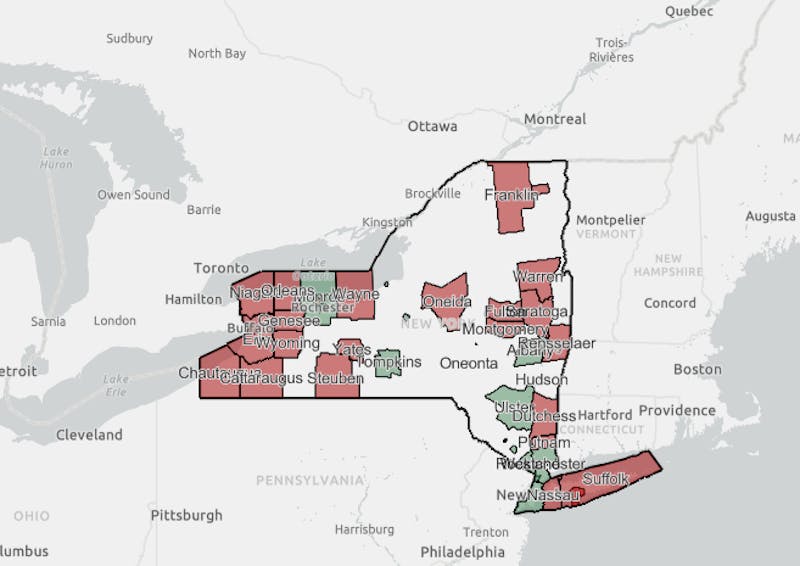
Cornell University Launches Interactive Immigration Policy Map for New York State
Researchers at Cornell University’s Jeb E. Brooks School of Public Policy unveiled an interactive map in January that highlights immigration policies across various regions of New York State. This valuable resource is part of the State Policy Advocacy Clinic, where undergraduate and master’s students team up with state stakeholders to develop policy initiatives focused on advancing equity and human rights.
Local Responses to Immigration Policy Highlighted
Titled “Local Approaches to Immigration Across New York State,” the mapping project visualizes how community organizations are currently engaging with and addressing immigration policy. Hattie Seten, a policy and advocacy researcher at the clinic, emphasized that the map offers a comprehensive view of immigration-related policies, government statements, and community resources available statewide.
Enhancing Public Understanding of Complex Policies
Seten noted that the map aims to present intricate information about immigration policy in an interactive and accessible format. Users can overlay various data metrics, allowing them to better understand immigration policies in their communities relative to broader state trends. Seten highlighted the recent shifts in federal immigration policies and their varying impacts across New York, which motivated the clinic to create this essential tool.
Data Collection Methods Outlined
A dedicated team of 12 researchers collected data through a variety of methods, including examining publicly available government contracts and scrutinizing hours of meeting minutes from regions across the state. Researcher Noah Friedman explained that the team also gathered statements from organizations like the Chamber of Commerce and utilized demographic data from the American Community Survey and the U.S. Census Bureau, alongside analyzing immigration bill sponsorship records within the state’s congressional districts.
Raising Awareness Among Key Stakeholders
In their efforts to promote the project, the clinic collaborated with state and local policymakers, advocates, academics, immigration policy experts, and community members. Keten Solomon Abebe, another contributor to the project, shared that the initial map was presented to Bitta Mostofi, a former senior advisor at the U.S. Citizenship and Immigration Services, and has since reached communities statewide, including state and county legislators and various news organizations.
Future Enhancements and Stakeholder Input
Seten disclosed that many stakeholders have suggested adding more metrics to the map, such as electoral vote distribution patterns and data on immigration detentions and deportations at the county level. Anezka Rodríguez Vigil emphasized the importance of addressing inclusivity in immigrant labor policies, focusing on H-2A visa concentrations and available programs for immigrant workers.
Impacting Policymaking and Advocating for Immigrant Rights
Rafael Montán highlighted the clinic’s aim to inspire other states to adopt similar tools, fostering a broader movement advocating for immigrant rights nationwide. He pointed out the significance of the map in identifying unconstitutional practices in public school districts regarding immigration information requests. Such tools empower both policymakers and community members during this period of uncertainty surrounding immigration policy.
The clinic is committed to responding to community needs and incorporating feedback to continually enhance the project. Montán affirmed that this information could prove invaluable to advocates for immigrant rights across New York State.
