


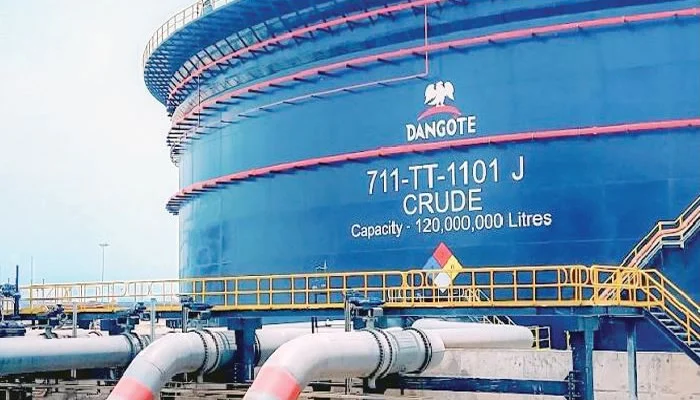
Dangote Oil Refinery Shifts to Selling Petrol in Naira Amid Supply Concerns
Dangote Oil Refinery has resumed the sale of petrol in naira, attributed to a holdback in stock by importers, according to a senior company executive speaking to The Punch. This decision comes amidst ongoing oil supply challenges in Nigeria.
Rationale Behind the Change from Dollar to Naira Pricing
The official requested anonymity due to the sensitivity of the situation, clarifying that the refinery’s return to naira pricing does not signal a resolution to the oil shortage crisis. Instead, the shift is a strategic move aimed at safeguarding national interests, particularly to avoid further fuel shortages and rising gasoline prices.
Impact of Importer Strategy on Fuel Availability
The executive highlighted that importers appear to be deliberately withholding stock in anticipation of price increases. “We decided to sell premium motor spirit in naira in the country’s interest, given that importers are holding back their products while seeking higher prices,” the source stated.
Current Pricing Structure for Petrol
Recently, the Dangote Refinery ended its temporary policy of pricing gasoline in dollars. A notification from the refinery’s commercial division revealed that the gantry price for petrol is now set at N1,215 per liter, while the onshore price is pegged at N1,602,495 per tonne. This announcement has eased previous tensions in the downstream oil sector that accompanied the dollar-dependent pricing model.
Previous Challenges and Government Intervention
Prior to this transition, independent distributors had ceased loading gasoline from the refinery once dollar pricing commenced, largely due to difficulties in acquiring the necessary foreign currency. The refinery had justified its earlier strategy by citing inadequate domestic crude oil supply, which necessitated purchasing additional crude internationally in dollars.
Negotiations with the Government Underway
In addition to adjusting its pricing strategy, the Dangote Group is currently in discussions with the federal government. The source expressed a cautious optimism that the government would engage in good faith once negotiations reach fruition. However, there are concerns that some government officials favor exporting crude oil rather than refining it domestically.
Predictions for Nigeria’s Oil Supply Landscape
With the Dangote refinery expected to commence operations in 2024, Nigeria’s dependency on imported gasoline, despite being one of Africa’s foremost oil producers, may shift significantly. Historically, the country’s refineries in Port Harcourt, Warri, and Kaduna have been non-operational, leaving consumers reliant on fuel imports amidst ongoing shortages and a contentious fuel subsidy policy.
Recent Developments in Gasoline Pricing Trends
Market dynamics have also seen petrol prices fluctuate, with localized gantry prices recently rising to N1,275 per litre following Dangote’s temporary pause in gantry loading. After the refinery announced its new price of N1,215, many retailers adjusted their prices accordingly, with current depot prices ranging from N1,215 to N1,220 per liter. Additionally, the pump price varies between N1,260 and N1,300, influenced by geopolitical tensions in the Middle East that have driven up global oil prices, closing at $96 a barrel after reaching over $100.
The financial implications of these developments are multifaceted. While higher global oil prices may bolster Nigeria’s export revenues and government income, insufficient domestic supply risks driving up the costs of imported refined petroleum products, intensifying inflationary pressures on consumers.
