


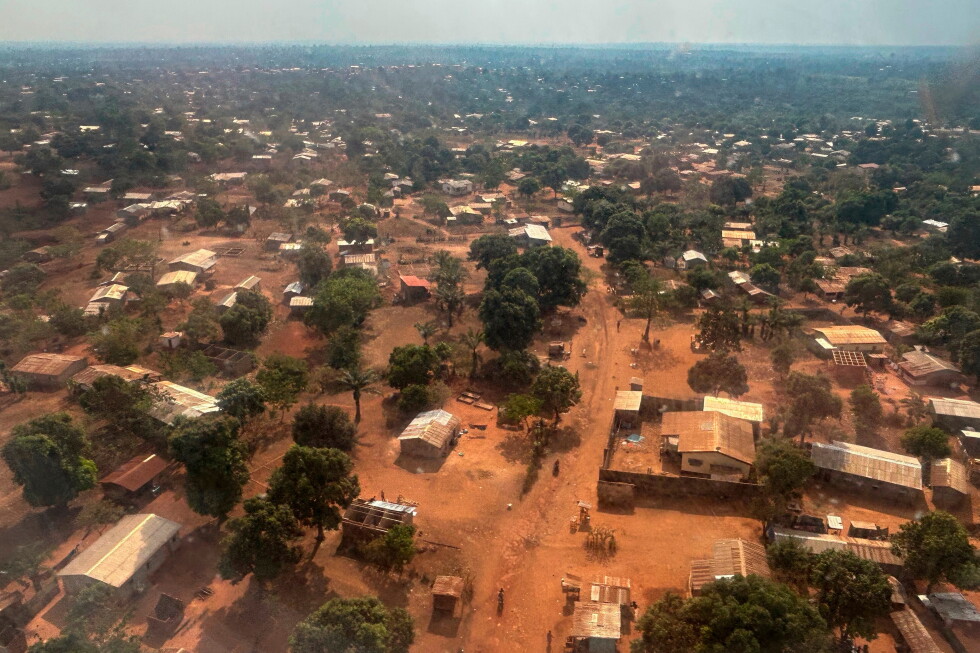
Deportation Flight Brings Migrants to Central African Republic Amid Controversy
BANGUI, Central African Republic (AP) – A plane carrying at least 20 migrants, including an Iranian woman facing persecution, landed in Bangui on Friday. This flight exemplifies the Trump administration’s contentious agreements with several African and Latin American nations to accept third-country deportees, a move that has drawn widespread criticism.
Ongoing Use of Third-Country Agreements
The Central African Republic, one of the world’s poorest and most conflict-stricken nations, is one of at least nine African countries involved in such deportation agreements. Advocates argue that the Trump administration has been deporting thousands of individuals to approximately two dozen nations under a series of secretive agreements as part of an overarching crackdown on U.S. immigration policies.
Legal Concerns Over Asylum Seekers
Immigration attorneys are raising alarms that the administration is exploiting third-country deportations as a legal loophole to indirectly return asylum seekers to their native lands. Uncertainty remains regarding the precise number of migrants aboard the deportation flight that departed Louisiana late Thursday bound for Bangui.
Diverse Backgrounds of Deported Individuals
Those targeted for deportation included individuals from diverse countries such as Iran, Jordan, Armenia, Turkey, Georgia, and Afghanistan, according to Ali Rahnama, the interim executive director of the Iranian American Legal Defense Fund, which is in contact with some of those affected.
Emergency Court Orders and Legal Protections
Three Iranian women residing in the U.S. were initially scheduled for deportation to the Central African Republic. However, two of them obtained emergency court orders temporarily halting their removal as a judge assesses the legality of the government’s actions. All three women had been granted court protection against deportation based on credible fears of political or religious persecution.
Challenges Faced by Deported Migrants
Despite the stay on deportation, legal representatives express grave concerns for these individuals, who may find themselves abandoned in a foreign country without lawful status, social connections, or support systems. “We fear they will ultimately be deported back to the countries they fled,” said Emily Trostle, an attorney representing two of the Iranian women.
Humanitarian Support Post-Deportation
The U.S. Department of Homeland Security declined to comment on specific cases, citing security reasons, while U.S. Immigration and Customs Enforcement did not provide a response to inquiries. The Central African Republic, despite its vast gold resources, struggles economically, with a third of its population living on less than $2 a day. Furthermore, the country has seen the presence of the Russian mercenary group Wagner, which has been instrumental in supporting President Faustin-Archange Touadera and combating rebel factions.
International Efforts to Assist Migrants
Rahnama expressed concern regarding the potential ramifications for Iranian asylum seekers sent to the Central African Republic, particularly given Russia’s significant influence and security ties in the region. The International Organization for Migration, a United Nations-affiliated agency, indicated it would provide post-arrival humanitarian assistance to migrants upon the request of Central African authorities. Earlier this year, the U.S. allocated $85 million to the IOM for its initiatives in the Central African Republic focused on aiding migrants and fostering community stabilization.
Banchereau reported from Dakar, Senegal. Additional contributions were made by Associated Press writers Rebecca Santana in Washington and Akram Obachir in Casablanca, Morocco.
