


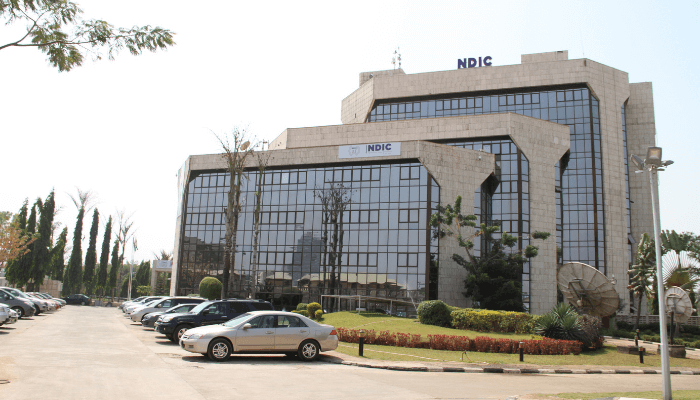
Dispute Arises Over Banana Island Property Between NDIC and Wema Bank
The Nigeria Deposit Insurance Corporation (NDIC) is embroiled in a legal battle with Wema Bank concerning a high-value property on Banana Island, a prestigious neighborhood in Lagos, Nigeria. This dispute follows NDIC’s role as the liquidator for the bankrupt Gulf Bank, culminating in the filing of two lawsuits against Wema Bank aimed at recovering assets linked to Gulf Bank.
Details of the Lawsuits Filed in Federal Court
In the first lawsuit, lodged at the Federal High Court in Lagos, NDIC asserts that Wema Bank has control over a 14,000-square-meter property belonging to Gulf Bank, valued at approximately N63 billion based on a market assessment of N4.5 million per square meter. The legal action signifies an essential step in NDIC’s mission to reclaim and liquidate assets from Gulf Bank, which has been non-operational for two decades.
Properties Allegedly Acquired Through Shell Companies
The first case specifically involves six properties situated in Banana Island, which NDIC claims were purchased via Euston Wennberg Engineering Company Limited, a shell company with ties to Gulf Bank. The lawsuit contends that these properties were utilized to secure interbank deposits totaling N771.78 million, although there are no corresponding records of these deposits in Gulf Bank’s financial statements.
Second Lawsuit Addresses Additional Properties
The second lawsuit from NDIC concerns another set of six properties acquired through Vacado Finance and Investment Limited, now recognized as Supra Commercials Limited. The regulatory body contends that Wema Bank sold these properties for N524 million without possessing valid mortgages, court orders, or rightful titles, raising questions about the legitimacy of the transactions.
Recovery of Alleged Funds
In addition to asset recovery, NDIC seeks to reclaim N401 million that Wema Bank reportedly recovered from the Union Bank of Africa (UBA), which had acted as an agent bank in the transactions. The NDIC maintains that these funds are part of the integral process to ensure that Gulf Bank’s creditors receive their rightful payouts.
Inspection Findings Highlight Lack of Documentation
To elaborate further on the allegations, NDIC outlines that between 1998 and 2003, Gulf Bank, via Euston Wennberg Engineering Company Limited, acquired six properties in Banana Island, which they claim continue to be beneficially owned by Gulf Bank PLC. Despite this, internal records from the defunct bank reportedly categorized these acquisitions as loan accounts, with no concrete documentation supporting their legitimacy.
NDIC Questions Valuation and Legitimacy of Sales
The regulatory authority cites a joint inspection conducted by the Central Bank of Nigeria (CBN) and NDIC in September 2005, which found no records to substantiate the existence of the alleged N771.79 million deposits in Gulf Bank’s financial books. The report also highlighted a lack of supporting documents and inadequate explanations from the bank. Regarding the properties linked to Vacado Finance and Investment Limited, NDIC underscores that Gulf Bank held a majority stake and invested significantly in the company during its operations.
