


Community Struggles After Relocation from Jean-Charles Island
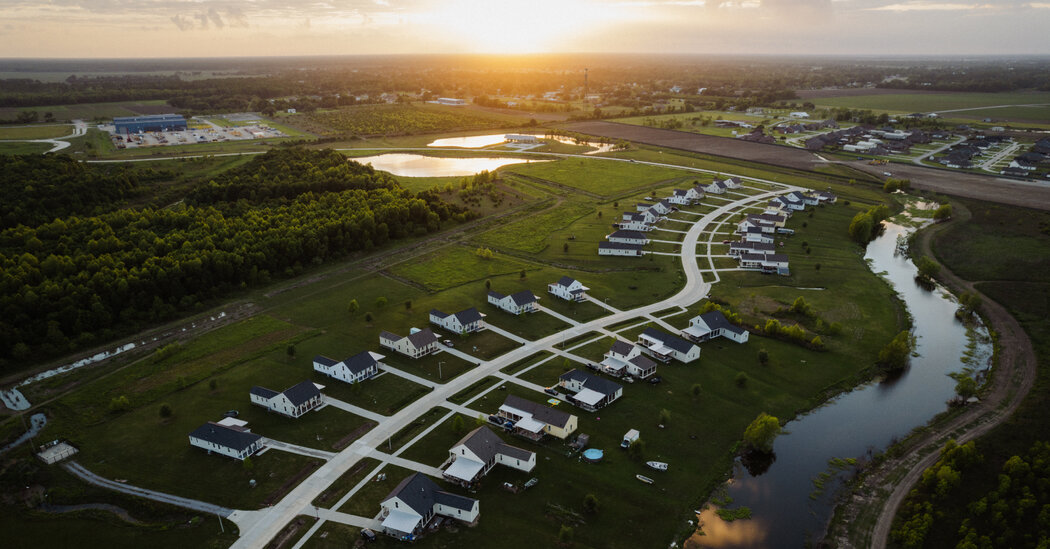
New Isle, a community formed after the relocation of families from Jean-Charles Island, bears a striking resemblance to its predecessor, sitting amid the picturesque Louisiana bayous. Residents, united by deep familial ties, live along a solitary road, surrounded by waters rich in aquatic life. However, the artificial canals of New Isle lack the fish species that once thrived on their former island home. While the swamps are gradually being engulfed by the Gulf of Mexico, residents are contending with speeding traffic and the demands of a homeowners association that prohibits parking on lawns.
Amy Handon, a resident of New Isle, acknowledges the stark contrast between her current situation and her previous life. Despite receiving a free home and the opportunity for a fresh start, she reflects on the decade since the U.S. government initiated a groundbreaking experiment in climate displacement, advising others, “Don’t do that.” Handon articulates her disillusionment with a relocation that was meant to serve as a beacon of hope.
The relocation project for Jean-Charles Island was launched ten years ago with a significant federal investment of $48 million, intended as a precedent for similar efforts to combat the impacts of climate change, such as rising sea levels and severe storms. However, as the threats from climate change become more pronounced, Louisiana’s experience remains an isolated case and serves as a cautionary tale.
While the project facilitated the move of thirty-seven families away from an increasingly perilous island, the perception of success is mixed among the new residents of New Isle. Numerous inhabitants voice frustration over subpar construction quality and the lack of input into how funds were allocated. They express dissatisfaction over a seldom-used community center and a body of water deemed unsafe for fishing. Additionally, promised further development has stalled, leaving many new homes unoccupied.
As climate migration becomes a pressing global issue, projections from the World Bank indicate that rising temperatures could drive 216 million people to migrate within the next twenty-five years. Social scientists have warned that such displacement presents significant risks, with ramifications that will echo across generations. A recent study highlights that southern Louisiana is eroding at an alarming pace, prompting the urgency for immediate discourse on the strategic relocation of entire communities. The consensus among researchers is clear: delay exacerbates the challenges ahead.
Challenges Encountered During the Relocation Process
According to Deme Nakan, who was central to the relocation effort, missteps began accumulating alongside extensive planning efforts. After announcing a series of grants in 2016 to facilitate the movement of communities to safer locations, the Obama administration’s initiative faced immediate roadblocks. High tides effectively severed access to Jean-Charles Island, thwarting the relocation plans.
The community, though a prime candidate for resettlement due to its close-knit population, faced complications stemming from a lack of federal recognition for the tribe. This designation prevented direct access to relocation grants, forcing the funds to filter through a Louisiana agency. Decision-making for New Isle involved input from both the Jean-Charles community and other groups, which caused further complications.
Unfulfilled Expectations of New Isle Living
Karen Curol, an economic development administrator, described the early visions of New Isle as a “Disneyland” of sorts, brimming with potential. Nevertheless, the reality has proven different. Upon moving to New Isle in 2022, residents were met with structural issues, including leaking pipes and unfinished repairs. Angry about the inadequacies, Handon pointed out that negligence has led to persistent water damage in her home.
The transition has also complicated community dynamics. Despite the residents’ wishes against it, a homeowners association has been established and imposed strict regulations that some individuals find difficult to accept. Keith Brunette, reflecting on the loss of autonomy, expressed frustration over the many new rules governing their living conditions.
Legal Struggles and Future Provisions for the Community
In December 2023, residents filed a federal civil rights lawsuit against Louisiana officials, claiming unfair exclusion from the resettlement process. However, they ultimately withdrew their claims amid federal administration changes that diminished support for civil rights enforcement. Tribal leader Naquin is actively engaged in discussions around “managed retreat,” connecting with leaders from similar communities struggling against climate impacts. He shares insights about the dangers of inadequate government response and the importance of understanding indigenous community needs.
Despite the hurdles, construction efforts continue in New Isle, albeit slowly. Many families are unable to afford the new homes constructed by charitable organizations, which have been priced out of reach for most. As the community strives to attract businesses for economic revitalization, the original vision remains precariously out of reach.
While nearly all of the $48 million allocated for New Isle has been utilized, the residual impacts of the transition linger. Handon laments the loss of connection with the bayou, a landscape that once defined their way of life. The new environment feels foreign and disconnected, evoking a sense of nostalgia for the deep ties to land and community that were lost in the move.
