


Durban University of Technology Hosts Pioneering DataScience Symposium
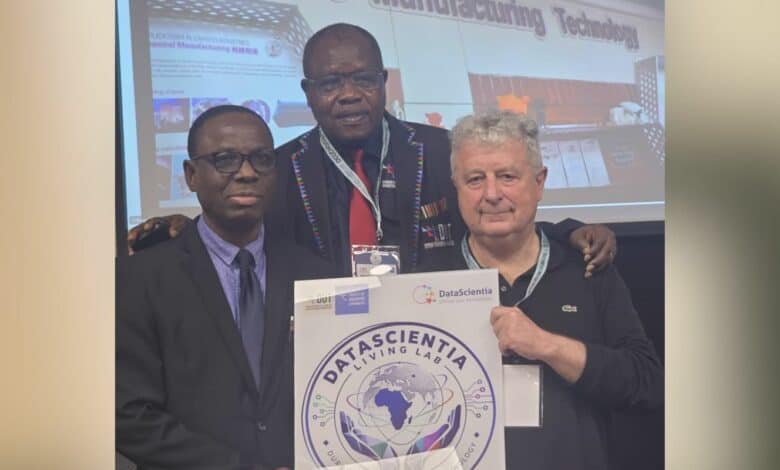
The Durban University of Technology (DUT) has made history by becoming the first African institution to host the DataScientia International Symposium, marking a significant shift after a decade of global research conferences concentrated in Europe. This landmark event coincided with the launch of the continent’s inaugural DataScientia Living Lab.
Global Gathering for Ethical AI and Collaboration
Over the course of three days, the symposium, themed “Sovereign AI for Diversity,” attracted more than 200 participants from over 50 institutions across Europe, Africa, Asia, the Middle East, and South America. Attendees included academics, policymakers, industry experts, and representatives from various international organizations. The event was organized under the aegis of the DataScientia Initiative, a global collaboration emphasizing ethical artificial intelligence, responsible data governance, and citizen science.
A Step Towards Human-Centered AI in Africa
Professor Oludayo Olugbala, Dean of Accounting and Information Studies at DUT, opened the event by underscoring its significance for Africa. He characterized the symposium as a pivotal moment aimed at promoting ethical and human-centered AI across the continent. The newly launched Living Lab will serve as an open innovation ecosystem, enabling researchers, businesses, governments, and citizens to collaboratively design, prototype, and test solutions intended to enhance human well-being.
Building a Global Citizen Science Community
The broader vision of the DataScientia initiative focuses on creating a global community devoted to human-centered general AI, emphasizing the role of individuals as active custodians of their own data rather than mere data points. From the University of Johannesburg Vice-Chancellor Letlhokwa Mpedi’s cautionary remarks about a potential “Digital Berlin Conference” on AI, to his vision for an “AI equivalent to geographical indications” aimed at safeguarding Africa’s cultural heritage, the initiative is poised to make a significant impact. Additionally, the expansion of the Sovereign AI Program and the launch of new initiatives reflect a continuous commitment to these principles.
Innovating Language Technologies for Cultural Preservation
A key project within the initiative is set to digitize over 7,000 human languages and develop AI-driven language technologies that facilitate communication in indigenous languages. Professor Olugbala highlighted that this undertaking could revolutionize language technology while also preserving important cultural and linguistic heritage. This approach emphasizes digital preservation in how AI systems navigate multilingual environments, aligning with various local language AI initiatives across the continent. Examples include Nigeria’s Veta Origin for key Nigerian languages, Egypt’s TokenAI developing for Arabic and hieroglyphics, and South Africa’s Vambo AI.
Local Knowledge and Cultural Diversity in AI Development
Professor Olugbala linked the symposium’s hosting to the discourse surrounding sovereign AI, asserting that its essence lies not only in computational power but in an approach that respects cultural diversity and local autonomy over data. He also pointed out the current underrepresentation of African institutions in the DataScientia partnership network. By hosting the symposium in Durban, DUT aims to engage more African organizations in the quest for AI sovereignty.
Interactive Sessions Focused on Diversity-Aware AI
The program includes a series of sessions dedicated to Diversity-Aware Sovereign AI, complemented by workshops and tutorials centered on the DataScientia initiative and the creation of lexical datasets for language modeling. This positions DUT as a vital participant in the ongoing conversation around sovereign AI, distinguishing it from being merely a case study in this important global dialogue.
