


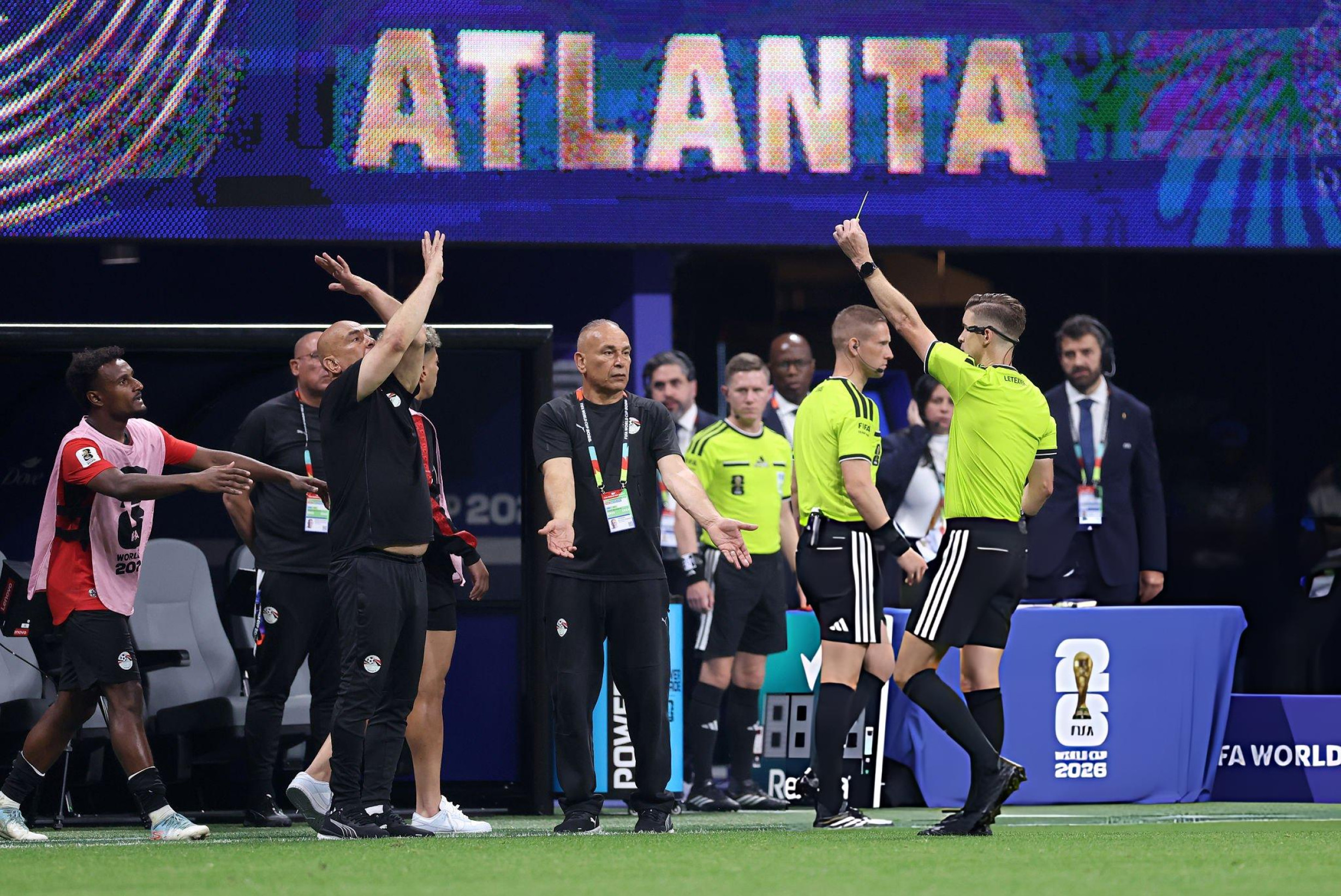
Hossam Hassan, the head coach of Egypt, expressed his frustration following the Pharaohs’ dramatic 3-2 defeat to defending champions Argentina in the Round of 16 at the FIFA World Cup in Atlanta. The loss, marked by a stunning comeback from Argentina, left Hassan questioning the integrity of the officiating.
The African team initially looked poised to achieve a monumental upset, leading 2-0 with goals from Yasser Ibrahim and Mostafa Zico. Despite Lionel Messi’s missed penalty, Argentina rallied in the final minutes, with Cristian Romero scoring to narrow the deficit before Messi equalized just seven minutes from time. Enzo Fernandes then secured the victory in stoppage time, sending Argentina forward to the quarter-finals.
This heartbreaking finish sparked outrage among Egyptian players and officials, who were particularly upset by a disallowed goal and several contentious refereeing decisions. Hassan emphasized that he believed external factors contributed to the outcome, hinting at undue influence favoring Argentina.
Factors Beyond the Field
In his post-match address, Hassan made strong claims about the conditions surrounding the match. He implied that the outcome was swayed by factors beyond just the game.
“We played better than the reigning champions in various aspects, but the result was affected by both internal dynamics on the pitch and external influences,” he stated. Hassan suggested that there may have been an intent to keep Messi and Argentina in the tournament.
He specifically criticized the appointment of French referee Francois Letexier and questioned certain VAR decisions that appeared to disadvantage his team. He expressed discontent with the officiating, claiming there seemed to be pressure from Argentina.
The Disallowed Goal That Changed the Game
One of the match’s most contentious moments occurred shortly after the hour mark when Egypt believed they had scored a second goal. Mohamed Salah set up Zico, who then scored, igniting celebrations among Egyptian supporters. However, a VAR review disallowed the goal due to a foul by Marwan Attia on Lisandro Martinez early in the play, a decision that left Egyptian officials unconvinced.
FIFA later confirmed that the disallowance was aligned with the laws of the game, stating that Attia had grabbed Martinez’s shirt and stepped on his foot, directly impacting the defensive sequence.
A Heated Exchange with the Referee
After the final whistle, emotions escalated as Hassan confronted Letexier. “I told the referee this was unfair,” he recounted, suggesting that the official might be hiding something due to the contentious nature of his decisions during the game.
Disappointment and Resilience from Egyptian Players
Mostafa Zico, one of Egypt’s goal scorers, shared his disappointment after the match, saying, “We were unlucky. The game slipped away from us at the last moment.” He remained adamant that the referee’s decisions played a significant role in the outcome, further elaborating that everything changed after Egypt’s initial two-goal lead.
Meanwhile, goalkeeper Mostafa Shobair expressed pride in his team’s performance, despite the loss. He was notably excellent in goal, saving Messi’s penalty and making several key stops. Shobair acknowledged that mistakes were made in the dying moments but stood firm that they had faced a formidable opponent.
A Reflection on Leadership
Substitute goalkeeper Mohamed Alaa also raised concerns regarding the officiating, reflecting the collective sentiment within the team. He echoed dissatisfaction with the referee’s decisions that led to Argentina’s counterattack following a penalty awarded to them.
Despite the anguish, team captain Salah actively sought to uplift the spirits of his teammates in the locker room post-match, emphasizing resilience and the importance of moving forward together.
Messi’s Performative Rescue
For much of the encounter, Messi seemed to be struggling as his dreams of lifting the trophy hung in the balance. He had earlier missed a penalty, trailing his record in crucial moments. However, when the stakes were at their highest, the iconic player stepped up. Messi not only created opportunities but ultimately scored the equalizer, marking his 21st goal in World Cup history. This moment underscored his relentless spirit, as Argentina went on to extend their campaign in the tournament.
