


Kenyan Farmers Embrace Solar-Powered Cold Storage Solutions
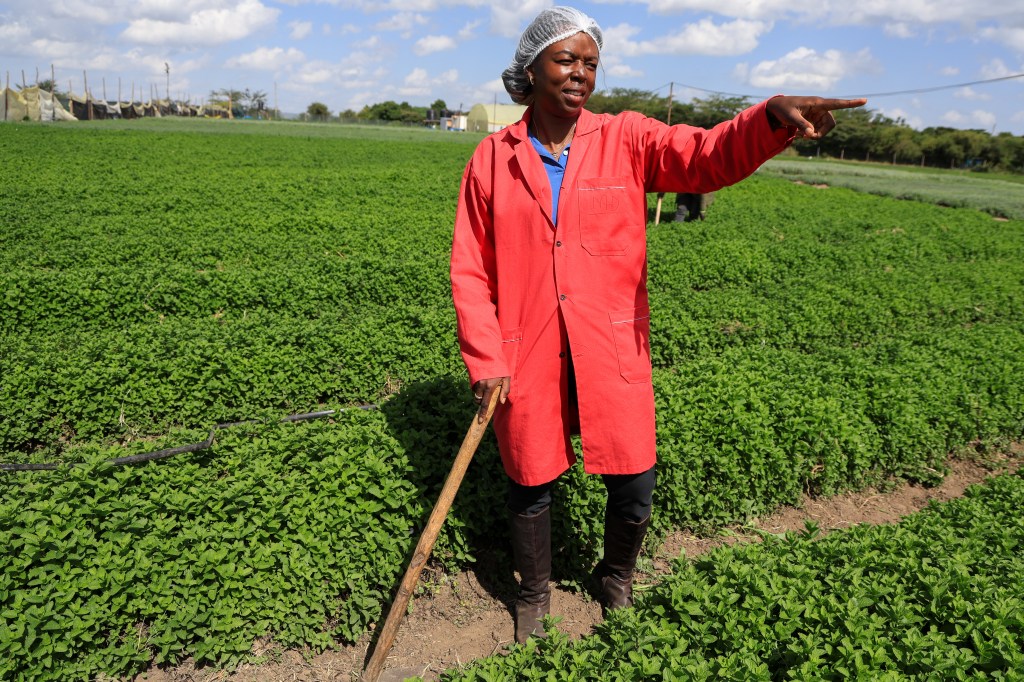
NAIROBI, Kenya – Early each morning, Kenyan farmer Yvonne Anyoni Mumia tends to her rows of rosemary, basil, and other crops destined for European supermarkets. Previously, she faced concerns over transportation delays and extreme heat that could spoil her harvest. However, the adoption of solar-powered refrigeration has transformed her ability to keep her produce fresh.
SoKo Fresh, a cold chain company, provides a pay-as-you-go model that charges farmers based on the kilograms stored. This innovative approach reflects a rising trend across Africa, using solar energy to mitigate food spoilage, a significant challenge in the agricultural sector.
The Food and Agriculture Organization (FAO) of the United Nations indicates that as much as 40% of food produced in Africa is lost before reaching the market, largely due to insufficient storage, transportation, and processing infrastructure.
Advancements in Solar-Powered Storage Technology
Solar-powered off-grid cold rooms and warehouses now allow farmers to securely store perishable goods without relying on expensive and often unreliable electricity grids. This shift is gaining traction throughout countries such as Kenya, Nigeria, Ethiopia, Rwanda, and South Africa.
Mumia acknowledges that the biggest obstacle was maintaining the quality of her crops post-harvest. Like many small-scale farmers, she could not afford the upfront cost of about $30,000 for her own solar-powered cold storage facility. “With proper storage, you can delay sales without worrying about spoilage, ultimately preserving both production and income,” she explains.
As the pressures of climate change and rising temperatures impact food handling systems, effective cooling technology is becoming increasingly essential in agriculture.
Unique Challenges Faced by African Farmers
In contrast to nations like India, China, Japan, the Netherlands, and the United States, where advanced cold-chain networks enable produce to reach markets over extended periods, many African farmers lack access to cooling facilities. This often forces them to sell crops soon after harvest, resulting in substantial losses.
As global temperatures continue to rise, this issue becomes more critical. Extreme heat accelerates the spoilage of vegetables, fruits, dairy products, and fish, while unreliable electricity supplies make traditional refrigeration both costly and impractical in rural areas.
Enhancing Supply Chains Through Solar Innovation
Soko Fresh reports it has significantly reduced spoilage rates for its clients, dropping from nearly 50% to below 2%. Additionally, farmers have seen an increase in income of up to 50% per kilogram. In Nigeria, companies like ColdHubs have installed solar-powered walk-in cold rooms at major agricultural markets, allowing farmers to rent space on a daily basis without the need for significant financial investments. Meanwhile, in Rwanda, solar-powered refrigeration is assisting dairy cooperatives with milk collection, and Ethiopia is ramping up its investment in cold chain initiatives to support the rapidly growing horticulture exports.
As African nations endeavor to bolster food security while mitigating greenhouse gas emissions, these innovations are becoming increasingly vital.
Traditional refrigeration systems often rely on diesel generators in regions with unstable power supplies. Solar power alternatives can lower both fuel consumption and operating costs while curbing emissions. However, experts argue the primary advantage may be economic rather than environmental. For years, development initiatives have emphasized expanding electricity access in Africa. While millions now have electricity, the focus has not sufficiently addressed how this energy can be transformed into economic opportunity.
Comprehensive Agricultural Solutions Beyond Refrigeration
Across the continent, solar-powered irrigation systems are now enabling year-round farming. Additionally, solar flour mills and processing equipment allow rural areas to add value to agricultural products closer to where they are grown. Yet, securing funding remains a significant hurdle.
Carol Koech, vice president for Africa at the Global Energy Alliance for People and Planet, remarks, “The current challenge is not proving that these systems work. We are developing well-financed projects that can attract larger investment pools and scale globally.”
Grants, low-interest loans, and donor support can help cover initial expenses. However, capturing sufficient commercial investment remains challenging due to fragmented agricultural markets dominated by small producers. “Investors tend to consider emerging technologies risky, as reliable business models to deliver consistent returns are scarce,” notes Soko Fresh CEO Dennis Kalema. “This perception makes financing our projects costly.”
