


Evidence Emerges of Cover-Up in Fatal Police Shootings During Immigration Raids
U.S. President Donald Trump’s administration has provided Minneapolis prosecutors with evidence related to the January incidents in which immigration agents shot and killed Renee Good and Alex Preti, injuring a Venezuelan man. Local officials disclosed this development on Monday.
Hennepin County Attorney Mary Moriarty, the city’s chief prosecutor, stated that after six months of negotiations, jurisdictional disputes, and litigation, the federal government submitted “extensive” evidence concerning the three shootings. This includes body camera footage and other digital records, along with Good’s bullet-damaged vehicle. Moriarty expressed appreciation for federal authorities’ willingness to re-evaluate their policies.
At a news conference, Moriarty emphasized the importance of cooperation, saying, “Our community needs it, too. Our democracy needs it.” She confirmed that the evidence was shared following discussions with Minnesota Attorney Daniel Rosen’s office and the local FBI field office, although neither entity commented on the matter.
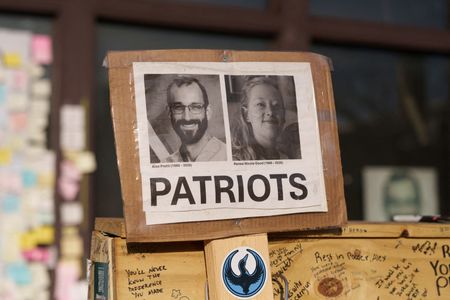
On January 7, an Immigration and Customs Enforcement (ICE) officer fatally shot Good while she was in her car. Later, on January 24, a Border Patrol agent shot and killed Preti during a protest. Both individuals were U.S. citizens. Additionally, on January 14, an ICE agent shot Venezuelan national Julio Sosascelis in the leg.
Moriarty’s office continues its investigation into the killings of Preti and Good. While no decision on state charges against the federal agents has been announced, charges have already been filed in the Sosa Celis case, where ICE officer Christian Castro faces four counts of second-degree assault and one count of falsely reporting a crime under Minnesota law.
These three shootings occurred amidst President Trump’s “Operation Metro Surge,” a campaign where armed immigration agents patrolled Minnesota cities to detain immigrants for deportation. The state’s Democratic leaders criticized the Trump administration, alleging widespread violations of citizens’ constitutional rights and pledging accountability.
Despite state requests for evidence, Trump officials initially rebuffed these, asserting that investigations into federal employees should solely be conducted by the U.S. Department of Justice and the Department of Homeland Security, incorrectly claiming that federal agents have complete immunity from state prosecution. Following Good’s death, federal law enforcement agencies ceased their usual cooperation in sharing evidence, prompting the state to take legal action against the Trump administration. This case remains ongoing, although Moriarty indicated that it may be resolved once the newly received evidence is examined.
Prosecuting federal law enforcement officers at the state level is uncommon and presents significant challenges. Should the U.S. Department of Justice contend that the agents acted within their legal mandates, it could request to move the case from state to federal court. In February, amid public outrage over the fatalities, the Trump administration announced a halt to the surge in Minnesota deportations, signaling a shift toward targeted enforcement over broad sweeps.
In recent developments, an ICE agent shot and killed Lorenzo Salgado Araujo, a Mexican man allegedly residing in the country unlawfully for decades, during a traffic stop in Houston. Additionally, a fatal encounter with U.S. immigration agents transpired in Biddeford, Maine, on Monday.
