


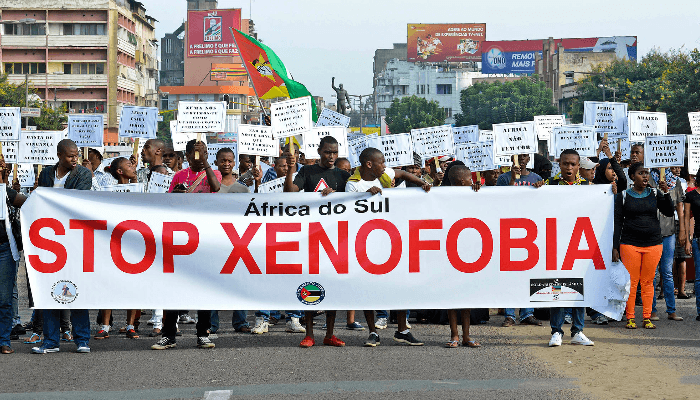
Anti-Immigrant Protests Erupt Amidst Economic Struggles in South Africa
In South Africa, where unemployment lingers above 30% and crime rates are among the highest in Africa, long-standing grievances have ignited anti-immigrant protests. Vigilante groups, including the opposition party Action SA, have been propelled by the circulation of misleading government posters claiming a June 30 deadline for the removal of illegal immigrants. The government has refuted these claims, labeling them unfounded and devoid of legal support.
Complex Dynamics of Migration and Economic Issues
The economic challenges facing South Africa are part of a broader global migration discourse. While migration often becomes a political tool throughout the continent, the systematic factors contributing to South Africa’s situation are evident. The unemployment rate exceeds 30%, with youth unemployment reaching a staggering 46% in early 2026. Persisting disparities and governance deficiencies exacerbate these issues. Although concerns about crime add complexity, their underlying causes reach beyond immigration, rooted in slow economic growth and institutional dysfunction.
Escalating Violence Amidst Heightened Tensions
The inflammatory rhetoric surrounding immigration has already incited violence, resulting in at least two deaths. Foreign nationals have sought refuge in mosques and churches, prompting several African nations to send planes for repatriation. In response, police and military forces have deployed across the country to safeguard airports, infrastructure, and communities, issuing stern warnings against acts of intimidation and property destruction.
Debate on Unemployment and Migration
The ongoing discussions are fervent. Political factions portray immigrants as competitors for limited jobs and resources, while activists contend that blaming immigrants diverts attention from deeper systemic issues like the energy crisis and social inequality. As the deadline looms, one must ponder: are South Africa’s escalating unemployment and crime rates genuinely attributable to immigration, or are they symptomatic of deeper systemic economic failures?
Analyzing Immigration Statistics and Crime Rates
South Africa is home to approximately 3 million immigrants, representing around 5 to 7 percent of the nation’s population of over 60 million. BBC Africa’s data reveals a concerning trend: despite rising unemployment and increasing immigrant numbers, there is no substantial evidence indicating that foreigners are responsible for the millions of jobs needed to address chronic unemployment. Instead, immigrants tend to occupy niches in construction, services, and entrepreneurship, often filling critical gaps rather than displacing local workers.
Exploring the Roots of South Africa’s Economic Dilemma
The rising unemployment rates and economic turmoil in South Africa can be traced back to deep-seated structural problems rather than immigration. A significant issue is the educational mismatch, where many young South Africans exit the educational system lacking the technical and digital expertise demanded by modern industries. While sectors such as engineering, ICT, and healthcare report talent shortages, graduates in the humanities find themselves struggling to secure employment.
Implications for Investor Confidence
The prevailing narrative around immigration directly influences investor confidence. Negative perceptions and the tendency to scapegoat migrants for unemployment and crime, as highlighted in recent protests, signal policy instability and social unrest to potential investors. The South African Federation of Trade Unions has warned against making migrants the fall guys for systemic failures, emphasizing that excluding foreigners will not remedy municipal issues or create sustainable jobs. The discourse surrounding immigration must shift focus towards opportunity, harnessing the potential contributions of immigrant entrepreneurs to foster economic growth.
Charting a Path Forward
South Africa’s increasing number of deportations and rising anti-immigrant rhetoric reflect a concerning policy trajectory. The evidence clearly indicates that immigration is not the catalyst for mass unemployment; instead, underlying challenges in education and governance remain at the forefront. This approach of blaming immigration may garner short-term applause but ultimately detracts from vital reforms needed to enhance investor confidence and social unity.
