


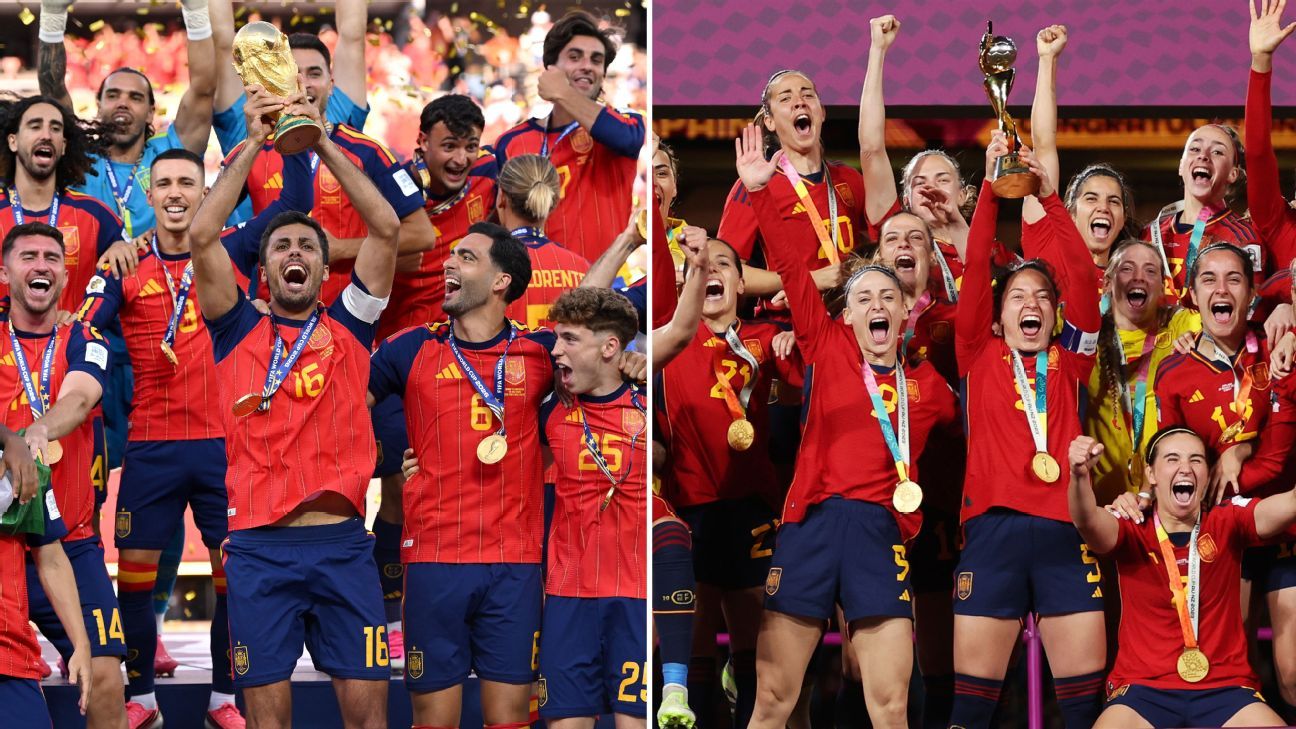
Spain Continues International Dominance in Football
This month, from Wrexham to Sarajevo to New Jersey, Spain celebrated yet another triumph in international football. Ferran Torres scored the decisive goal in the 106th minute during the FIFA World Cup final against Argentina, cementing a memorable summer for Spanish football. Earlier victories at the Men’s U19 European Championship in Wales and the Women’s U19 European Championship in Bosnia and Herzegovina have contributed to this remarkable achievement. Notably, Spain now stands as the first country ever to hold both the men’s and women’s World Cup titles simultaneously.
A Historic Moment for La Roja
Three years prior, Olga Carmona’s pivotal strike in Sydney secured Spain a 1-0 win over England, granting them their inaugural Women’s World Cup trophy. Torres’ goal on Sunday marked his significant contribution to Spain’s legacy in men’s football.
Interconnected Success in Football
The synergy between coaching, player progression, and tactical development has elevated Spain to the forefront of global football, as reflected in FIFA’s world rankings. At every level, Spanish teams exhibit a consistent playing style, underscoring their dominance. As former France international Thierry Henry noted on FOX, this unified approach is pivotal for Spain’s supremacy across all football disciplines.
The Evolution of Spanish Football
Spain was not always a football powerhouse. Until the 2000s, their only significant achievement was winning the men’s European Championship in 1968, often falling short in major tournaments. However, the appointment of Luis Aragonés as manager in 2004 marked a turning point. Since then, Spain has clinched three of the last five European Championships (2008, 2012, 2024), secured two Men’s World Cups (2010, 2026), and triumphed in the Women’s World Cup in 2023.
Strong Foundations in Youth Development
Success in both men’s and women’s football in Spain can largely be attributed to a coherent youth development strategy. Many players, including World Cup Golden Ball winner Rodri and goalkeeper Unai Simon, honed their skills together at youth levels. Under current coach Luis de la Fuente, they won the European Under-19 Championship in 2015 and the Under-21 Championship in 2019. Similarly, the women’s team has seen successes with players like Ona Batlle and Aitana Bommati emerging from age-group competitions under coach Sonia Bermudez.
Spain’s Unique Coaching Environment
Investment in coaching education is unparalleled in Spain, which boasts a high number of UEFA A and professional license holders compared to other European nations. This focus on nurturing talent has led to Spanish managers assuming pivotal roles in top leagues, including the Premier League. Their distinct coaching styles often reflect the foundational principles established by Johan Cruyff, emphasizing possession, positioning, and pressing.
The Barça Influence on Spanish Football
FC Barcelona’s legendary La Masia academy continues to be crucial for Spain’s football identity. Many members of the recent World Cup-winning squad are products of this academy. The emphasis on developing technically proficient players has laid the groundwork for success at both club and national levels, allowing Spain to remain resilient even when facing adversity, like injuries.
The Promise of Future Success
While challenges remain, particularly concerning the development of the women’s game, the commitment to a coherent football philosophy has been steadfast. Spain’s ability to adapt and leverage its strengths has proven effective, showcasing an approach that prioritizes teamwork over individual accolades. As Spain prepares for the upcoming Women’s World Cup in Brazil, expectations remain high that La Roja will continue to build on its legacy of excellence.
