


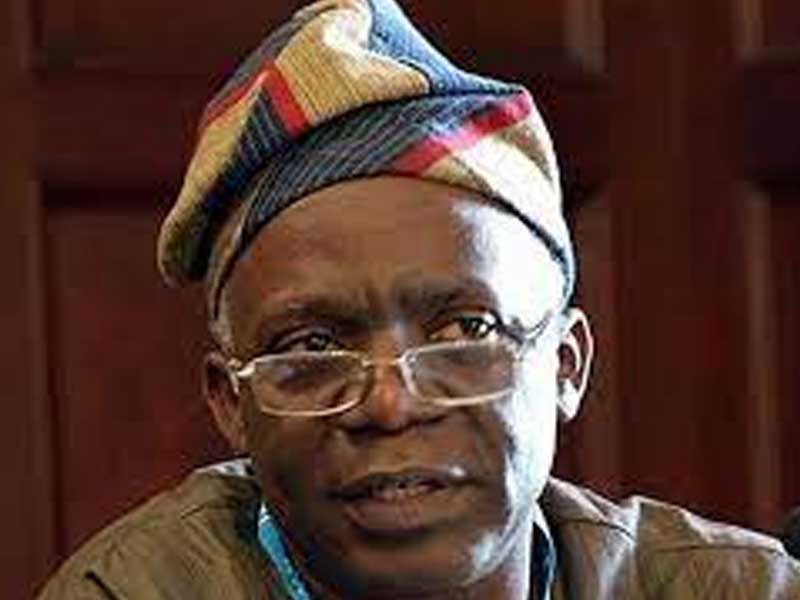
Femi Falana Calls for Transparency on Presidential Foreign Intervention Promotion Council
Human rights lawyer and Senior Advocate of Nigeria (SAN), Femi Falana, has called on the Federal Government to address serious questions being raised by Nigerians regarding the operations of the allegedly fraudulent agency, known as the Presidential Foreign Intervention Promotion Council (PFIPC).
During an appearance on Eagle 102.5 FM’s current affairs show “Frontline” in Irese-Ijebu, Ogun State, Falana urged the federal government to provide a comprehensive and transparent account of the controversy surrounding the agency. He emphasized that the issues connected to its existence and the claims of its operations cannot be brushed aside with a brief public statement.
According to Falana, the official explanation issued by the presidency falls short of adequately addressing public concerns, leaving significant “gaping holes” that necessitate a detailed investigation. He expressed skepticism, stating that there appears to be far more to the situation than what is immediately visible. “Nigerians are not being given the full facts,” he asserted.
He criticized Mr. Bayo Onanuga, who spoke on behalf of the President, saying, “This country is under unprecedented ridicule.” Falana urged the government to recognize that it is engaging with an informed citizenry, and therefore must offer more clarity on this critical issue.
Falana raised alarming questions regarding how an institution, which he claims was not lawfully established, managed to penetrate Nigeria’s governance structures. He pointed out that the circumstances surrounding this agency call into question the integrity of the nation’s institutions. Notably, he queried how the council, reportedly promoted by Mr. Adeniyi Adeyemi, was incorporated into the national budget, operated within the Federal Secretariat, opened a Central Bank of Nigeria (CBN) account, and employed staff, all despite lacking a recognized legal foundation.
“How did an agency that was not established by law infiltrate Nigeria’s appropriation laws? How did that agency establish an office in the Federal Secretariat? How did it manage to open an account with the CBN, and how did it staff that office with around 300 people?” Falana remarked, highlighting the need for accountability throughout various government agencies involved in budgeting, administration, and financial management.
He also directed attention to the National Assembly, suggesting that it too must answer for the alleged inclusion of the PFIPC in Nigeria’s spending processes. Falana questioned, “If this is a con artist who can trick the President into issuing an appointment letter, fool the central bank into opening an account, and deceive Congress into budgeting for a government agency, then I think the government is not taking this seriously enough.”
Furthermore, Falana called for an independent investigation into the actions of Presidential Chief of Staff, Femi Gbajabiamila. He suggested that Gbajabiamila should temporarily step aside to facilitate an unbiased investigation free from any potential controversies. “The government has an obligation to the country and its own interests to ask Mr. Gbajabiamila to resign, allowing for a thorough inquiry,” he stated.
