


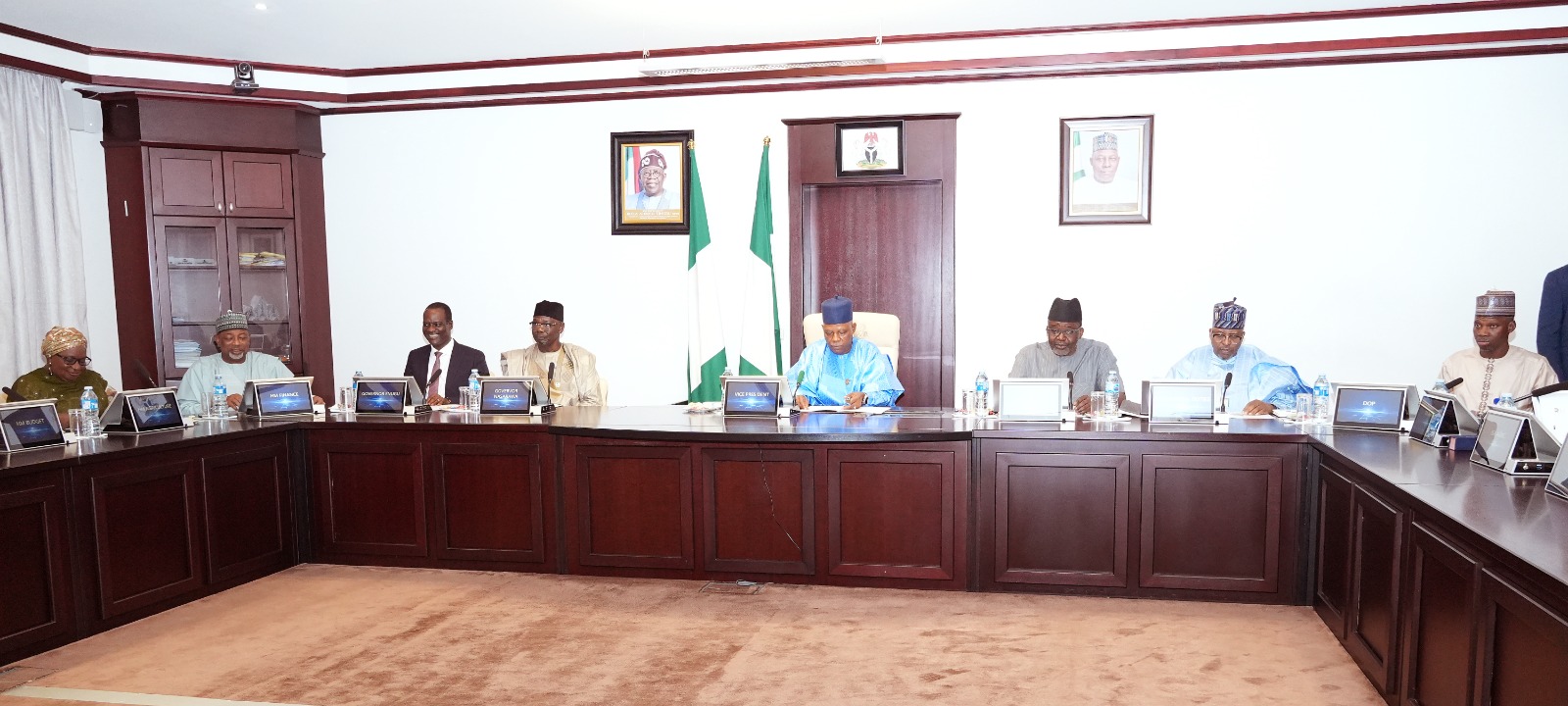
Final Report on $500 Million Agriculture Initiative Delivered to Federal Government
The Federal Government has received the final report from the National Technical Working Group for the World Bank-supported $500 million Sustainable Agriculture Value Chains for Growth Program (AGROW). This announcement was made by Vice President Kassim Shettima during a press briefing at the Presidential Villa in Abuja.
Vice President Shettima noted that the receipt of this report signifies the conclusion of the program’s design phase and the commencement of its implementation. The AGROW initiative aims to foster connections between farmers and national policy-making processes, addressing the disconnect between agricultural producers and the systems defining their economic realities.
AGROW Program Framework
The AGROW program, backed by the World Bank, resulted from extensive regional consultations across 32 states, highlighting a strengthened commitment by local governments toward agricultural development. This collaborative effort illustrates the states’ willingness to take on greater roles in enhancing productivity, infrastructure, extended services, and market access.
Vice President Shettima emphasized that the AGROW report restores farmers as pivotal contributors to national economic discourse. He stated, “Today marks a significant transition for AGROW as we move from program design to implementation.” The Vice President stressed that the initiative is geared towards designing programs grounded in agricultural realities, enabling private investment that can elevate Nigeria’s agricultural sector.
Significance of Agriculture to Nigeria’s Economy
Agriculture, which constitutes 23% of Nigeria’s GDP and supports 34% of the workforce, should not be perceived as a secondary sector, according to Shettima. He underlined that most Nigerians rely on farming for their livelihoods, and emphasized the profound economic impacts that agricultural productivity has on food prices, rural income stability, and broader economic growth.
Shettima articulated the broader implications of agricultural yields, noting that higher productivity leads to reduced food prices, increased rural income, and a stabilization of industry supply chains. Conversely, inadequate yields can result in severe economic consequences, causing widespread food insecurity and poverty.
Implementation Challenges and Strategies
On the implementation front, Shettima clarified that out of the $500 million funding allocated, $355 million—or 71%—will be distributed among participating states. He acknowledged that while this funding is significant, it falls short of meeting the expansive demands for improvements in extension services, infrastructure, and market access.
The Vice President commended the National Technical Working Group for their diligence and expertise in crafting the report. He announced the formal dissolution of the group, transferring responsibilities to the Federal Ministry of Agriculture and Food Security, which will drive the initiative forward.
World Bank’s Continued Support of AGROW
Bertin Kamphis, the World Bank’s AGROW Program Leader, reaffirmed the organization’s commitment to supporting Nigeria’s agricultural goals. He articulated that with the final report, Nigeria is positioned to increase efforts aimed at enhancing food security and elevating citizens out of poverty. Kamphis underlined the importance of creating a conducive environment for private sector participation in the agricultural value chain.
Local Governments’ Support for Agricultural Development
During a recent meeting, Governor Abdullahi Sule of Nasarawa State expressed confidence in the AGROW initiative, voicing the governors’ full backing for the program. Similarly, Kaduna State’s Deputy Governor Hadiza Balarabe pledged their commitment, indicating that a dedicated state-level coordination mechanism would be established to ensure effective implementation of the program.
Highlighting the National Technical Working Group’s achievements, Marion Moon, Vice Presidential Technical Adviser on Agriculture, pointed out that the group devised a framework for prioritizing agricultural value chains based on Nigeria’s unique ecological environment. Their extensive consultations across multiple states were instrumental in shaping the final AGROW program design.
