


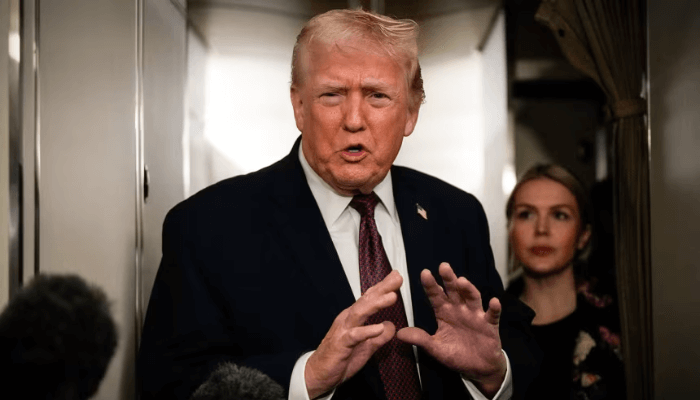
Supreme Court Affirms Trump’s Authority to Terminate Protections for Haitian and Syrian Immigrants
The U.S. Supreme Court has delivered a significant victory to President Donald Trump by ruling that his administration can effectively end Temporary Protected Status (TPS) for hundreds of thousands of Haitian and Syrian immigrants residing in the country. This decision, rendered in a 6-3 vote, overrules a previous lower court’s injunction that had preserved protections for approximately 350,000 Haitians and over 6,000 Syrians. Under TPS, individuals from countries struggling with war, natural disasters, or other extraordinary crises are granted the legal right to live and work in the U.S. despite the ongoing peril in their home nations.
The TPS program was initially established for Haitians in response to the catastrophic 2010 earthquake, and it was extended to Syrians following the outbreak of civil conflict in 2012. The implications of this ruling are substantial, as it could expose immigrants from other TPS-designated countries to deportation if their protections are also rescinded.
In a related ruling, the court determined that migrants must physically set foot on U.S. soil to apply for asylum, marking another legal triumph for the Trump administration in its efforts to impose stricter immigration controls.
Venezuela’s Earthquake Leads to Rising Death Toll and Destruction
Rescue teams are actively searching through the rubble after Venezuela experienced the strongest earthquake in over a century, resulting in at least 188 fatalities and more than 1,500 injuries. The disaster struck when two major quakes, measuring 7.2 and 7.5 in magnitude, struck within a minute of each other, wreaking havoc in the capital city of Caracas and the coastal region of La Guaira.
The United Nations reported that over 100 buildings had collapsed, prompting emergency responders to sift through debris in search of survivors. Eyewitnesses recounted scenes of chaos as buildings shook violently, leading many residents to evacuate into the streets, with thousands spending the night outdoors in fear of further tremors. The U.S. Geological Survey anticipates that the final death count could be significantly higher as search efforts continue in the most devastated areas.
Authorities have declared a state of emergency, mobilizing humanitarian agencies to deliver aid and medical assistance to those affected.
Global Oil Prices Rebound as Traffic in the Strait of Hormuz Resumes
Global oil prices have returned to pre-war levels following a resumption of shipping traffic through the Strait of Hormuz, alleviating fears regarding energy supply disruptions. Brent crude oil prices briefly dipped below $72.50 per barrel but have since seen a minor recovery, marking a dramatic turnaround from the spikes experienced after Iran’s military actions and subsequent maritime restrictions.
This decline in prices reflects a growing optimism following a recently signed memorandum of understanding between the United States and Iran. This agreement established a framework for negotiations aimed at de-escalating tensions and addressing concerns related to Iran’s nuclear activities.
However, analysts caution that despite the recent price relief, the market remains extremely sensitive to developments in the Middle East. Any collapse in diplomatic negotiations or escalation of military action could reverse these gains and push energy costs higher.
Ukraine Airstrike Claims Lives in Crimea; Tensions Escalate
Russian officials report that Ukrainian drone strikes have resulted in the deaths of at least five people in Crimea and adjacent Russian territories as Ukraine intensifies its long-range strike operations. An overnight attack on the Crimean peninsula accounted for two fatalities, including that of a child, according to local authorities.
Additional casualties were reported in Russia’s Bryansk and Belgorod regions, and authorities noted that debris from a drone attack ignited a fire at an oil storage facility in Krasnodar. In a response, the Russian Ministry of Defense asserted that 269 Ukrainian drones were intercepted overnight, highlighting the scale of the attacks aimed at disrupting Russia’s military logistics and energy infrastructure.
In retaliation, Russian officials have announced temporary power outages in certain regions of Crimea and implemented enhanced security measures around vital infrastructure.
Iran Disputes U.S. Claims About Use of Unfrozen Assets
Iran’s chief negotiator and parliamentary speaker, Mohammad Bagher Ghalibaf, has rebutted U.S. claims that Iranian assets released as part of a preliminary agreement will solely be earmarked for purchasing American agricultural products. This denial follows President Donald Trump’s assertions that financial relief from the agreement would be directed towards U.S. corn and wheat purchases, rather than flowing directly to Tehran.
Ghalibaf dismissed the proposal and accused the U.S. government of misrepresenting the deal’s terms. He criticized the U.S. for attempting to frame the agreement as a concession, while ignoring the longstanding mistrust that exists between the two nations. Iranian officials portray the memorandum as a significant diplomatic achievement, emphasizing that it does not obligate Iran to procure U.S. goods. These ongoing disagreements underscore the persistent tensions as negotiations for a broader settlement progress.
Congo Implements Travel Restrictions Amid Ebola Outbreak
The Democratic Republic of the Congo has intensified travel regulations following the confirmation of the first Ebola case linked to its rapid spread in France. Health Minister Samuel Roger Kamba has instituted new guidelines mandating that anyone identified as a contact of a confirmed or suspected Ebola case undergo 21 days of active monitoring and refrain from travel, both domestically and internationally, during that period without special authorization.
These restrictions also apply to healthcare workers and outbreak response teams returning from affected areas. Additionally, all international travelers departing Congo are now required to complete a health declaration form as part of enhanced screening measures. This initiative aims to curb the international spread of the Bundibugyo strain, which has already infected over 1,100 individuals and resulted in numerous fatalities.
Africa CDC Amplifies Appeal for Ebola Funding to Combat Outbreak
Africa’s foremost public health agency has substantially raised its funding appeal to $1.4 billion in response to the continent’s increasingly severe Ebola outbreak. According to Jean Kaseya, Director-General of the African Centers for Disease Control and Prevention, this revised estimate is approximately three times higher than initial projections, reflecting the outbreak’s scale and complexity, particularly in the Democratic Republic of Congo and neighboring Uganda.
With the Bundibugyo strain already affecting more than 1,100 individuals across the region, health experts warn that the accelerated spread into urban centers poses significant challenges in containment efforts. Kaseya emphasized the urgent need for governments, international organizations, and donors to address funding shortfalls before the crisis escalates into a broader regional emergency.
Ghana Mandates Increased Gold Purchases to Fortify Reserves
Ghana has finalized a new agreement mandating that major mining companies sell 30% of their gold production to the state starting July 1, as part of efforts to bolster foreign exchange reserves and stimulate domestic smelting capabilities. This new mandate extends an earlier program that required miners to provide 20% of their annual output to the central bank.
Officials believe this increased purchasing requirement will enhance the country’s financial position while supporting initiatives to create internationally certified refining capacity. Given gold’s status as one of Ghana’s key exports, authorities view this initiative as a strategic move to strengthen reserves amid robust global demand for the precious metal.
The Ghanaian government aims to amass up to 157 tonnes of gold reserves by 2028 and to secure international certification for at least one domestic refinery by the end of the decade.
Kenyan Police Detain Hundreds During Anniversary of Anti-Tax Protests
In Nairobi, Kenyan police utilized tear gas to disperse demonstrations as crowds gathered to commemorate victims of the 2024 anti-government protests that shook the nation. Authorities reported the arrest of 355 individuals across the country during these commemorative events, which mark two years since widespread unrest erupted in response to tax increases and rising living costs.
The initial protests led to demonstrators breaching parliament grounds, resulting in a severe security response that left at least 60 individuals dead. Interior Minister Kipchumba Murkomen acknowledged the disruption caused to residents and businesses but defended the stringent security measures, including road closures and restricted access to key areas in the capital.
As human rights organizations continue to demand accountability for those lost in the 2024 protests, event organizers emphasize that the anniversary serves as a platform for honoring the deceased and renewing calls for political and economic reforms.
New Currency Circulates in RSF-Administered Regions of Sudan, Exacerbating Divisions
Sudan’s newly issued banknotes are now in circulation within areas controlled by the Rapid Support Forces (RSF) militia, raising concerns over the nation’s escalating political and economic rifts. This development signifies a further entrenchment of parallel institutions within the RSF’s administrative zone, as the group seeks to operate independently of the military-backed government.
The currency issuance has become increasingly contentious, particularly since the government introduced redesigned banknotes and declared all previously issued currency invalid. The RSF has refused to accept the new banknotes, resulting in cash shortages in areas under its control. The introduction of freshly minted currency within RSF territories may exacerbate Sudan’s de facto division and complicate future efforts aimed at reinstituting cohesive financial systems and restoring economic stability following over three years of conflict.
